










Every year on 11 November, the courtyard of Gangtey Goenpa in the Phobjikha valley fills with villagers, monks, schoolchildren and a handful of lucky visitors for the Black-Necked Crane Festival. It is a small, local celebration with a simple purpose: to welcome back the black-necked cranes that fly over the Himalaya to spend the winter in this wide glacial valley, and to remind everyone, young and old, why they matter.
This guide explains what happens at the festival, why the cranes are so loved in Bhutan, how to reach Phobjikha, and how to watch the birds without disturbing them. The 2026 festival falls on Wednesday 11 November, just a few days away. If you can't make it this year, plan for 11 November 2027 and you will have plenty of time to arrange flights, permits and a good room in the valley.
What is the Black-Necked Crane Festival?
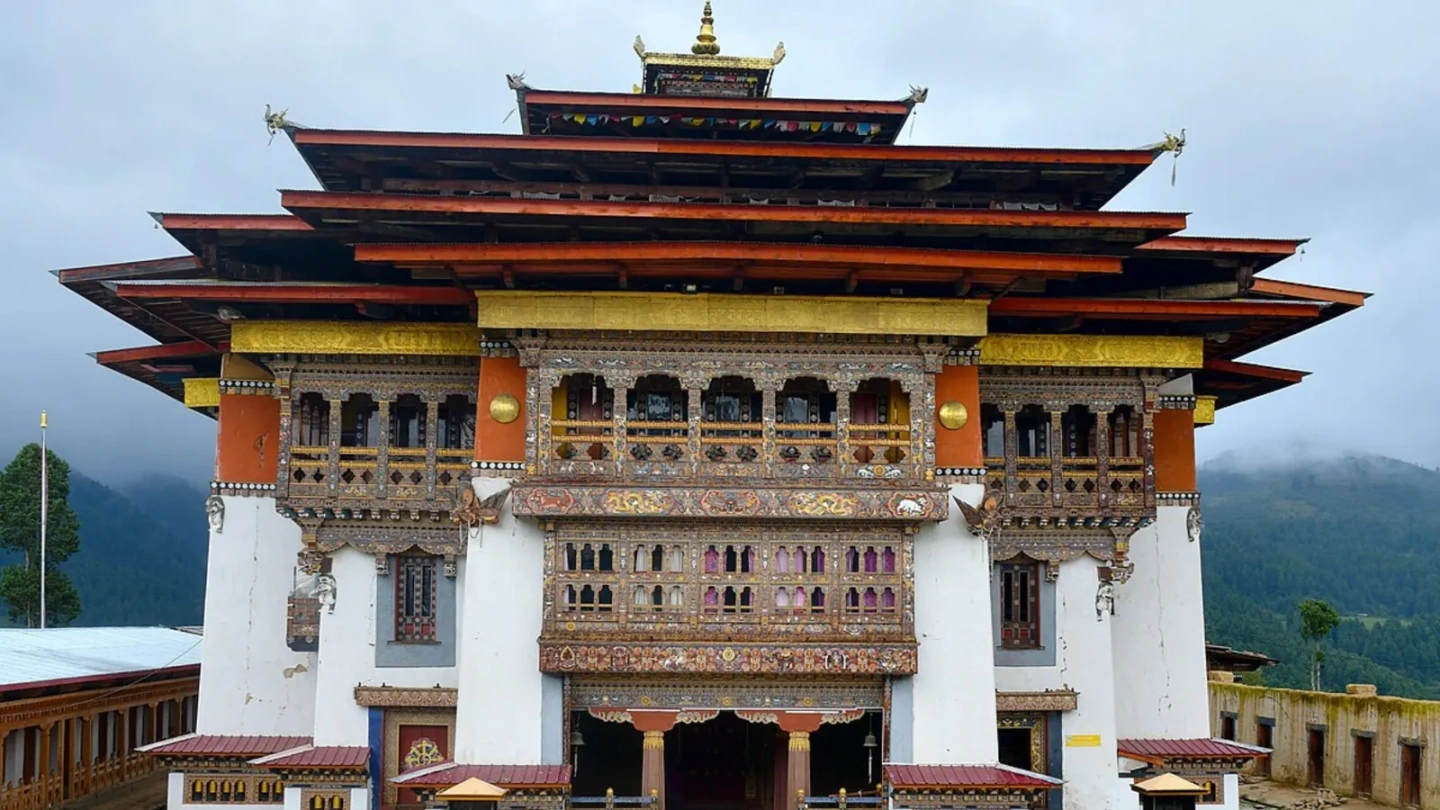
The festival is a one-day community event held in the open courtyard of Gangtey Goenpa, the hilltop monastery that looks down over Phobjikha. It is organised by the local community together with conservation groups such as the RSPN (Royal Society for Protection of Nature), which has worked in the valley for many years to protect the cranes and their wetland habitat.
The programme usually includes:
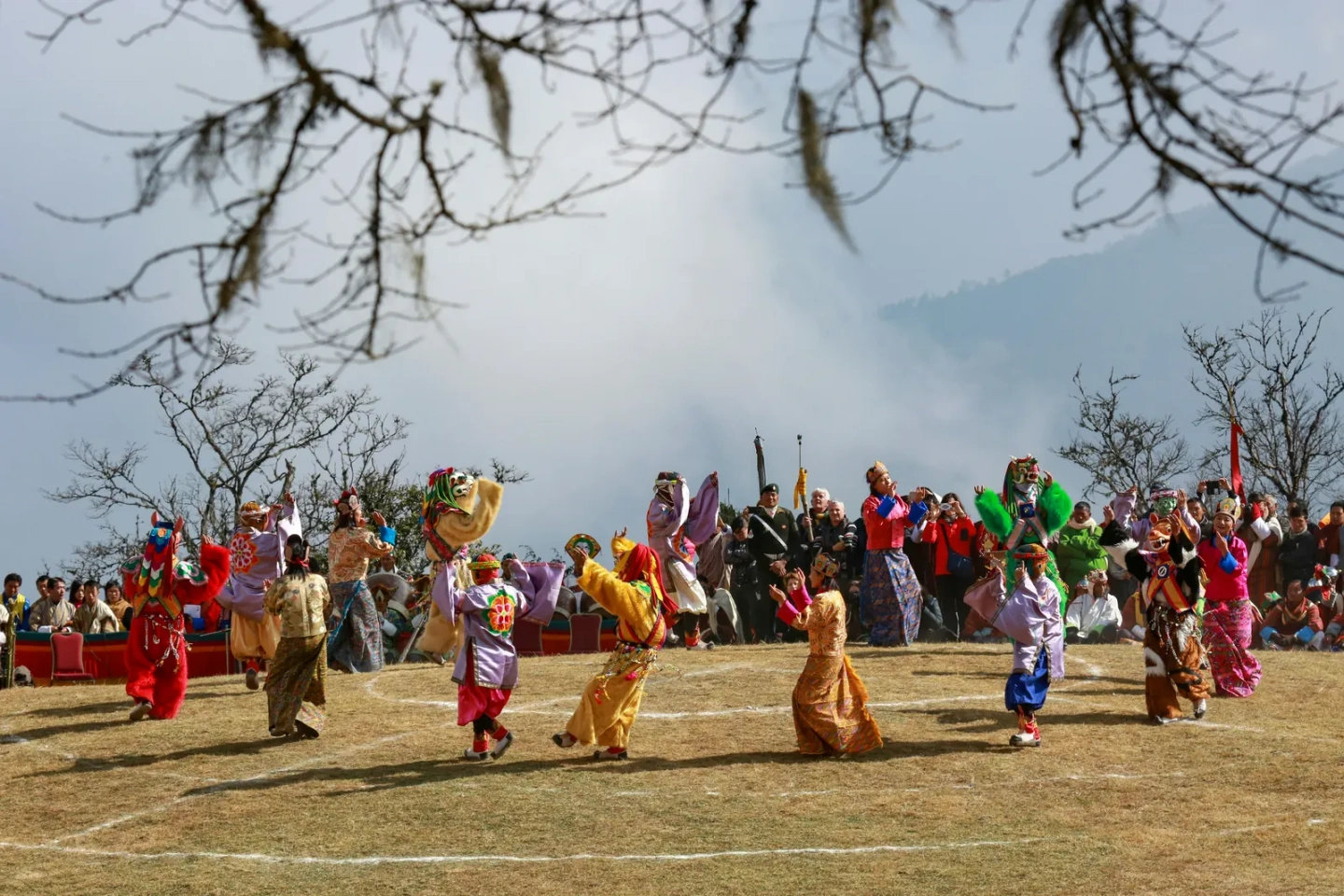
- Crane dances performed by local schoolchildren in costumes that copy the black, white and grey of the birds, often the most loved part of the day.
- Folk songs and dances by villagers from Phobjikha and nearby communities.
- Masked dances with religious meaning, performed in the monastery courtyard.
- Conservation awareness through short plays, songs and talks about protecting the cranes, the wetlands and the valley's way of life.
- Local food and crafts, with small stalls run by families from the area.
It is not a large, staged show. You stand or sit among local families, many of whom have walked up from the valley in their best gho and kira. That intimacy is exactly what makes it special.
History and meaning: why Bhutan celebrates the cranes
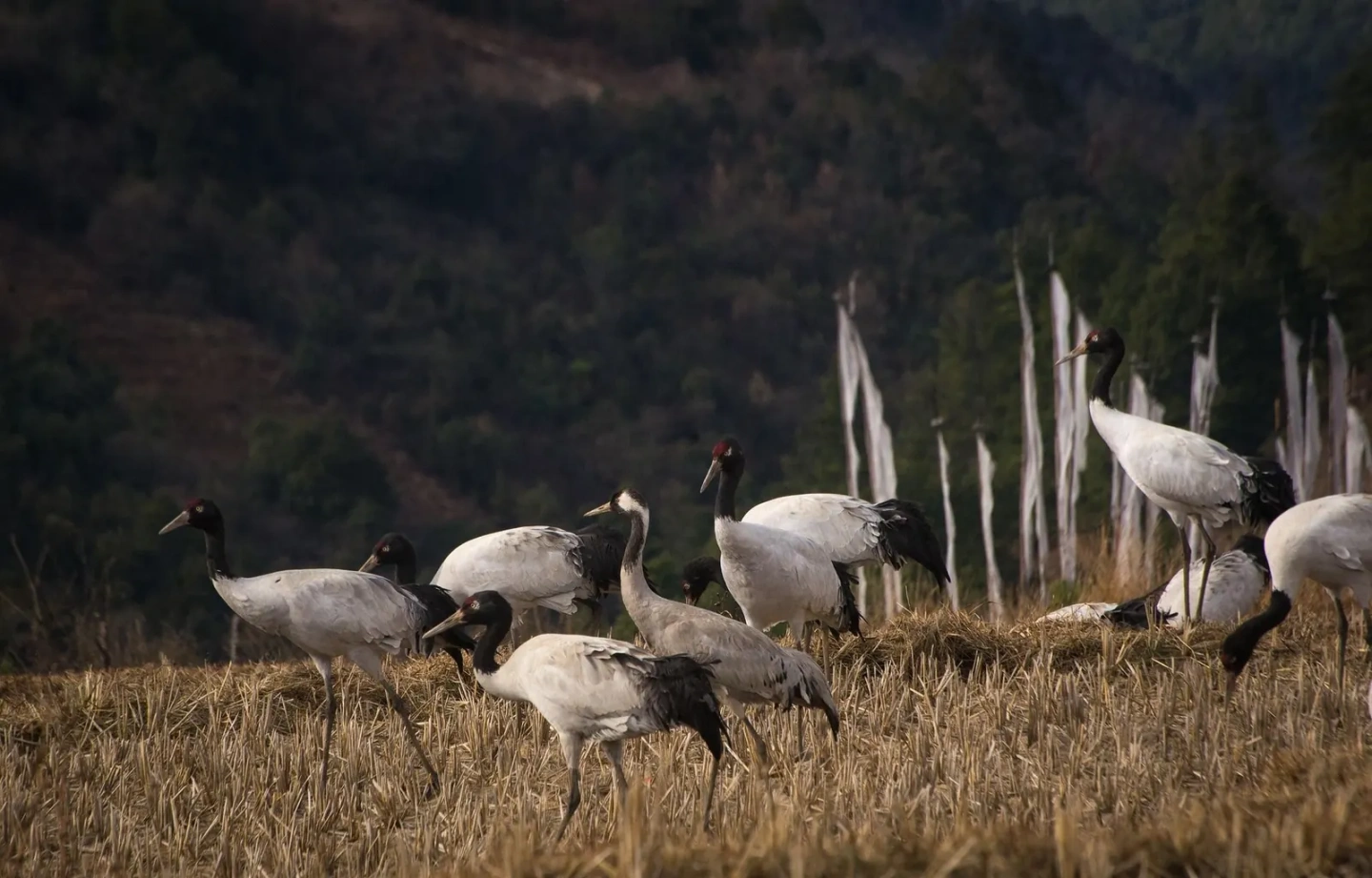
The black-necked crane is the only crane species that lives and breeds on the high Tibetan plateau. In autumn, part of the population flies south over the mountains to spend the winter in a few sheltered valleys, and Phobjikha is the best known of these in Bhutan. The birds usually arrive from late October into November and leave again around February or March. The species is listed as vulnerable, so every wintering site matters.
In Bhutan the cranes carry spiritual as well as ecological meaning. They appear in folk songs, and many Bhutanese see them as heavenly birds. According to local tradition, the cranes circle Gangtey Goenpa when they arrive and again before they leave, as if paying their respects. Whether or not you see that happen, you will notice how gently people in Phobjikha speak about them.
The festival grew out of this respect. It gives the community a day to celebrate the birds, and it helps link conservation with local pride and livelihoods, so that protecting the cranes is something the valley owns rather than something imposed from outside.
How to get to Phobjikha for the festival
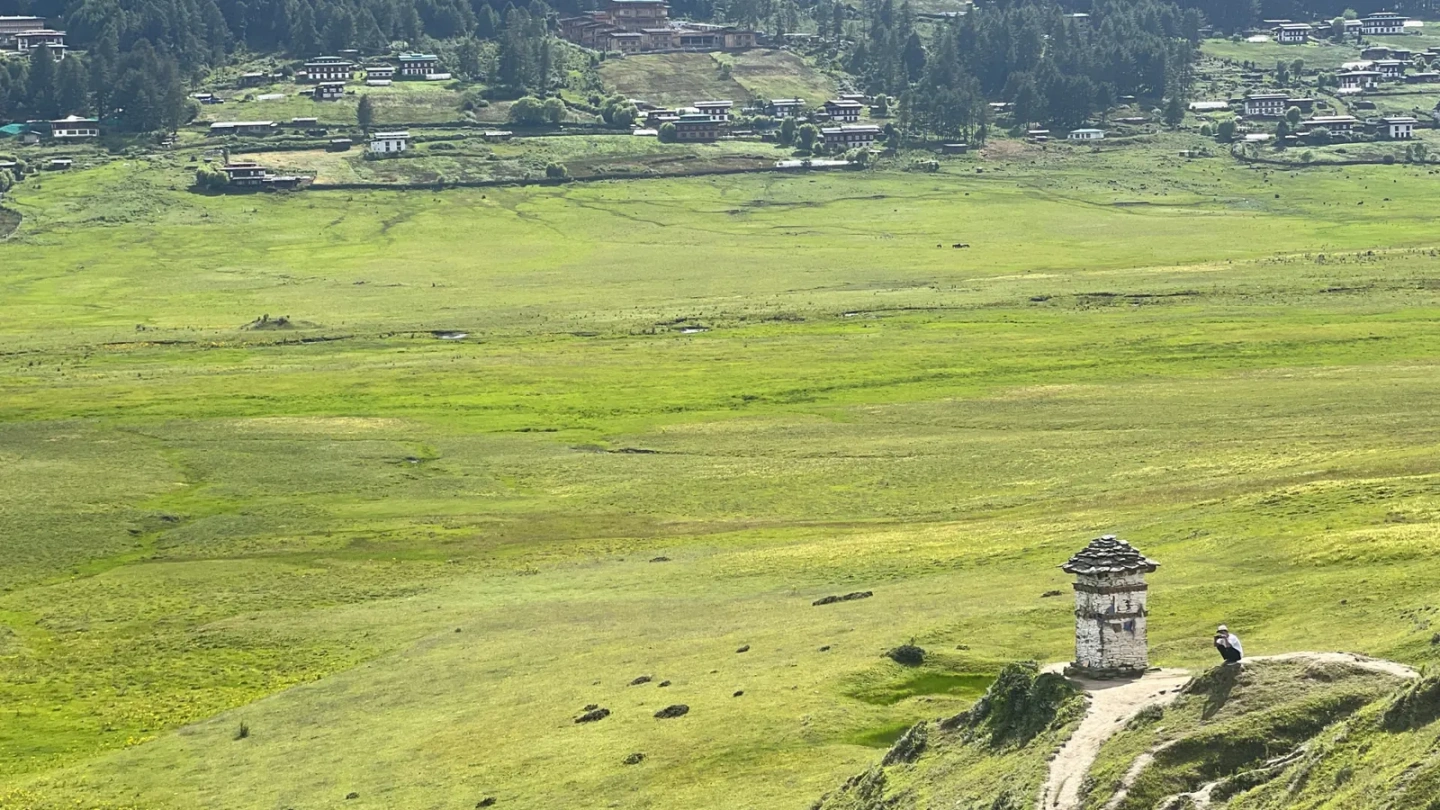
Phobjikha lies in Wangdue Phodrang district, in the centre of Bhutan. Most travellers fly into Paro, spend a day or two in Thimphu, then drive east over Dochula Pass and down through Wangdue before climbing into the valley. The drive from Thimphu takes about 5 to 6 hours, with stops for photos, tea and lunch. Roads in the mountains are winding, so it is a full travel day, not a quick hop.
A licensed guide is required for travel beyond Thimphu and Paro under current rules, and your guide also arranges the route permits you need along the way. Our car with driver service and licensed guides handle all of this for you.
Because rooms in Phobjikha are limited and the festival draws visitors on a single date, we recommend arriving the day before (10 November) and staying at least two nights. That gives you time for the Gangtey Nature Trail and the crane information centre as well as the festival itself.
Best time to see the cranes
The festival is fixed on 11 November, but crane watching is good from about mid-November right through to February, when most birds are settled in the valley. Early morning and late afternoon are the best times, when the cranes move between their roosting sites in the marshes and the fields where they feed. Numbers vary from year to year, so treat any count you read online as a guide only.
Phobjikha sits at about 3,000 m, and November nights are cold, often below freezing. Days can be bright and crisp. Pack warm layers, a hat, gloves and a down jacket, and see our packing list for Bhutan. If you are coming from sea level, read our notes on altitude in Bhutan; the valley is high but most visitors adjust well with an easy pace.
Tips and etiquette for festival day and crane watching
- Keep your distance. Stay well back from the birds and use binoculars or a long lens. If a crane changes its behaviour because of you, you are too close.
- No drones. Drones disturb the cranes and are not appropriate here. Leave them at home or in the car.
- Stay quiet. Speak softly, avoid sudden movements and never chase or call to the birds.
- Use the hides and observation areas. The valley has viewing points and observation areas set up for this purpose. Your guide will take you to the right places.
- Stick to paths. The wetland is fragile. Do not walk into the marsh or across planted fields.
- Dress respectfully in the monastery courtyard: long sleeves and long trousers or skirts, no hats inside temple buildings. Our guide to the gho and kira explains local dress.
- Ask before photographing people, especially monks and children in costume, and follow your guide's advice about where photography is allowed.
Combining the festival with nearby sights
The crane festival fits neatly into a central Bhutan route. A popular pattern is Paro, Thimphu, Phobjikha and Punakha, finishing with the hike to Tiger's Nest back in Paro. Our 7-day Bhutan itinerary follows this shape and is easy to adjust for 11 November, while the 10-day itinerary adds time for Bumthang's temples further east.
On the way you can stop at the 108 chortens at Dochula, visit Punakha Dzong and walk through rice fields to Chimi Lhakhang. If festivals are the focus of your trip, check our Bhutan festival calendar for 2026 and 2027 and our festival tours. The Dochula Druk Wangyal Festival on 13 December is another good option for a winter visit.
Fees, permits and how we help
The Sustainable Development Fee (SDF) is currently USD 100 per adult per night (confirmed until 31 August 2027), USD 50 for children aged 6 to 11, and free for children under 6. The visa fee is USD 40. Indian nationals pay INR 1,200 per person per night. Fees and rules can change, so we always confirm the current figures for your dates.
We plan the full trip around the festival date: your route through Thimphu and Wangdue, a licensed guide, a comfortable vehicle and driver, route permits, and a warm place to stay in Phobjikha, whether a hotel or a family farmhouse. Use our trip cost calculator for a first idea of your budget, or send us your dates and we will draft an itinerary.
Planning for the crane festival? Message us on WhatsApp +975 17661648 or email [email protected]. We reply with a tailored itinerary and quote.
Frequently asked questions
When is the Black-Necked Crane Festival in 2026?
The festival is held every year on 11 November. In 2026 it falls on Wednesday 11 November. If you cannot make it this year, plan for 11 November 2027.
Where is the festival held?
It takes place in the courtyard of Gangtey Goenpa, the monastery overlooking the Phobjikha valley in Wangdue Phodrang district, central Bhutan.
How do I get to Phobjikha from Thimphu?
By road over Dochula Pass and through Wangdue. The drive takes about 5 to 6 hours with stops. A licensed guide and route permits are required, and we arrange both.
When can I see black-necked cranes in Phobjikha?
The cranes usually arrive from late October into November and leave around February or March. Mid-November to February is generally the most reliable time to see them.
Can I fly a drone to film the cranes?
No. Drones disturb the birds and are not appropriate in the valley. Use binoculars or a long lens from the observation areas instead.
How cold is Phobjikha in November?
The valley sits at about 3,000 m and nights are often below freezing. Days can be sunny and pleasant, so bring warm layers, gloves and a hat.
Do I need a guide for the crane festival?
Yes. A licensed guide is required for travel beyond Thimphu and Paro under current rules. Your guide also arranges route permits and explains the dances.
What does the trip cost?
Costs depend on your hotels, group size and length of stay. The official fees are the SDF of USD 100 per adult per night and the USD 40 visa fee, and fees can change. Our trip cost calculator gives a first estimate.









