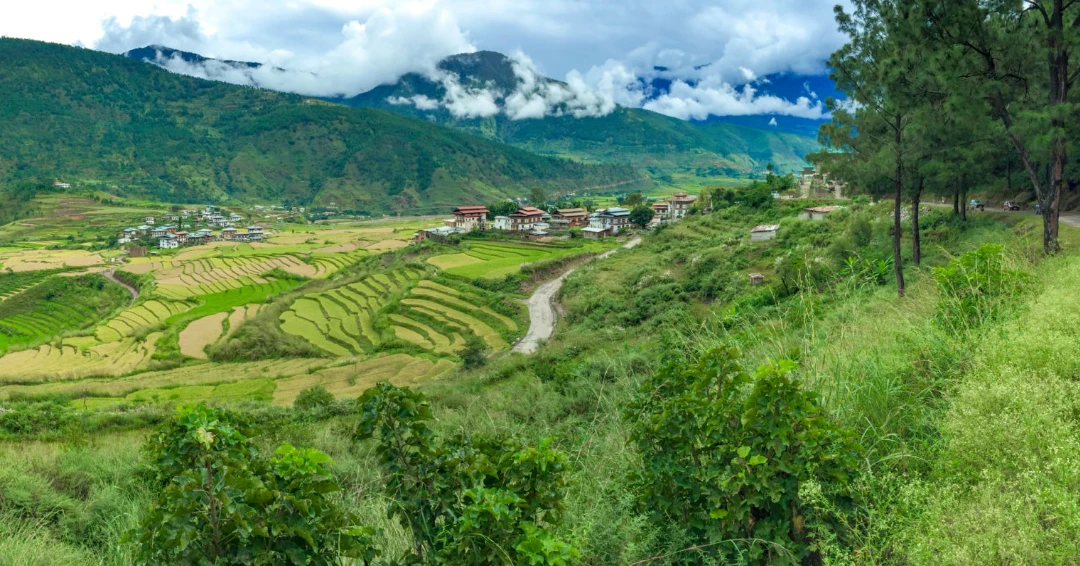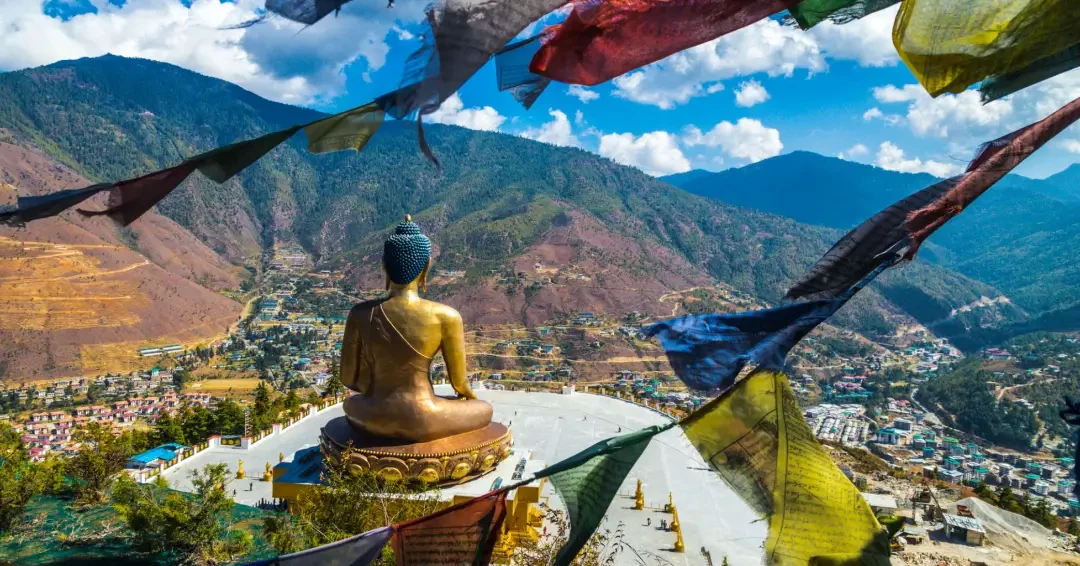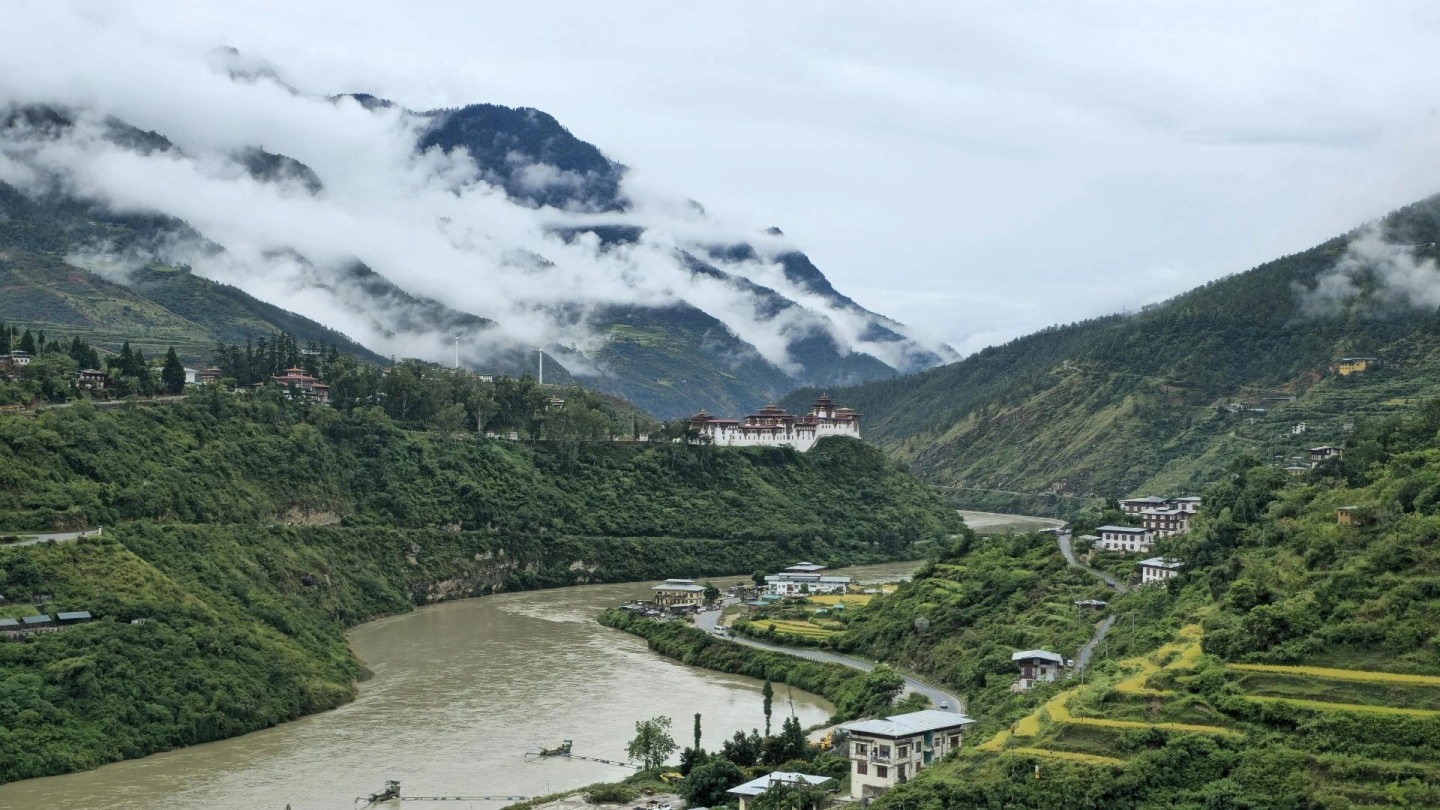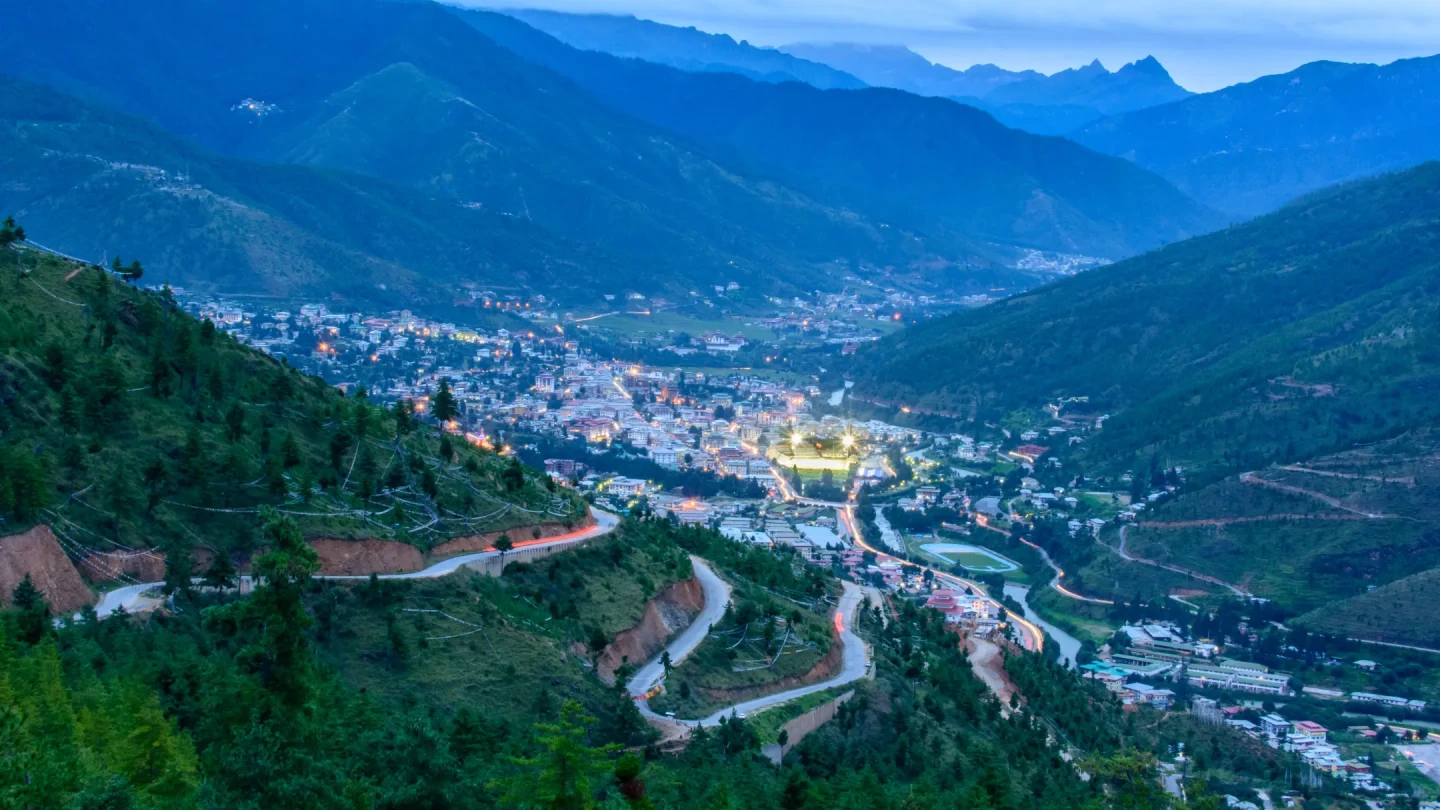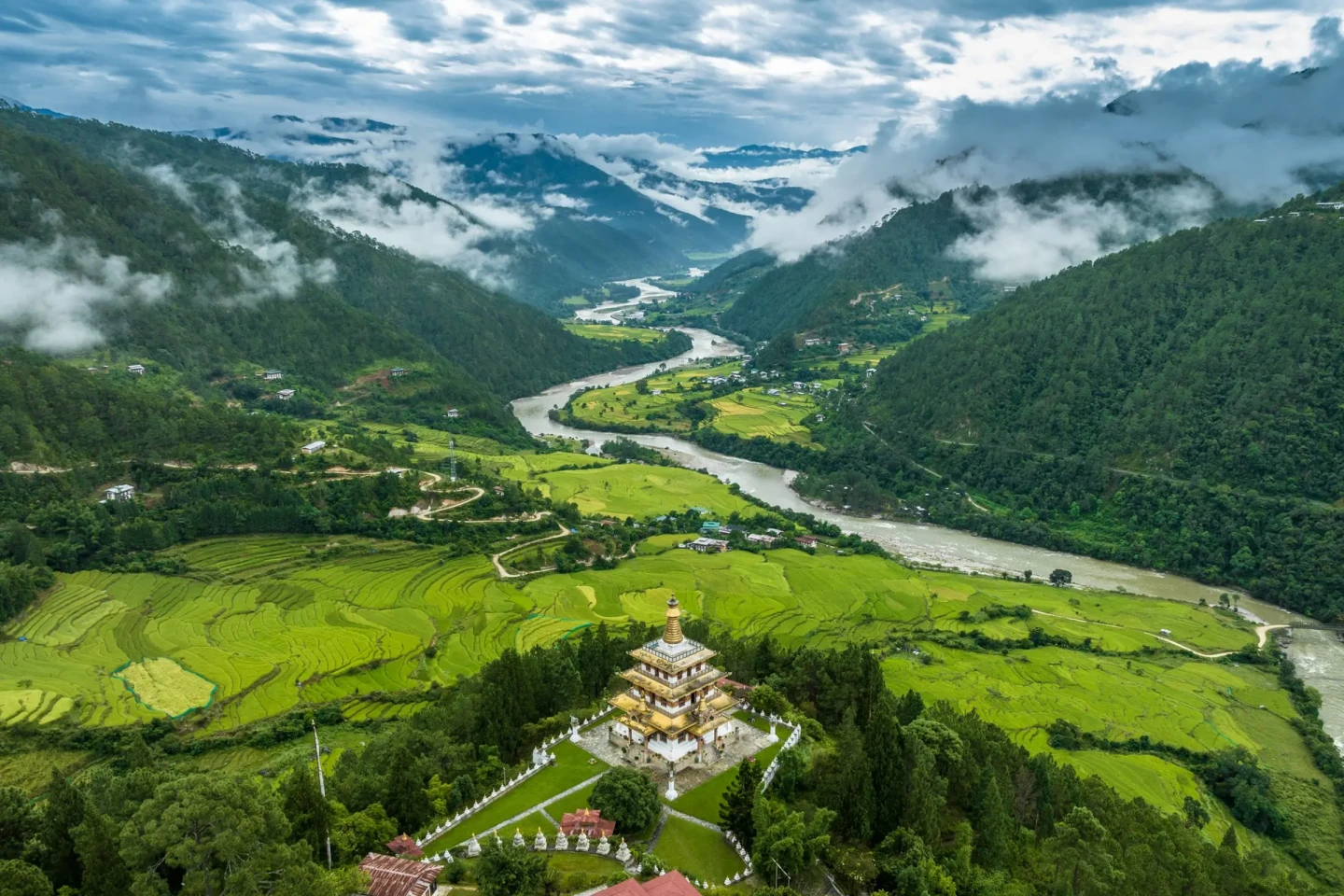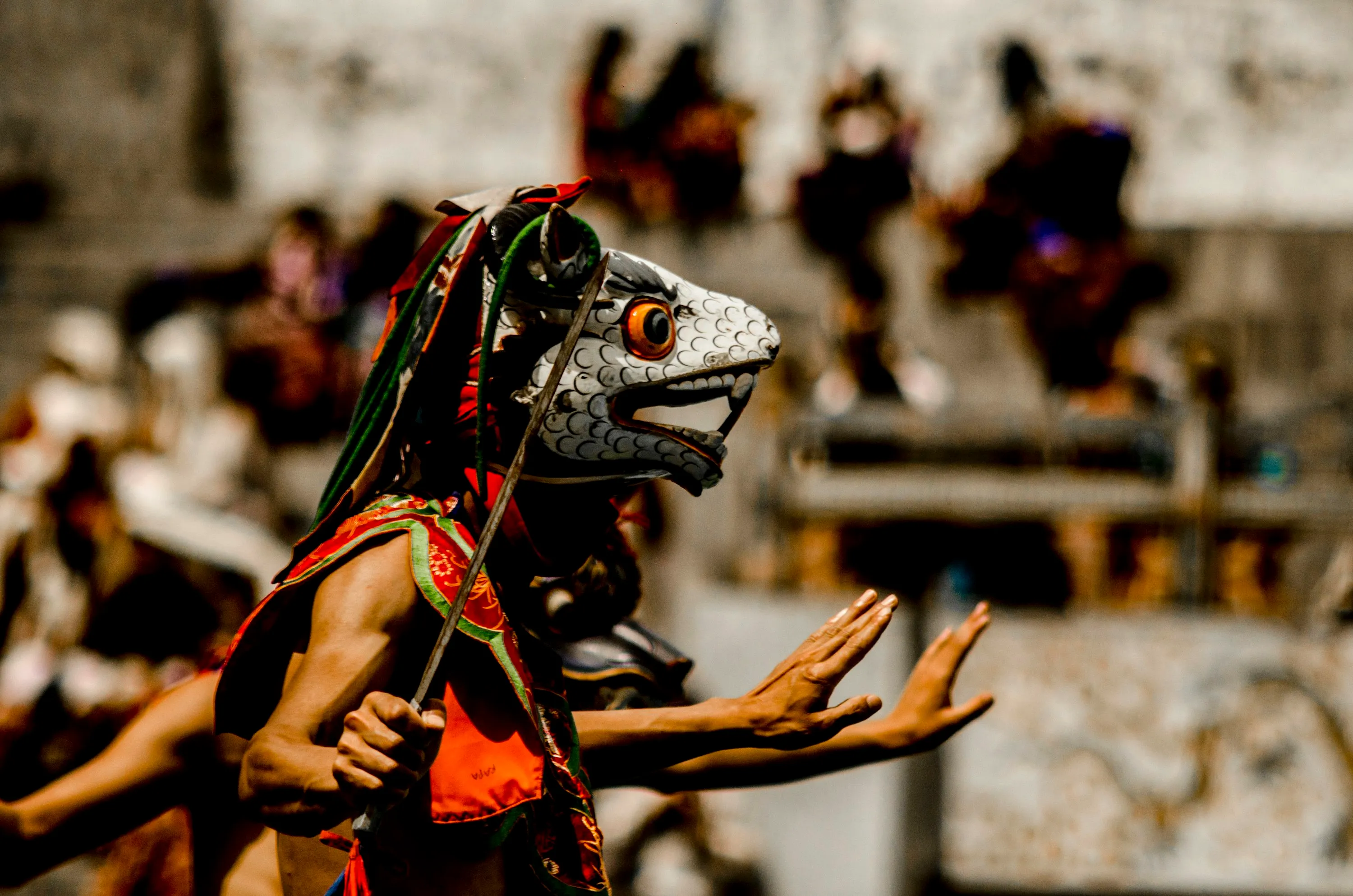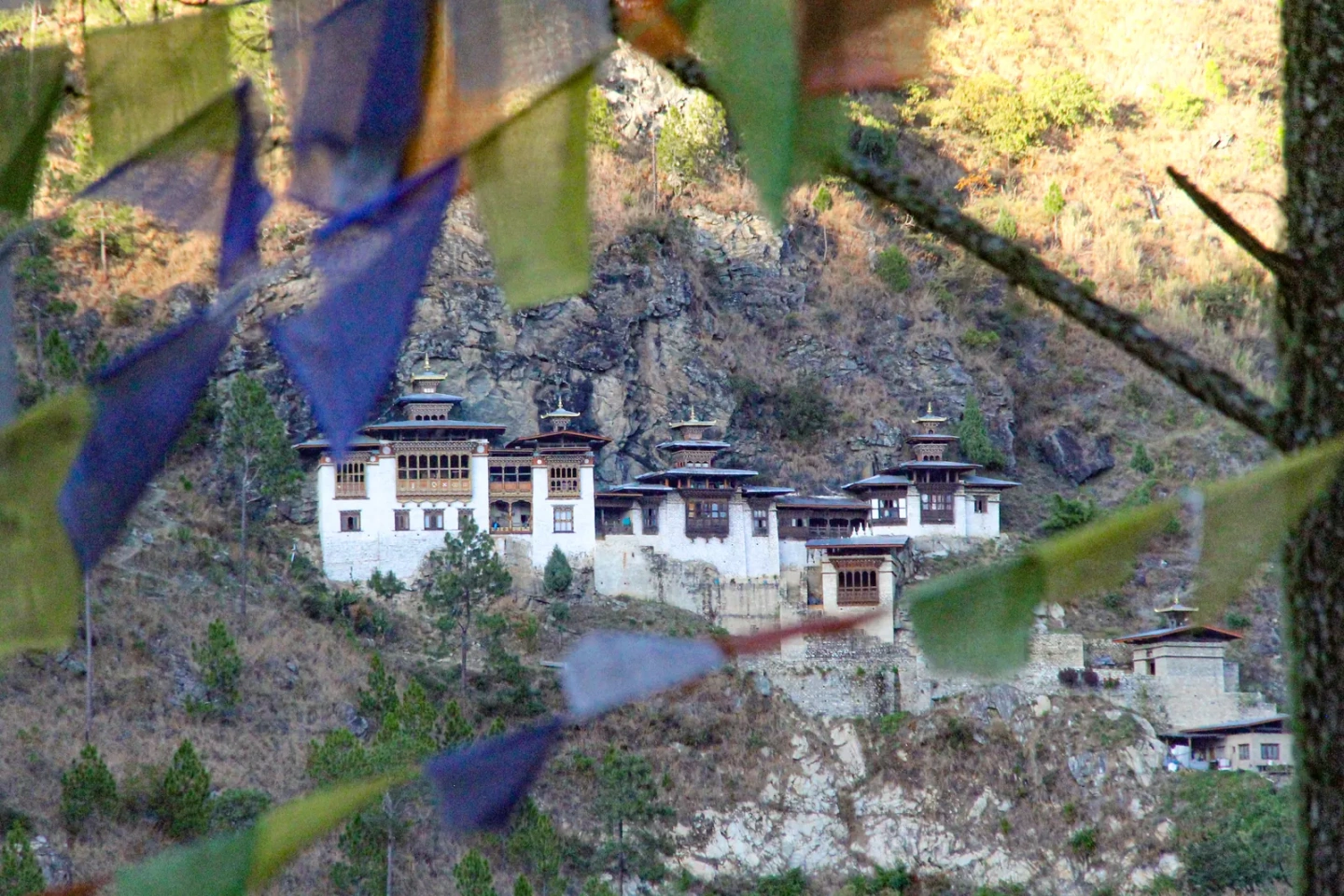
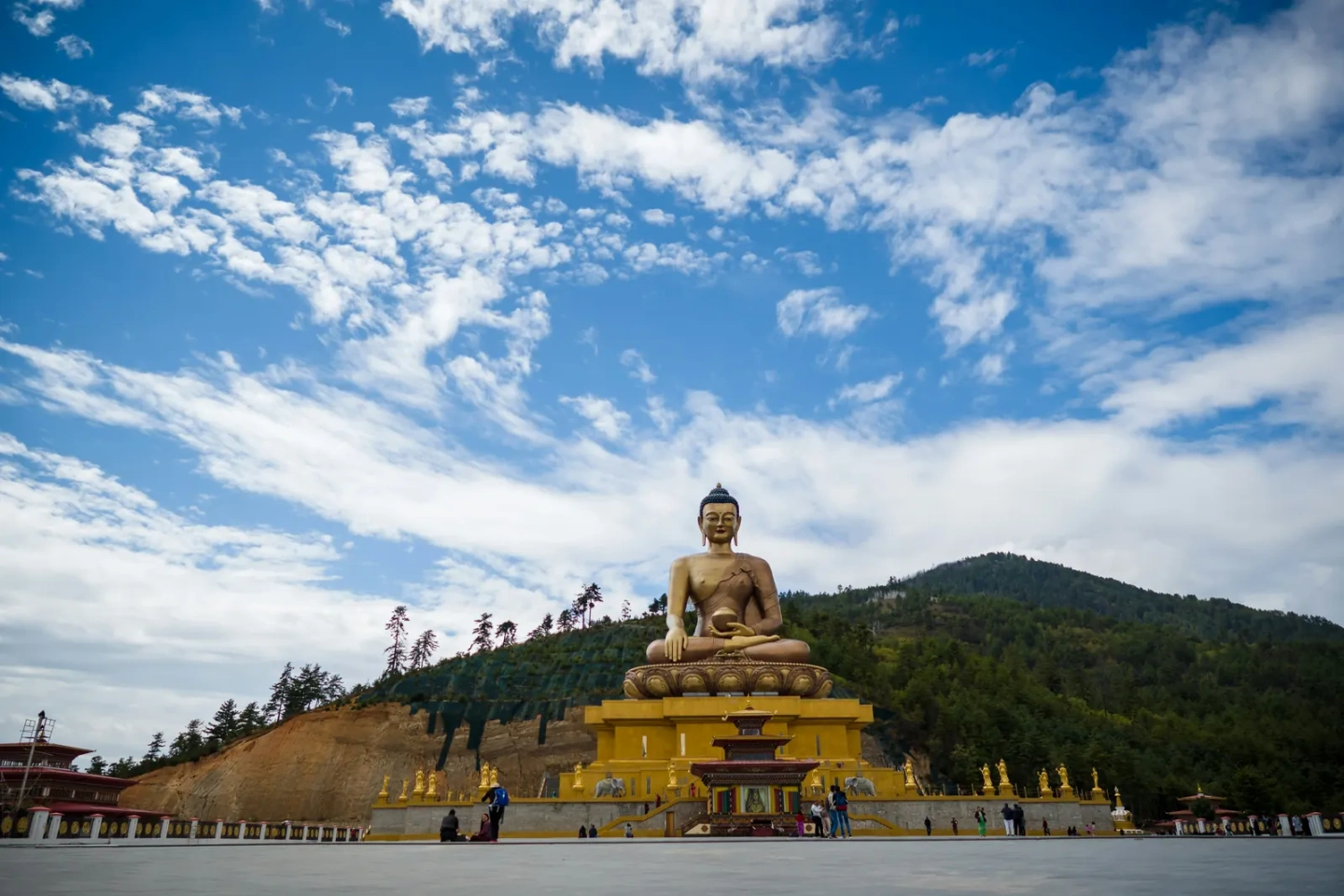





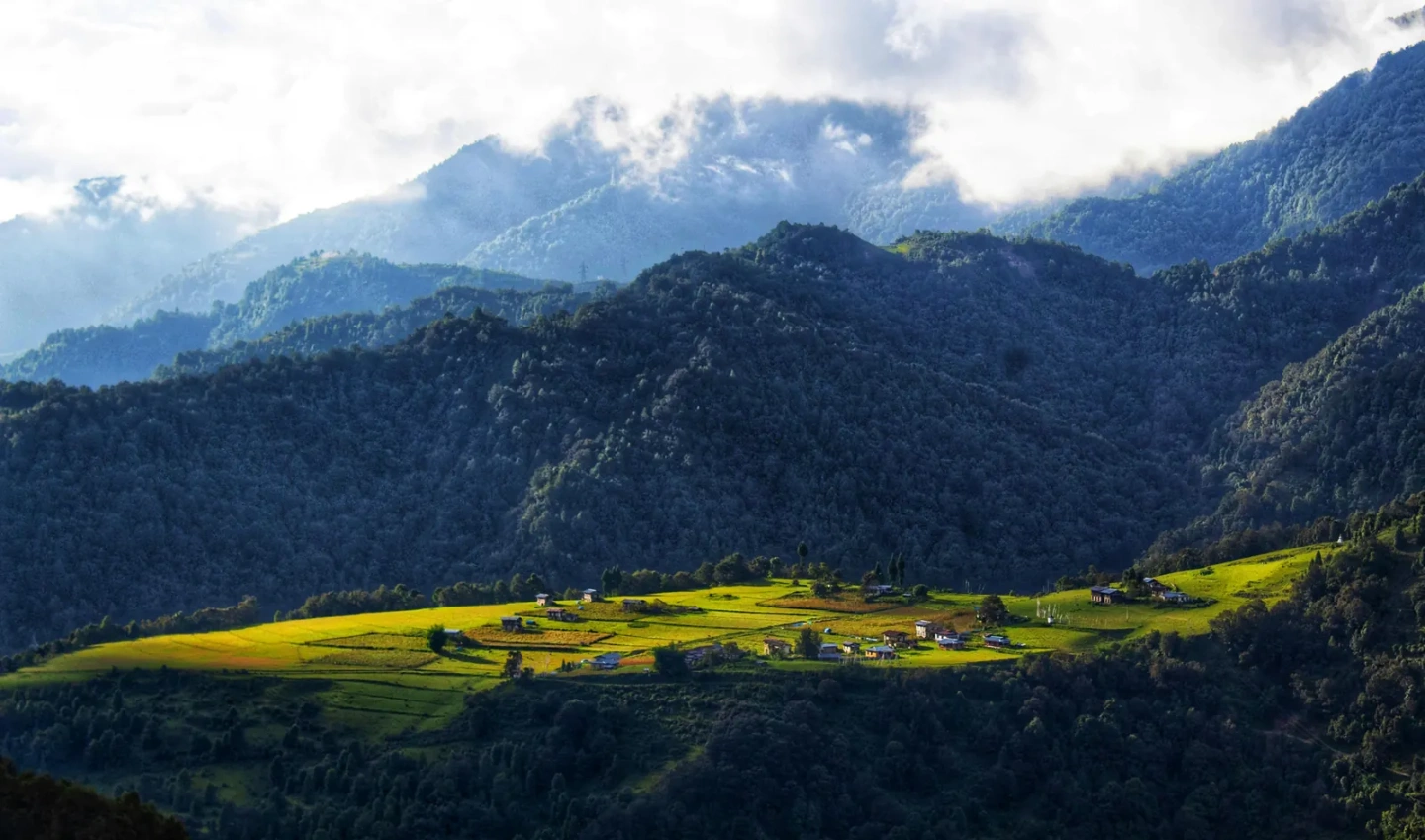
Chimi Lhakhang is a small temple on a low, rounded hill in the Punakha valley, surrounded by rice fields and farmhouses. It is dedicated to Lama Drukpa Kunley, the much-loved saint known as the Divine Madman, and it is famous across Bhutan as a place where couples come to pray for children. The walk there, through paddy fields and a village of painted houses, is one of the gentlest and most enjoyable short walks in the country.
This guide explains the temple's history and meaning, the fertility blessing, the symbols you will see in the village, how to get there, and how to visit respectfully, whatever your age or background.
What is Chimi Lhakhang?
Chimi Lhakhang stands near Lobesa, between Punakha and Wangdue Phodrang, a short drive from Punakha Dzong. It is a modest whitewashed temple with a golden roof, a courtyard lined with prayer wheels and a large old tree. A small community of monks lives and studies here. The name is often explained as meaning no dog, linked to a story in which Drukpa Kunley subdued a demon that had taken the form of a dog on this hill.
History and meaning: the Divine Madman
Lama Drukpa Kunley (1455 to 1529) was a Buddhist master from Tibet who travelled through Bhutan teaching in a most unusual way. He mocked hypocrisy and stiff religious formality, drank, sang bawdy songs and used shocking humour to jolt people out of fixed ideas and towards genuine understanding. Stories of his adventures are still told with great affection across Bhutan, and he remains one of the country's most popular saints.
The temple was built in 1499 by Ngawang Chogyel, a relative of Drukpa Kunley, on a site the saint is said to have blessed. According to legend, Drukpa Kunley subdued the demons of the region with his unconventional methods, and the hill became a place of protection and blessing.
The fertility blessing
Chimi Lhakhang is best known as a temple of fertility. Couples hoping for a child come from all over Bhutan, and increasingly from abroad, to receive a blessing from the monks. As part of the blessing, a monk gently touches visitors on the head with a ritual wooden or bone phallus, and sometimes with other objects linked to Drukpa Kunley. The ritual is short, calm and carried out with real seriousness.
Many families return after a child is born to give thanks, and some ask the monks to suggest a name for the baby. Inside the temple you may see albums of photographs and letters from grateful parents. Whether or not you are hoping for a child yourself, you are welcome to receive a general blessing. Your guide can explain the ritual and help you take part respectfully.
Understanding the symbols in the village
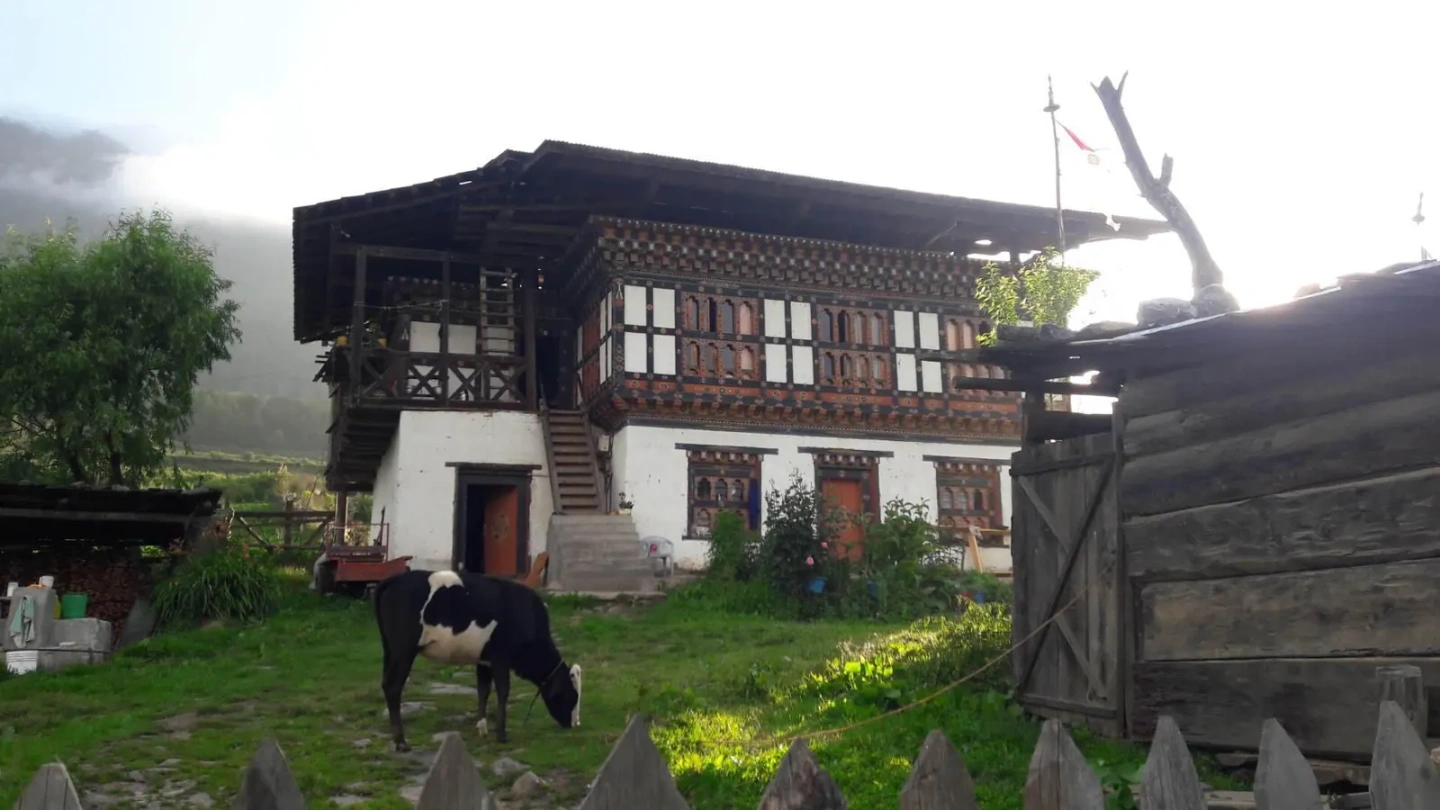
As you walk through the village near the temple, you will notice phallus paintings on the walls of houses and carved wooden phalluses hanging from roof corners. Visitors are sometimes surprised, but in Bhutan these images are protective symbols, not jokes. They are linked to Drukpa Kunley's teachings and are believed to ward off evil spirits, gossip and bad luck, and to bring fertility and good fortune to the household.
You will see the same symbols in other parts of rural Bhutan, though they are especially common around Chimi Lhakhang. It helps to see them as Bhutanese people do: as an everyday part of the country's folk religion, treated with good humour but also with respect. Families travelling with children usually find that a simple explanation works well: these are lucky charms that keep the house safe.
How to visit
The temple is reached on foot. From the road near Sopsokha village, a footpath leads through rice fields and past farmhouses, across a small stream and up a gentle rise to the temple. The walk takes about 20 to 30 minutes each way at an easy pace and is suitable for most ages. Small shops along the path in Sopsokha sell handicrafts and wooden souvenirs.
A licensed guide is required for travel beyond Thimphu and Paro and for most sightseeing in Bhutan under current rules. Your guide will arrange the visit, explain the stories behind the temple and help with the blessing. Our car and driver service will drop you at the start of the path and meet you on the other side if you prefer a one-way walk.
Inside the temple, the main statue is of Drukpa Kunley himself, alongside images of the Buddha and other saints. The atmosphere is calm and friendly, and monks are usually happy to answer questions through your guide. Allow around an hour for the round trip walk and the visit.
Best time to visit
Chimi Lhakhang can be visited throughout the year. The rice fields change colour with the seasons: freshly planted and bright green in early summer, deep green in the monsoon, and golden in autumn before harvest. Spring and autumn bring the most comfortable walking weather. The Punakha valley is lower and warmer than Thimphu, so even winter days are often mild in the sunshine.
Morning and late afternoon visits are usually quieter and cooler. Your guide will fit the walk around your visit to Punakha Dzong. For seasonal detail, see our page on the best season to visit Bhutan.
Tips and etiquette
- Dress modestly: long sleeves and long trousers or a skirt, and remove hats inside the temple.
- Walk clockwise around the temple and the prayer wheels.
- Photography: photos are fine outside, but not inside the shrine. Ask before photographing monks or villagers.
- Be respectful of the symbols. Smiling is fine; mocking is not. Many villagers live here and these images have meaning for them.
- Make a small offering if you wish; your guide can show you how.
- Wear comfortable shoes for the field path, which can be muddy after rain.
- Stay on the paths and do not walk across planted rice fields.
Combining Chimi Lhakhang with nearby sights
Chimi Lhakhang is a natural part of a day in the Punakha valley. Combine it with Punakha Dzong, the Punakha suspension bridge and the walk to Khamsum Yulley Namgyal Chorten. On the drive from Thimphu you will cross Dochula Pass and its 108 chortens, and from Punakha the road continues to the Phobjikha valley, the winter home of the black-necked cranes.
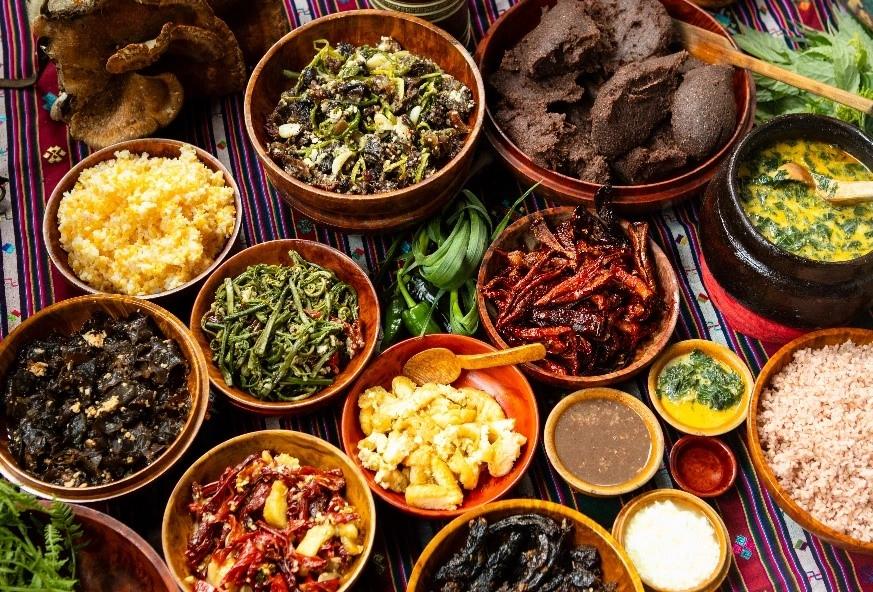
The temple is included in our 5-day, 7-day and 10-day itineraries, and it is popular with families on our family trips because the walk is short and the countryside is lovely. Couples often build their trip around a visit here; if you are planning a special occasion, see our page on wedding venues in Thimphu and Paro. You can also learn more about local life and meals in our Bhutanese food guide, as farmhouse lunches in this area are a highlight for many visitors.
Fees and how we help
The Sustainable Development Fee (SDF) is currently USD 100 per adult per night (confirmed until 31 August 2027), USD 50 for children aged 6 to 11, and free for children under 6. The visa fee is USD 40. Indian nationals pay INR 1,200 per person per night. Fees and rules can change, so we always confirm the current figures for your dates.
We plan your Punakha day so the walk to Chimi Lhakhang fits comfortably, arrange a guide who can explain the stories and the blessing sensitively, and can add a farmhouse lunch along the way. Our trip cost calculator gives a first estimate.
Thinking of visiting Chimi Lhakhang? Message us on WhatsApp +975 17661648 or email [email protected]. We reply with a tailored itinerary and quote.
Frequently asked questions
What is Chimi Lhakhang known for?
It is known as Bhutan's fertility temple. Couples come to receive a blessing from the monks when they hope to have a child.
Who was the Divine Madman?
Lama Drukpa Kunley (1455 to 1529), a Buddhist master famous for his unconventional, humorous teaching style. He is one of Bhutan's most loved saints.
When was Chimi Lhakhang built?
It was built in 1499 by Ngawang Chogyel in honour of Lama Drukpa Kunley.
How long is the walk to Chimi Lhakhang?
About 20 to 30 minutes each way through rice fields from the road near Sopsokha village. It is an easy walk for most ages.
Why are there phallus paintings on houses?
They are traditional protective symbols linked to Drukpa Kunley, believed to ward off evil spirits and bring good fortune and fertility.
Is Chimi Lhakhang suitable for children?
Yes. The walk is gentle and the countryside is lovely. Your guide can explain the symbols in a simple, family-friendly way.
Can I receive a blessing if I am not trying to have a child?
Yes. Visitors are welcome to receive a general blessing. Your guide will help you take part respectfully.