Phobjikha is a wide, bowl-shaped glacial valley on the western slopes of the Black Mountains, in Wangdue Phodrang district. At about 3,000 m, it is a place of open marshland, potato fields, farmhouses with smoking chimneys and pine-covered hills. Each winter it becomes home to the endangered black-necked cranes, which fly over the Himalaya from the Tibetan plateau to feed and roost in the valley's wetlands. For many visitors it is the quietest and most peaceful stop on their trip.
This guide covers the valley's landscape and history, Gangtey Goenpa, the cranes and the best season to see them, the Gangtey Nature Trail, where to stay, and how to visit in a way that keeps the valley as it is.
What is the Phobjikha valley?
Phobjikha is often called the Gangtey valley, after the monastery that stands on a ridge above it. Unlike the narrow river valleys of western Bhutan, Phobjikha is broad and flat at its centre, shaped long ago by glaciers. A slow stream winds through its marshes, which are the reason the cranes come here. Around the edges are small villages, farms and forest.
The valley is part of a protected landscape, and conservation and community life are closely linked here. The RSPN (Royal Society for Protection of Nature) has worked with local families for many years to protect the cranes while supporting livelihoods such as farming and small-scale tourism.
History and meaning: Gangtey Goenpa
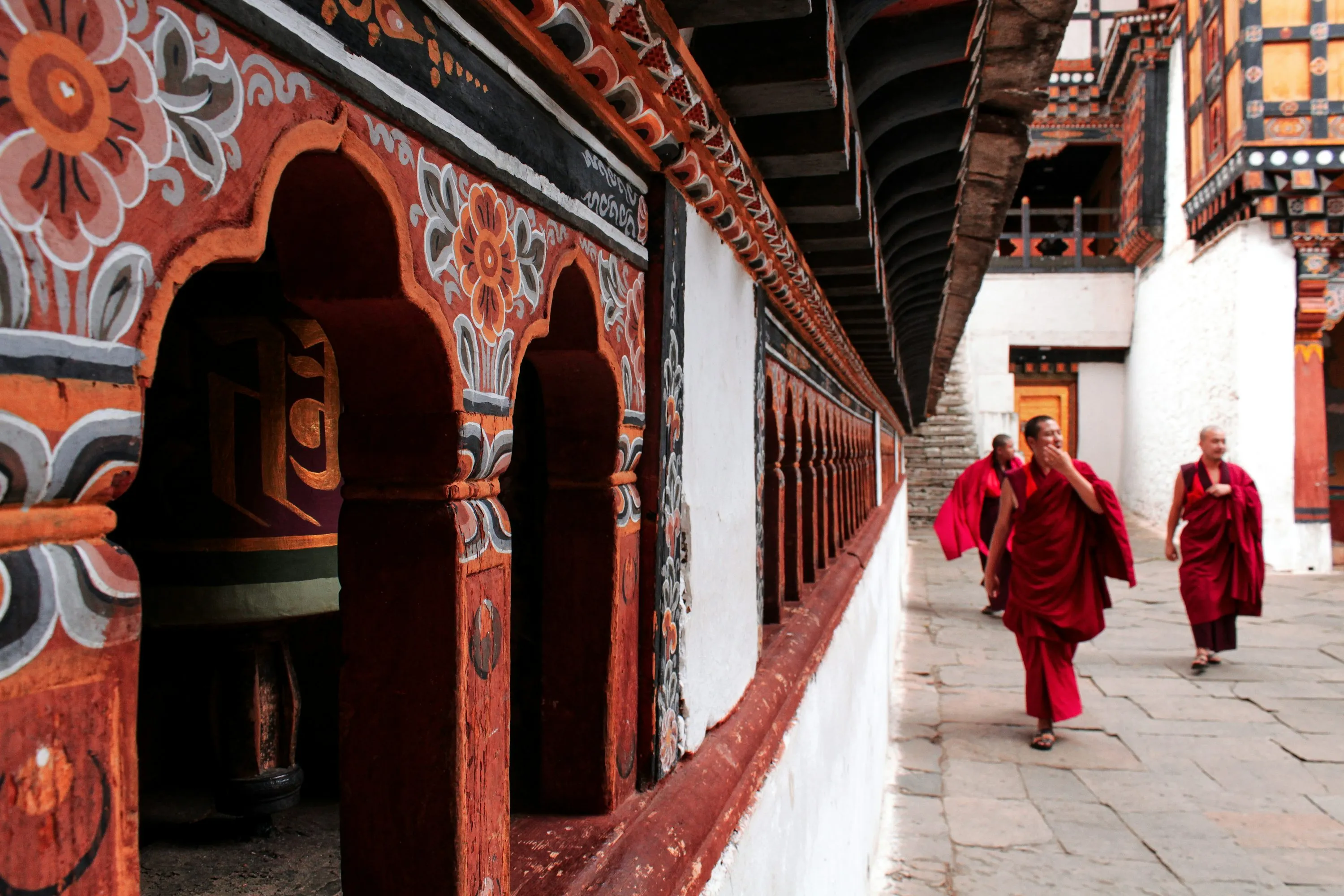
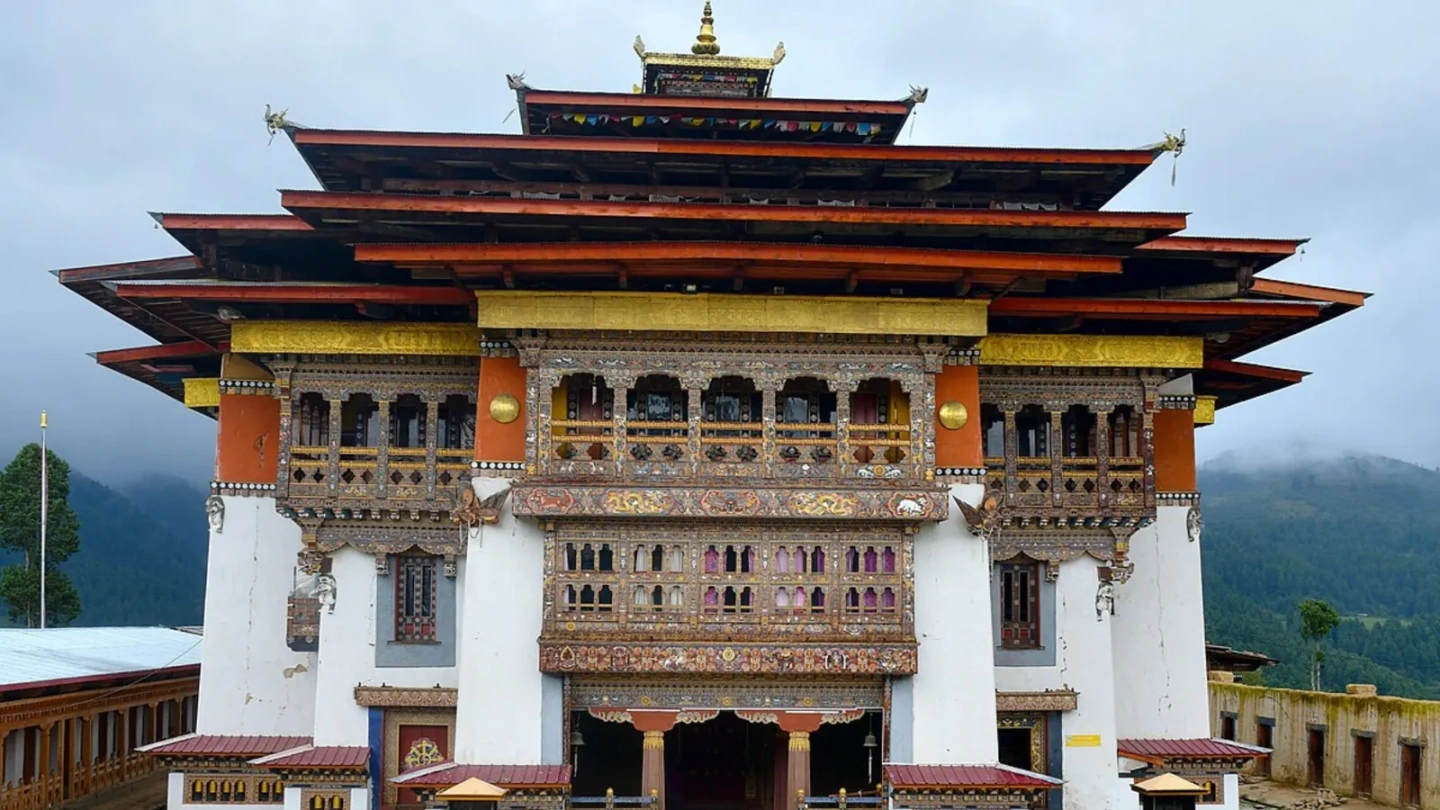
Gangtey Goenpa, the monastery on the hill above the valley, is the most important religious site in Phobjikha. It belongs to the Nyingma school of Tibetan Buddhism and was founded in 1613 by Gyalse Pema Thinley, the grandson of the great treasure revealer Pema Lingpa. It remains an active monastery with a community of monks and a school for young novices, and its spacious courtyard is where the Black-Necked Crane Festival is held each November.
The cranes themselves hold a special place in local culture. They feature in folk songs and are widely seen as heavenly birds. According to local tradition, when the cranes arrive in autumn they circle Gangtey Goenpa three times before landing, and they do the same before leaving in spring.
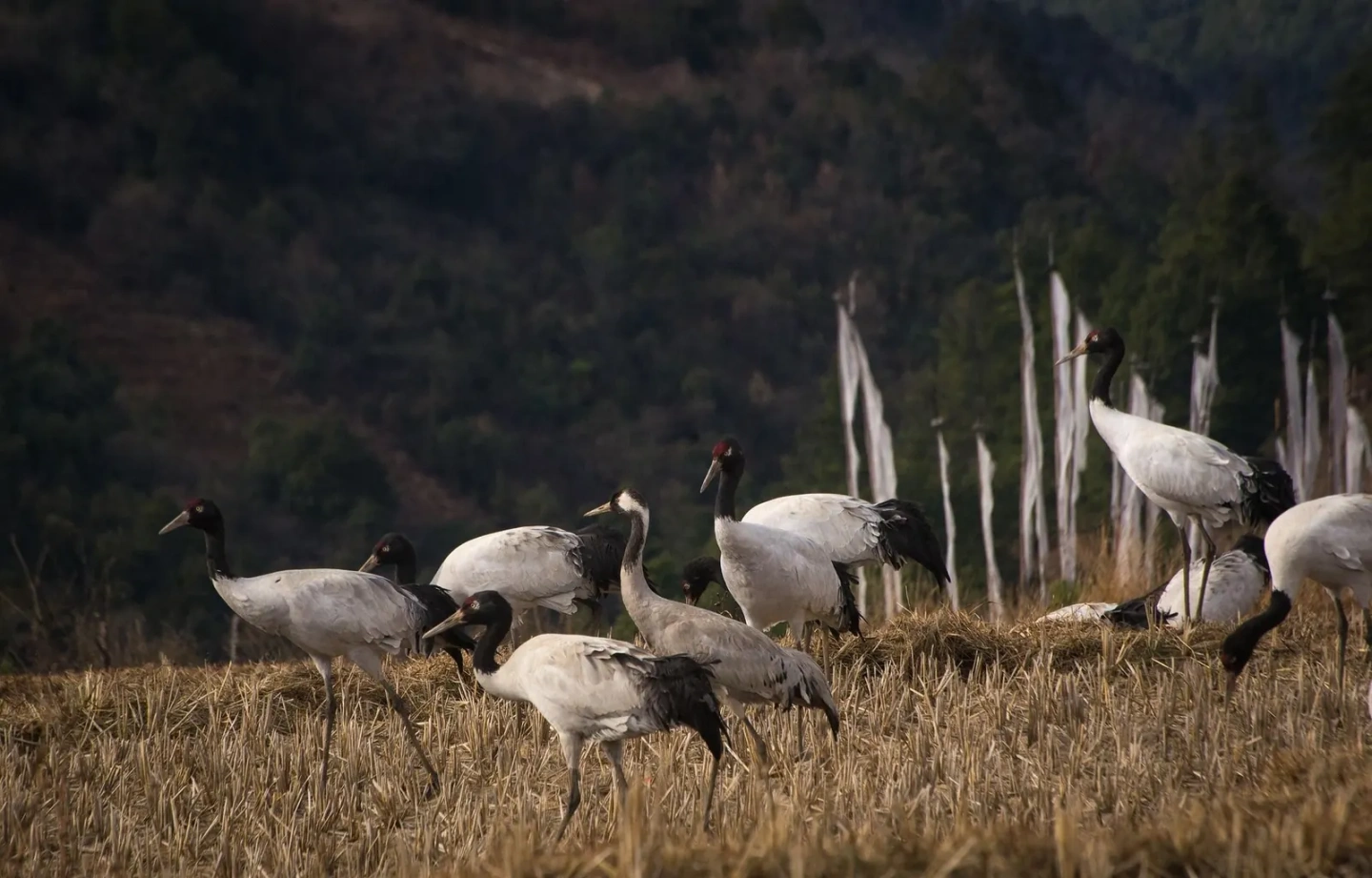
The black-necked cranes of Phobjikha
The black-necked crane is the only crane that breeds on the high plateau of Tibet and the surrounding regions. It is listed as vulnerable, so its wintering grounds are important for the species' survival. In Phobjikha, the cranes usually arrive from late October into November and stay until around February or March, before flying north again to breed.
During the day the cranes feed in the fields and marshes, picking at fallen grain, roots and small creatures. At dusk they gather to roost in the shallow wetland, where they are safer from predators. Seeing them glide down into the valley in the late afternoon, calling to each other, is a moment many visitors remember.
The valley has made real efforts to protect them. For example, Phobjikha has put power cables underground in sensitive areas so that overhead lines do not endanger the birds in flight. Visitors can help by following simple rules for watching the cranes, listed below.
How to visit Phobjikha
Phobjikha is reached by road from Thimphu over Dochula Pass, then down through Wangdue before climbing a side road into the valley. The drive from Thimphu takes about 5 to 6 hours with stops, so it is usually a full day of travel, or you can break the journey with a night in Punakha.
A licensed guide is required for travel beyond Thimphu and Paro under current rules, and your guide arranges the route permits you need. Our car and driver and guide service take care of the logistics.
Things to do in the valley
- Black-Necked Crane Information Centre: run by the RSPN, with displays about the cranes and the valley's ecology. It usually has observation facilities with telescopes or binoculars for viewing the birds without disturbing them.
- Gangtey Nature Trail: a gentle walk of a couple of hours that starts near Gangtey Goenpa, passes through villages, pine forest and open meadows, and offers lovely views over the crane roosting areas.
- Gangtey Goenpa: the monastery and its courtyard, with views over the whole valley.
- Village walks and farm visits: wander through the farming settlements and see how families live and work at this altitude.
Best time to visit
For the cranes, the best period is from about mid-November to February, when most birds have settled in the valley. The Black-Necked Crane Festival on 11 November each year is a good time to visit for culture as well as nature. Check our festival calendar for other events.
Phobjikha is lovely in other seasons too. Spring brings fresh green to the meadows and rhododendrons to the hills, summer is green and wet, and autumn has clear skies before the cranes arrive. Winters are cold, with frosty nights and occasionally snow, so warm clothing is essential. See our guide to the best season to visit Bhutan.
Where to stay: hotels, farmhouses and homestays
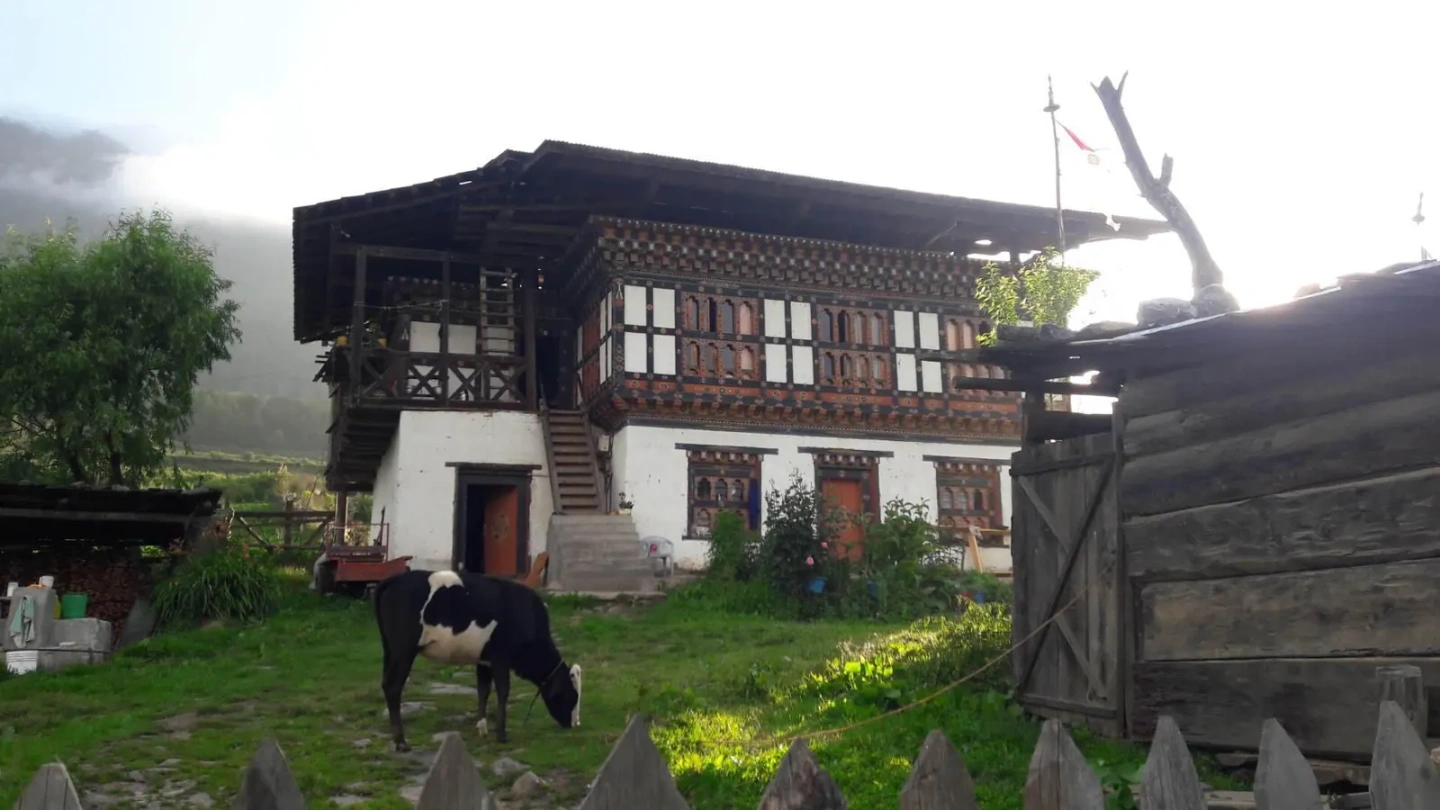
The valley has a range of places to stay, from comfortable lodges and hotels to simple farmhouses and homestays run by local families. A homestay is a wonderful way to experience rural life: you sit by the wood stove, share home-cooked meals and perhaps try a traditional hot stone bath. Rooms are limited, especially around the festival, so book early.
Most rooms in Phobjikha are heated with wood stoves or electric heaters, and many lodges provide hot water bottles at night in winter. Facilities in homestays are simpler than in hotels, but the warmth of the welcome makes up for it. Let us know about any dietary needs in advance, as fresh supplies in the valley can be limited.
Tips and etiquette for crane watching
- Keep your distance and use binoculars or a long lens.
- No drones anywhere near the cranes.
- Stay quiet and avoid sudden movements.
- Do not walk into the marshes or across fields where cranes are feeding.
- Use the observation areas and follow your guide's lead.
- Dress warmly; mornings and evenings are very cold at this altitude.
- Respect the monastery: modest dress, no hats inside, no photography in shrine rooms.
Combining Phobjikha with nearby sights
Phobjikha fits well into central Bhutan routes. Combine it with Punakha Dzong, the walk to Chimi Lhakhang and the views from Dochula Pass. For a longer trip, continue east through Trongsa to the temples of Bumthang. Our 7-day and 10-day itineraries include the valley, and both end with the hike to Tiger's Nest in Paro.
Fees and how we help
The Sustainable Development Fee (SDF) is currently USD 100 per adult per night (confirmed until 31 August 2027), USD 50 for children aged 6 to 11, and free for children under 6. The visa fee is USD 40. Indian nationals pay INR 1,200 per person per night. Fees and rules can change, so we always confirm the current figures for your dates.
We arrange your stay in Phobjikha, whether a lodge or a family farmhouse, plan the drive and route permits, and give you time for the nature trail and the crane centre. Our trip cost calculator gives a first estimate.
Want to see the cranes in Phobjikha? Message us on WhatsApp +975 17661648 or email [email protected]. We reply with a tailored itinerary and quote.
Frequently asked questions
Where is the Phobjikha valley?
Phobjikha is in Wangdue Phodrang district in central Bhutan, at about 3,000 m. It is about 5 to 6 hours' drive from Thimphu with stops.
When can I see black-necked cranes in Bhutan?
The cranes usually arrive in Phobjikha from late October into November and leave around February or March. Mid-November to February is the most reliable period.
Is Phobjikha the same as the Gangtey valley?
Yes. The valley is often called Gangtey after Gangtey Goenpa, the monastery on the ridge above it.
Who founded Gangtey Goenpa?
It was founded in 1613 by Gyalse Pema Thinley, the grandson of Pema Lingpa. It belongs to the Nyingma school.
How long is the Gangtey Nature Trail?
It is a gentle walk of a couple of hours through villages, forest and meadows, with views over the crane roosting areas.
Can I stay in a farmhouse in Phobjikha?
Yes. The valley has farmhouse homestays as well as lodges and hotels. Rooms are limited, especially around the November festival.
How many nights should I spend in Phobjikha?
At least one night, but two nights give you time for the nature trail, the crane centre and the monastery without rushing.
Do I need a guide to visit Phobjikha?
Yes. A licensed guide is required beyond Thimphu and Paro under current rules, and your guide arranges route permits.