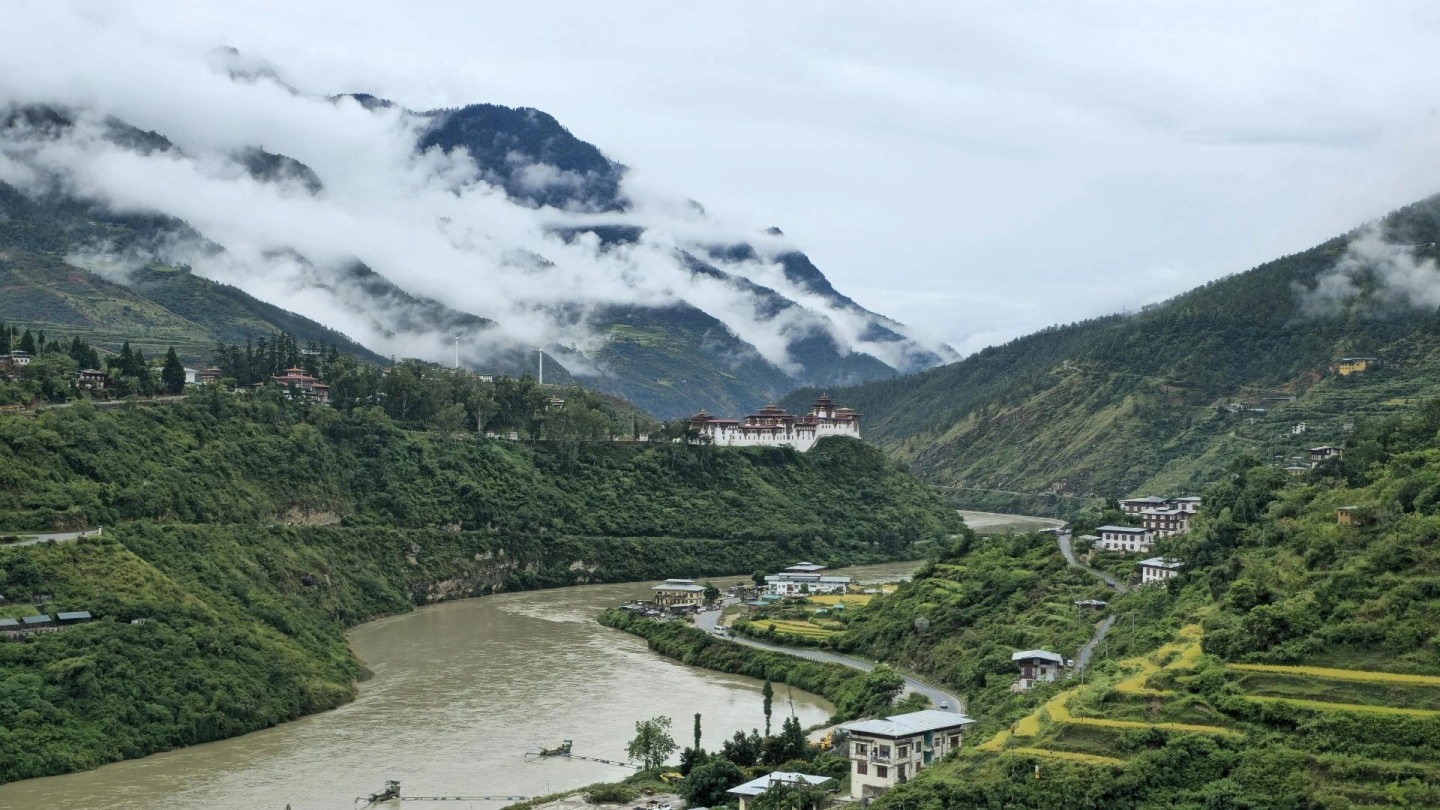





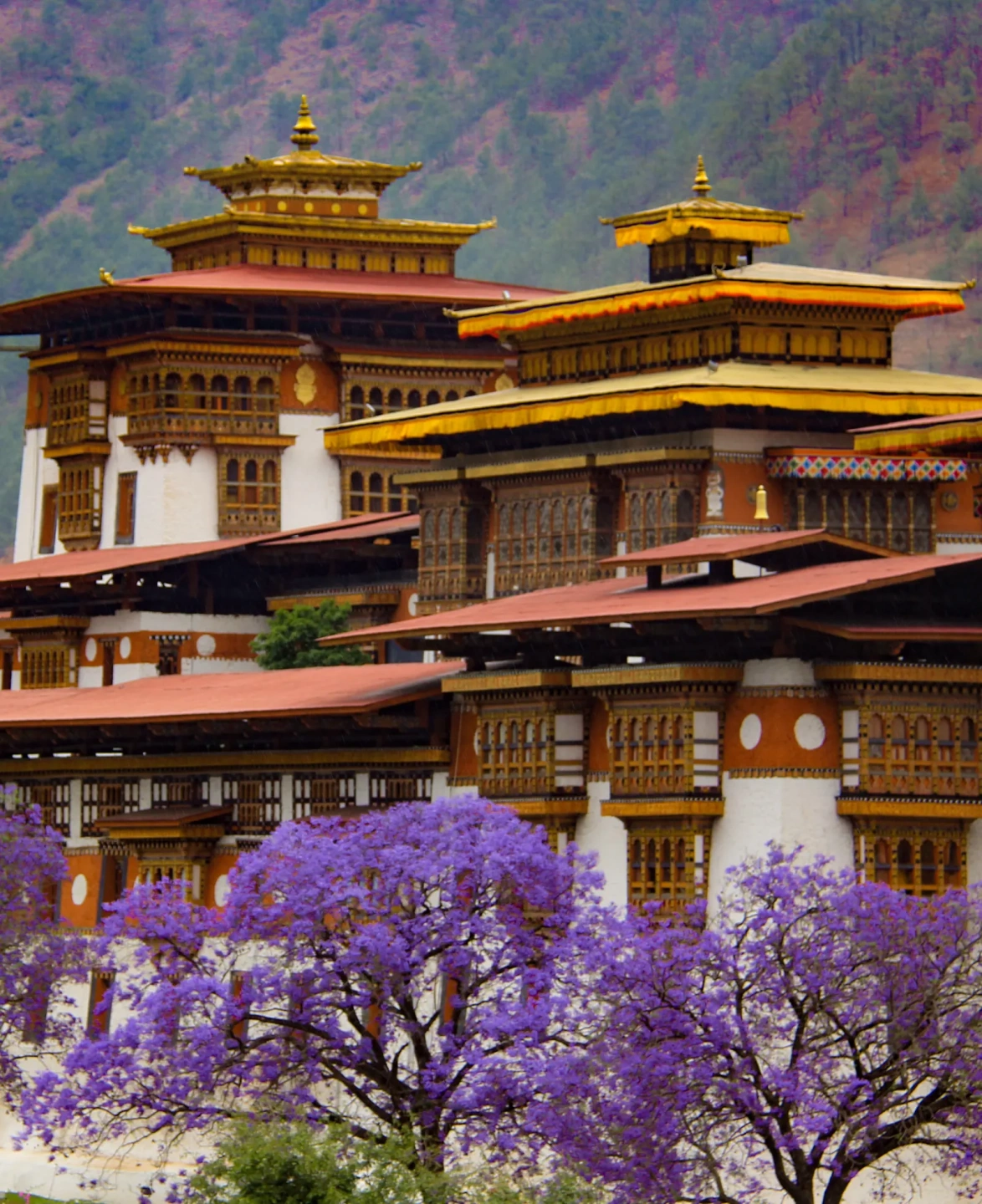
Punakha Dzong sits where two rivers meet, its whitewashed walls and red-roofed towers rising straight from the water's edge. Many travellers call it the most beautiful dzong in Bhutan, and it is hard to argue, especially in spring when the jacaranda trees around it turn soft purple. Its full name is Pungthang Dewa Chhenbi Phodrang, often translated as the palace of great happiness or bliss.
This guide covers the dzong's history, what you will see inside, the best time to visit, etiquette, and the other sights in the Punakha valley that are worth adding to your day.
What is Punakha Dzong?
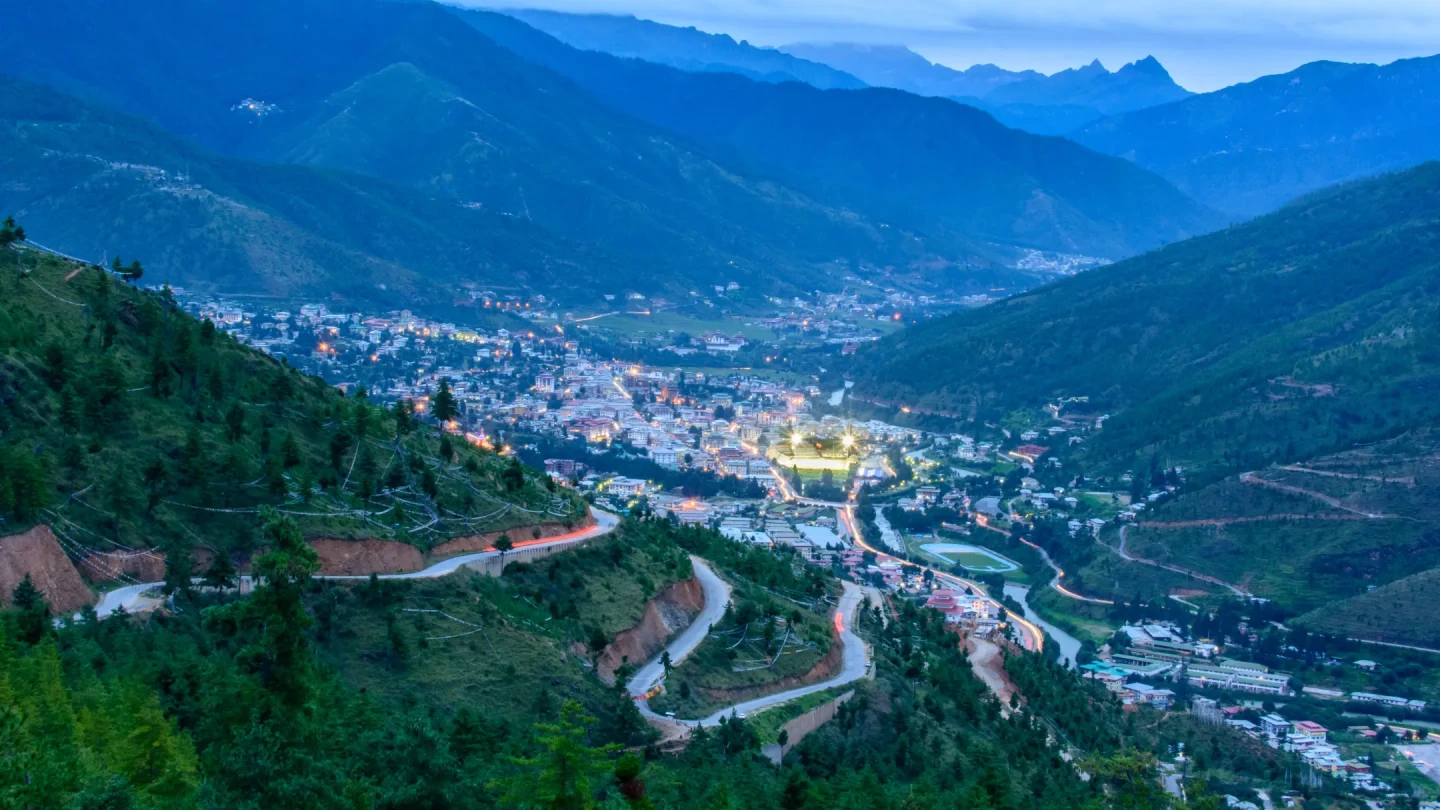
A dzong is a fortress monastery, combining a monastic community with district administration under one roof. Punakha Dzong is the second oldest and second largest dzong in Bhutan. It stands at the confluence of the Pho Chhu (the male river) and the Mo Chhu (the female river) in Punakha district, at a much lower and warmer altitude than Thimphu or Paro.
Today it houses the Punakha district administration and serves as the winter home of the Je Khenpo, the chief abbot of Bhutan, and the central monk body, who move down from Thimphu each winter to escape the cold.
History and meaning
The dzong was built in 1637 and 1638 by Zhabdrung Ngawang Namgyal, the leader who unified Bhutan as a country. According to tradition, the site was foretold by Guru Rinpoche, who predicted that a person named Namgyal would arrive at a hill shaped like an elephant's trunk. The dzong sits at the tip of that ridge.
Punakha served as Bhutan's capital and the seat of government until 1955, when the capital moved to Thimphu. Many of the great moments of Bhutanese history took place here, including the coronation of the first King in 1907. Royal weddings have also been held in the dzong, which adds to its special place in national life.
Over the centuries the dzong has faced fires, floods and an earthquake, and each time it has been repaired. The careful restoration you see today keeps the traditional style: heavy whitewashed walls, carved and painted woodwork, and courtyards linked by steep wooden stairways.
What to see inside
- The wooden bridge entrance: you cross the Mo Chhu on a traditional covered cantilever bridge and climb steep steps into the dzong.
- The courtyards: the dzong is arranged around several courtyards, one for administration and others for the monastic community.
- The Bodhi tree in the courtyard and the tall central tower (utse).
- The main assembly hall: large, richly painted, with images of the Buddha, Guru Rinpoche and the Zhabdrung. Photography is not allowed inside shrine rooms.
- Murals: painted scenes of the life of the Buddha line many walls; your guide will explain them.
How to visit
Punakha is reached from Thimphu over Dochula Pass, a scenic drive with plenty of photo stops. A licensed guide is required for travel beyond Thimphu and Paro under current rules, and your guide arranges route permits and the dzong entry. Our car with driver and licensed guide service makes the day straightforward.
The dzong is open to visitors on most days, but opening hours can change around religious events and official functions, so your guide will confirm the timing on the day. Allow at least an hour inside, more if you enjoy the murals and architecture.
Best time to visit
Punakha is pleasant for much of the year because it sits lower and warmer than western Bhutan. Spring is the favourite season: the jacaranda trees around the dzong usually bloom around April, framing the white walls in purple.
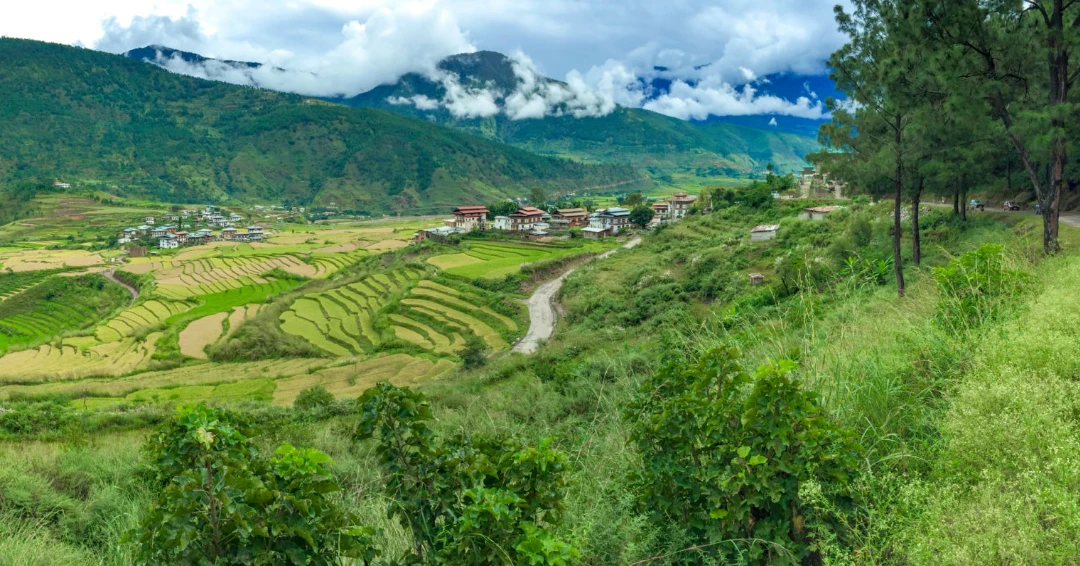
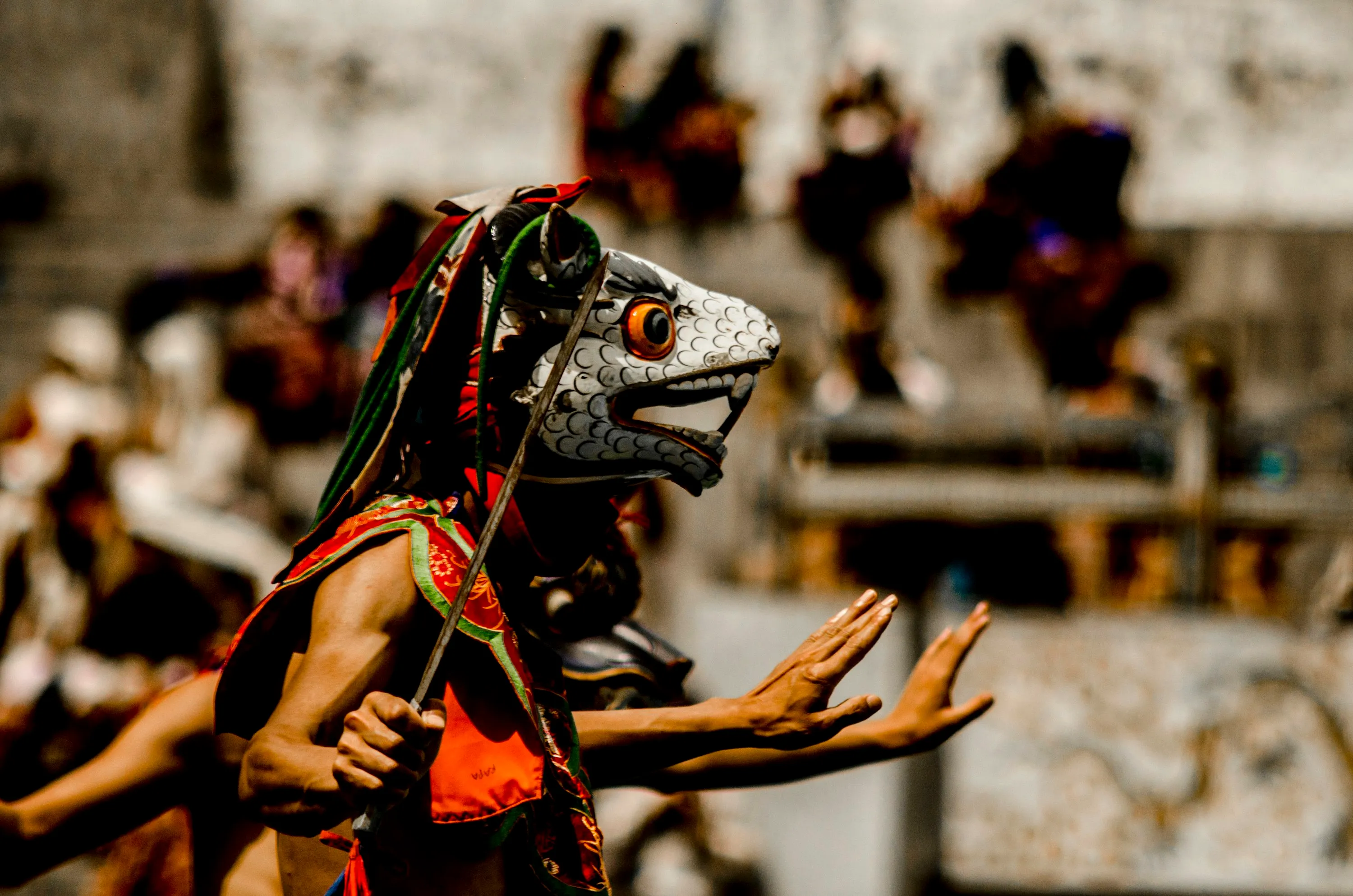
Early spring also brings the Punakha Drubchen and Punakha Tshechu, festivals held at the dzong. The Drubchen famously re-enacts a 17th-century battle scene with local militia in traditional dress. Dates follow the lunar calendar, so check our festival calendar before you book. Autumn is also excellent, with clear skies and golden rice terraces in the valley. Summer is hot and wet; winter is mild by day and the time when the monk body is in residence.
Tips and etiquette
- Dress code: long sleeves and long trousers or a long skirt. Bhutanese visitors wear national dress with a ceremonial scarf; visitors should simply dress neatly and modestly.
- No hats inside the dzong and no photography in the shrine rooms.
- Walk clockwise around chortens and prayer wheels.
- Be quiet and respectful; this is a working monastery and government office.
- Do not climb or sit on religious structures for photos.
A suggested day in Punakha
A relaxed Punakha day often looks like this. Leave Thimphu after breakfast and stop at Dochula for tea and the view. Descend into the valley for lunch, perhaps at a farmhouse, then walk through the rice fields to Chimi Lhakhang. In the afternoon, visit the dzong when the light is soft on the white walls, and finish with a short stroll across the suspension bridge. If you stay a second night, spend the next morning hiking up to Khamsum Yulley Namgyal Chorten or rafting on the Mo Chhu before continuing to Phobjikha or back to Paro.
Because Punakha is warmer than Thimphu, it also makes a good base in winter, when the valley is green while the higher valleys are frosty. Hotels range from simple riverside guesthouses to comfortable resorts on the hillsides, and we will suggest options that suit your budget and style.
Understanding the architecture
Like all dzongs, Punakha was built without written plans or nails, using rammed earth, stone and timber joined by skilled craftsmen. The design follows a strong logic: thick sloping walls for defence, a central tower housing important shrines, and separate courtyards so that civil and monastic life can run side by side. As you walk through, notice the carved window frames, the painted beams and the symbols on the walls, each of which has meaning. Your guide can explain how the building reflects the dual system of government that the Zhabdrung established.
Combining Punakha Dzong with nearby sights
Punakha has enough for a full day or two:
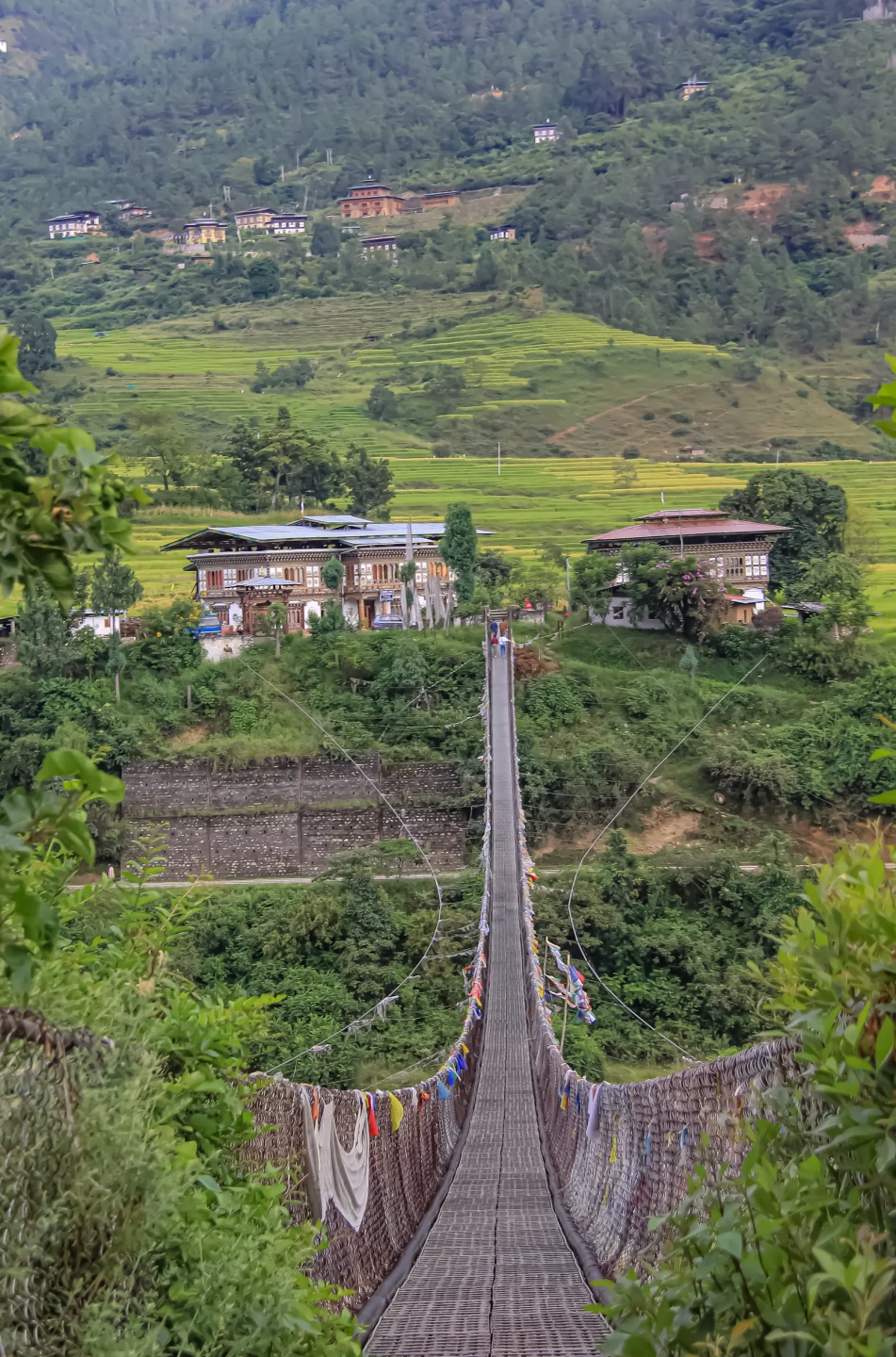
- Punakha suspension bridge: one of the longest suspension bridges in Bhutan, strung with prayer flags over the Pho Chhu, a short drive and walk from the dzong.
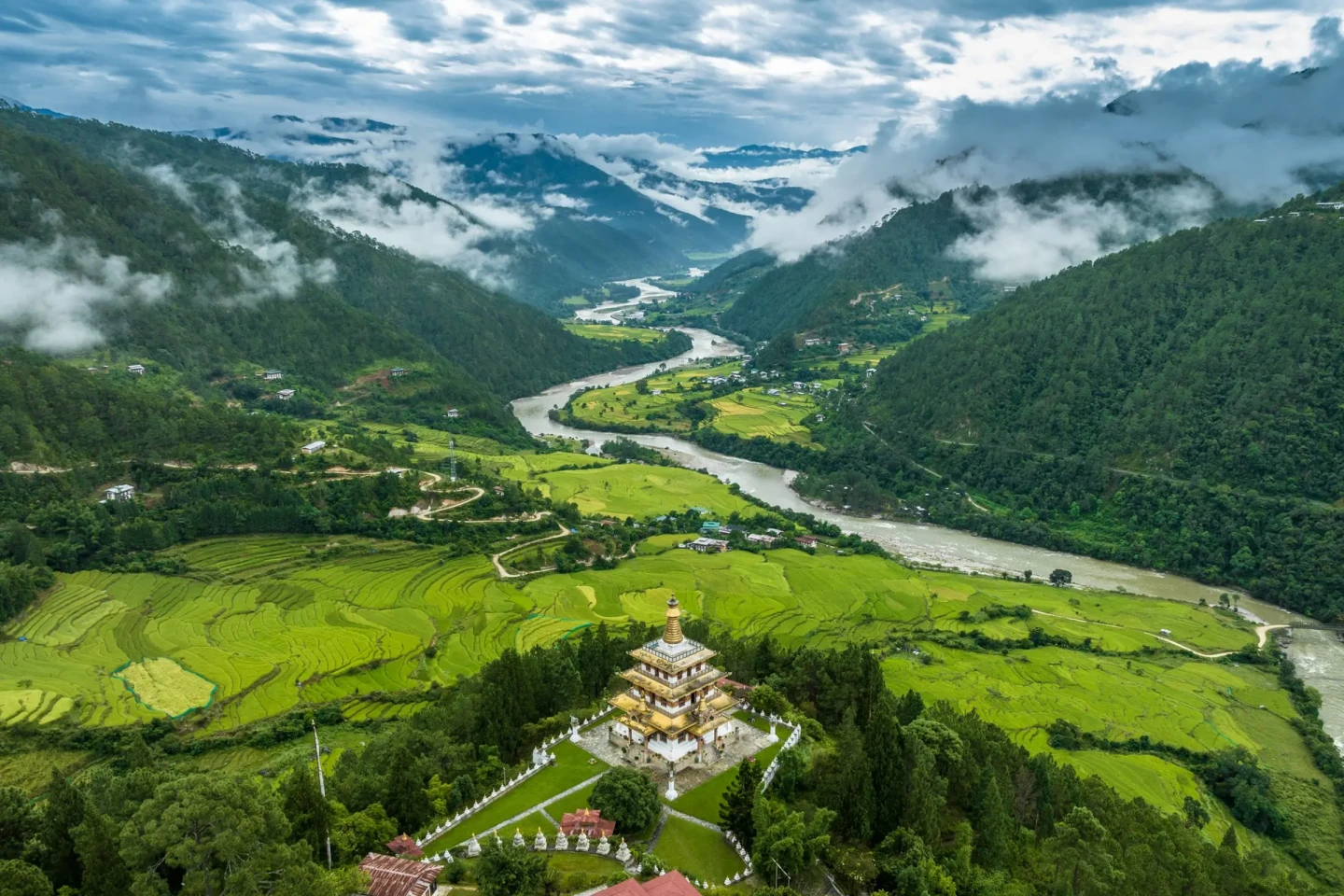
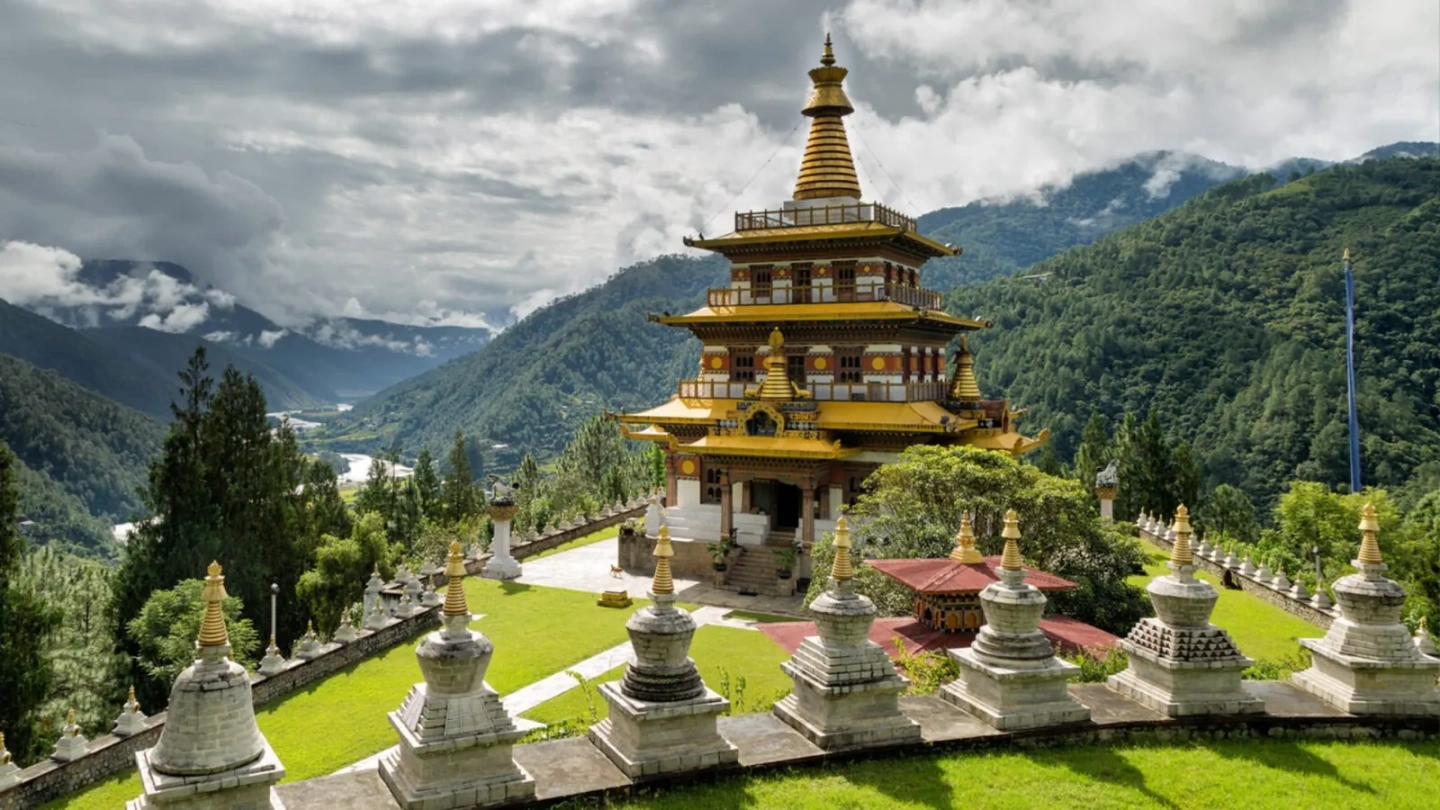
- Khamsum Yulley Namgyal Chorten: a beautiful temple on a ridge above the Mo Chhu, reached by a pleasant uphill walk through rice fields and pine forest, with wide views of the valley.
- Chimi Lhakhang: the temple of the Divine Madman, a short walk through rice fields near Lobesa.
- River rafting: gentle rafting trips on the Mo Chhu are available in suitable seasons; ask us to check conditions for your dates.
Punakha pairs naturally with the Phobjikha valley and its cranes, and with Dochula on the way. It features in our 5-day, 7-day and 10-day itineraries, and families often enjoy it as part of our family trips.
Fees and how we help
The Sustainable Development Fee (SDF) is currently USD 100 per adult per night (confirmed until 31 August 2027), USD 50 for children aged 6 to 11, and free for children under 6. The visa fee is USD 40. Indian nationals pay INR 1,200 per person per night. Fees and rules can change, so we always confirm the current figures for your dates.
We build the Punakha day around the dzong's opening times, add the suspension bridge, Khamsum Yulley or rafting as you like, and choose a hotel in the valley that suits your style. Try the trip cost calculator for a first estimate.
Want to see Punakha Dzong? Message us on WhatsApp +975 17661648 or email [email protected]. We reply with a tailored itinerary and quote.
Frequently asked questions
When was Punakha Dzong built?
It was built in 1637 and 1638 by Zhabdrung Ngawang Namgyal, the founder of the Bhutanese state.
Why is Punakha Dzong important?
It is the second oldest and second largest dzong in Bhutan, was the seat of government until 1955, and is the winter home of the Je Khenpo and the central monk body.
What does Pungthang Dewa Chhenbi Phodrang mean?
It is the dzong's full name, usually translated as the palace of great happiness or bliss.
When do the jacarandas bloom at Punakha Dzong?
Usually around April, though timing varies a little each year with the weather.
Can I take photos inside Punakha Dzong?
You can photograph the courtyards and exterior, but photography is not allowed inside shrine rooms and temples. Your guide will tell you where it is fine.
Do I need a guide to visit Punakha?
Yes. A licensed guide is required beyond Thimphu and Paro under current rules, and also for visiting dzongs. Your guide arranges route permits.
Can I go rafting in Punakha?
Rafting on the Mo Chhu is available in suitable seasons. Ask us to check conditions and options for your dates.
How long should I spend in Punakha?
One full day covers the dzong, the suspension bridge and Chimi Lhakhang. Two days lets you add the Khamsum Yulley hike or rafting at a relaxed pace.