









Dochula Pass is the first big stop for almost everyone travelling east from Thimphu. At about 3,100 m on the road to Punakha, roughly 30 km from the capital, it is a ridge of prayer flags, a temple and a gentle hill crowned with 108 white chortens. On a clear morning you can look north across a long line of snow peaks. On a misty day the chortens drift in and out of the cloud, which many visitors find just as memorable.
This guide explains what the 108 chortens are, why they were built, when you are most likely to see the mountains, the Dochula festival in December and how to fit the pass into your route.
What is Dochula Pass?
Dochula (la means pass) crosses the ridge that separates the Thimphu valley from the warmer Punakha and Wangdue valleys to the east. The road climbs through forest of pine, oak and rhododendron, reaches the pass and then drops steadily down towards Punakha. It is a natural place to stop, stretch your legs and have tea while you adjust to the altitude.
At the pass you will find three main things:
- The 108 Druk Wangyal Chortens, arranged in rising rows on a small hill beside the road.
- Druk Wangyal Lhakhang, a temple on the slope above, with modern murals that mix traditional themes with recent Bhutanese history.
- Viewpoints facing north towards the high Himalaya, with prayer flags strung across the ridge.

History and meaning of the 108 chortens
The 108 Druk Wangyal Chortens were built in the mid-2000s on the initiative of the Queen Mother Ashi Dorji Wangmo Wangchuck. They honour those who served the country and are a prayer for peace and the well-being of Bhutan. Druk Wangyal can be translated as the victory of the Druk, the thunder dragon that gives Bhutan its name.
The number 108 is deeply sacred in Buddhism. A Buddhist rosary (mala) has 108 beads, the Kangyur, the collected teachings of the Buddha, has 108 volumes, and the number is linked to the afflictive emotions that practice works to overcome. Walking clockwise around the chortens while reciting prayers is a traditional way to gather merit.
Bhutan has recently added a new set of 108 stupas in the south of the country. If the number speaks to you, read about the 108 stupas pilgrimage at Gelephu and how it links with Dochula and other sacred sites.
How to visit Dochula
Dochula is on the main road from Thimphu to Punakha, Wangdue and central Bhutan, so you will usually stop on your way east and sometimes again on the way back. The drive up from Thimphu is short, but mountain roads are slow and you will want time to look around, so plan for a stop of 30 minutes to an hour.
A licensed guide is required for travel beyond Thimphu and Paro under current rules, and your guide also arranges the route permits checked along this road. With our car and driver service and a licensed guide, Dochula becomes a relaxed break rather than a rushed photo stop.
There is a cafeteria near the pass where you can have tea or coffee with a view on clear days. The temple is usually open to visitors, and your guide will explain the murals.
Best time to visit and seeing the Himalaya
The mountain views are the big draw, but they depend on the weather. From October to February, mornings are often clear and you may see a long chain of snow peaks, including Gangkar Puensum, the highest mountain in Bhutan. Clouds tend to build later in the day, so an early start from Thimphu improves your chances.
- October to February: the clearest skies and best chance of Himalayan views, cold mornings and sometimes snow on the pass in winter.
- March to May: rhododendrons flower in the forests around the pass, with red, pink and white blooms. Views are often hazier.
- June to September: monsoon months bring mist and rain. The chortens in the cloud have their own quiet beauty.
Winter snow can occasionally slow the road. Your driver will check conditions before you set off. Our page on the best season to visit Bhutan explains the year in more detail.
The Dochula Druk Wangyal Festival
On 13 December each year, the pass hosts the Dochula Druk Wangyal Festival, held in front of the 108 chortens with the mountains as a backdrop on a clear day. Unlike most Bhutanese festivals, which are performed by monks, the dances here are performed mainly by members of the armed forces, and they tell the story of the country's recent history through masked and folk dances. It is a popular winter festival, so book early if you want to attend. See our festival calendar for other dates, including the Black-Necked Crane Festival in November.
What you will see as you walk around
The chortens rise in three tiers on a small, grassy mound, with a path that lets you circle them clockwise. Each chorten is whitewashed with a red band near the top, and they are arranged so that the whole group looks like a single, layered monument from the road. Up the slope, the Druk Wangyal Lhakhang has painted walls that show Buddhist figures alongside scenes from the country's modern history, an unusual mix that your guide can explain.
Prayer flags in five colours run along the ridge. Each colour represents an element, and the prayers printed on them are believed to be carried by the wind for the benefit of all beings. You will also see tall white flags on poles, often raised in memory of people who have died.
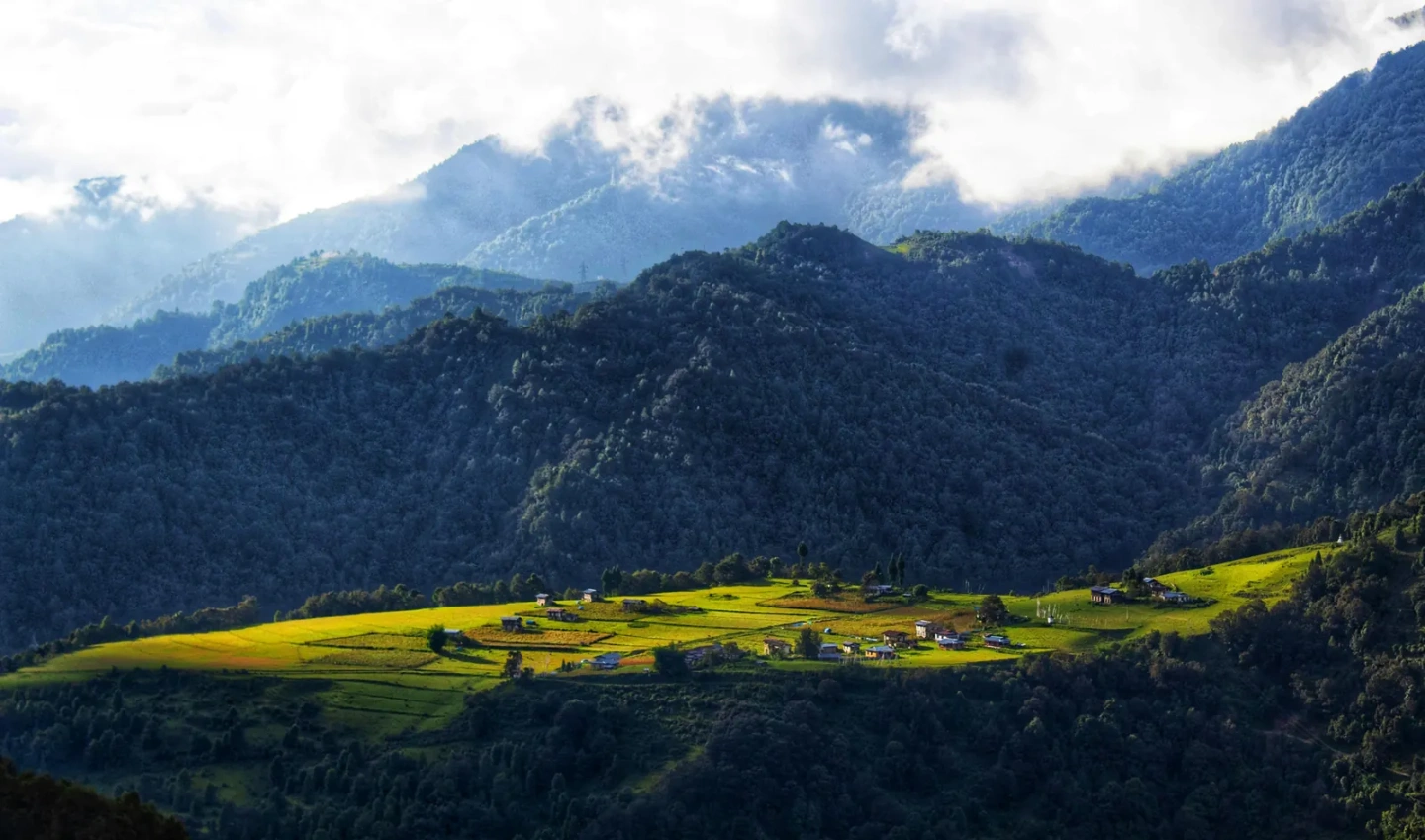
Tips and etiquette
- Walk clockwise around the chortens and the temple, never anticlockwise.
- Do not climb on the chortens or their bases for photos.
- Dress modestly to enter the temple, with long sleeves and long trousers or a skirt, and remove your hat.
- Bring a warm layer. At about 3,100 m the pass is much colder and windier than Thimphu or Punakha.
- Take it easy if you have just arrived in Bhutan. Walk slowly up the chorten hill; see our notes on altitude.
- Prayer flags: if you want to hang prayer flags, ask your guide, who can help you do it in the right way and the right place.
Combining Dochula with nearby sights
Dochula is less a destination in itself than the gateway to central Bhutan. After the pass, the road drops to the farming villages and rice fields of the Punakha valley, where you can walk to Chimi Lhakhang and visit Punakha Dzong. From there, many travellers continue to the Phobjikha valley for the black-necked cranes in winter.
Before leaving Thimphu, you might visit the Buddha Dordenma, which gives you a good view over the capital. Dochula appears in our 5-day, 7-day and 10-day itineraries. Keen walkers can also ask about short hikes in the forests around the pass in good weather.
Fees and how we help
The Sustainable Development Fee (SDF) is currently USD 100 per adult per night (confirmed until 31 August 2027), USD 50 for children aged 6 to 11, and free for children under 6. The visa fee is USD 40. Indian nationals pay INR 1,200 per person per night. Fees and rules can change, so we always confirm the current figures for your dates.
We time your drive over Dochula for the best chance of clear views, arrange your guide and route permits, and can plan your trip around the 13 December festival if you would like to see it. Our trip cost calculator gives a first estimate.
Planning a drive over Dochula? Message us on WhatsApp +975 17661648 or email [email protected]. We reply with a tailored itinerary and quote.
Frequently asked questions
How high is Dochula Pass?
Dochula is at about 3,100 m above sea level on the road from Thimphu to Punakha, roughly 30 km from Thimphu.
Why are there 108 chortens at Dochula?
The 108 Druk Wangyal Chortens were built in the mid-2000s on the initiative of the Queen Mother Ashi Dorji Wangmo Wangchuck. 108 is a sacred number in Buddhism.
Can you see Mount Everest from Dochula?
No. On clear days you can see a range of Bhutanese Himalayan peaks, including Gangkar Puensum, the highest mountain in Bhutan. Everest is not visible from here.
When is the best time to see the mountains from Dochula?
October to February, especially in the early morning, gives the best chance of clear Himalayan views.
When is the Dochula festival?
The Dochula Druk Wangyal Festival is held on 13 December each year at the pass.
How long should I stop at Dochula?
Allow 30 minutes to an hour to walk around the chortens, visit the temple and enjoy a hot drink at the cafeteria.
Do I need a permit to cross Dochula?
Yes. Travel beyond Thimphu requires route permits, which your licensed guide arranges. A guide is required under current rules.









