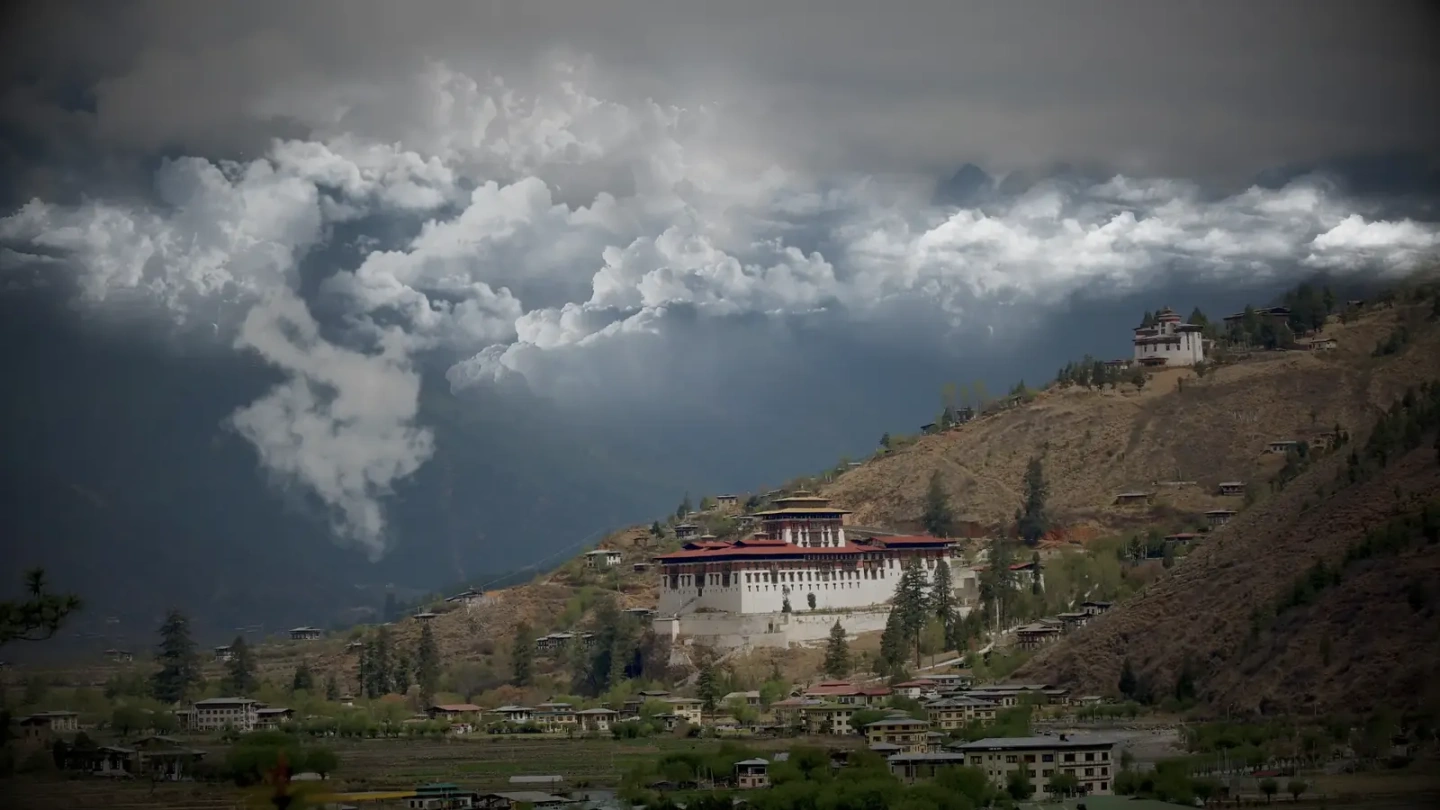


On 1 November 2026, Bhutan raised 108 stupas in a single day at Gelephu in the south of the kingdom. Tens of thousands of volunteers set up the outer structures of the Jangchub Chortens, the Stupas of Enlightenment, in one long line along the Mao Chhu river, while very large crowds of Bhutanese and visitors gathered on the riverbanks to watch. The royal initiative, announced by His Majesty The King in February 2026, sits at the heart of the new Gelephu Mindfulness City.
This guide explains what the 108 stupas are, how they were raised, why the number matters, and how to combine a visit to Gelephu with Bhutan's older 108 sites into one unhurried pilgrimage across the country.
The 108 stupas at a glance
- Name: Jangchub Chortens (Stupas of Enlightenment).
- Raised: 1 November 2026, in a single day.
- Where: along the Mao Chhu river at Gelephu, Sarpang district, in Gelephu Mindfulness City.
- Size: each stupa stands about 15 metres tall, set roughly 108 metres apart in a single procession along the river.
- Built by: tens of thousands of volunteers (the Associated Press reported about 40,000), after months of preparing the sacred relics placed inside.
- Blessing: the relics were consecrated in a rabney ceremony by monks of the Zhung Dratshang, Bhutan's central monastic body, over about 21 days beginning in late September.
The day the stupas rose
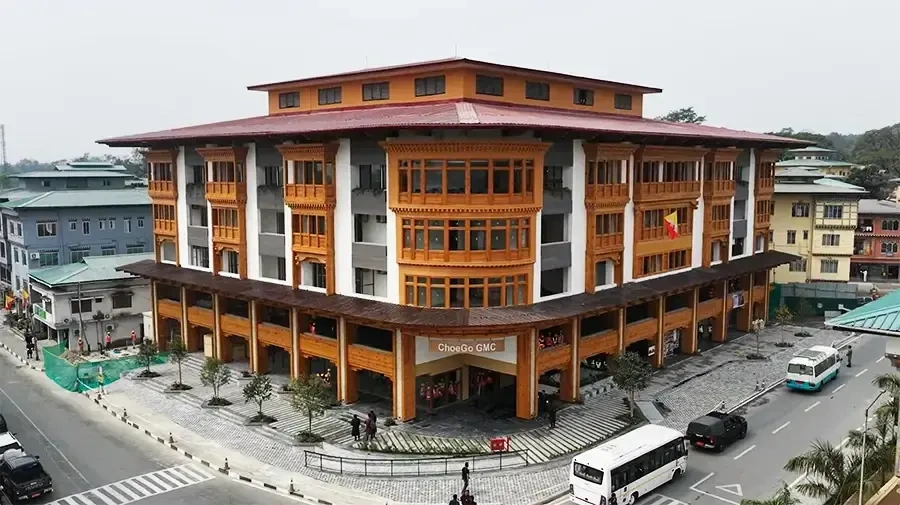
The project began with a royal announcement in February 2026. Through the months that followed, the inner work went on quietly: sacred relics, texts and offerings were prepared to be placed inside each chorten, as tradition requires. From late September, monks of the Zhung Dratshang performed a rabney, a consecration ceremony, over about 21 days, so that the relics were blessed before the structures that would hold them went up.
On 1 November, volunteers assembled the outer structures of all 108 stupas in the course of a single day. The line runs along the bank of the Mao Chhu, each chorten roughly 108 metres from the next, so the whole procession stretches for many kilometres. For many Bhutanese who took part, it was an act of merit and service rather than a building job. According to Indian media reports, one of the stupas, No. 76, was dedicated to India's Prime Minister Narendra Modi, a sign of the close friendship between the two countries.
What is a Jangchub Chorten?
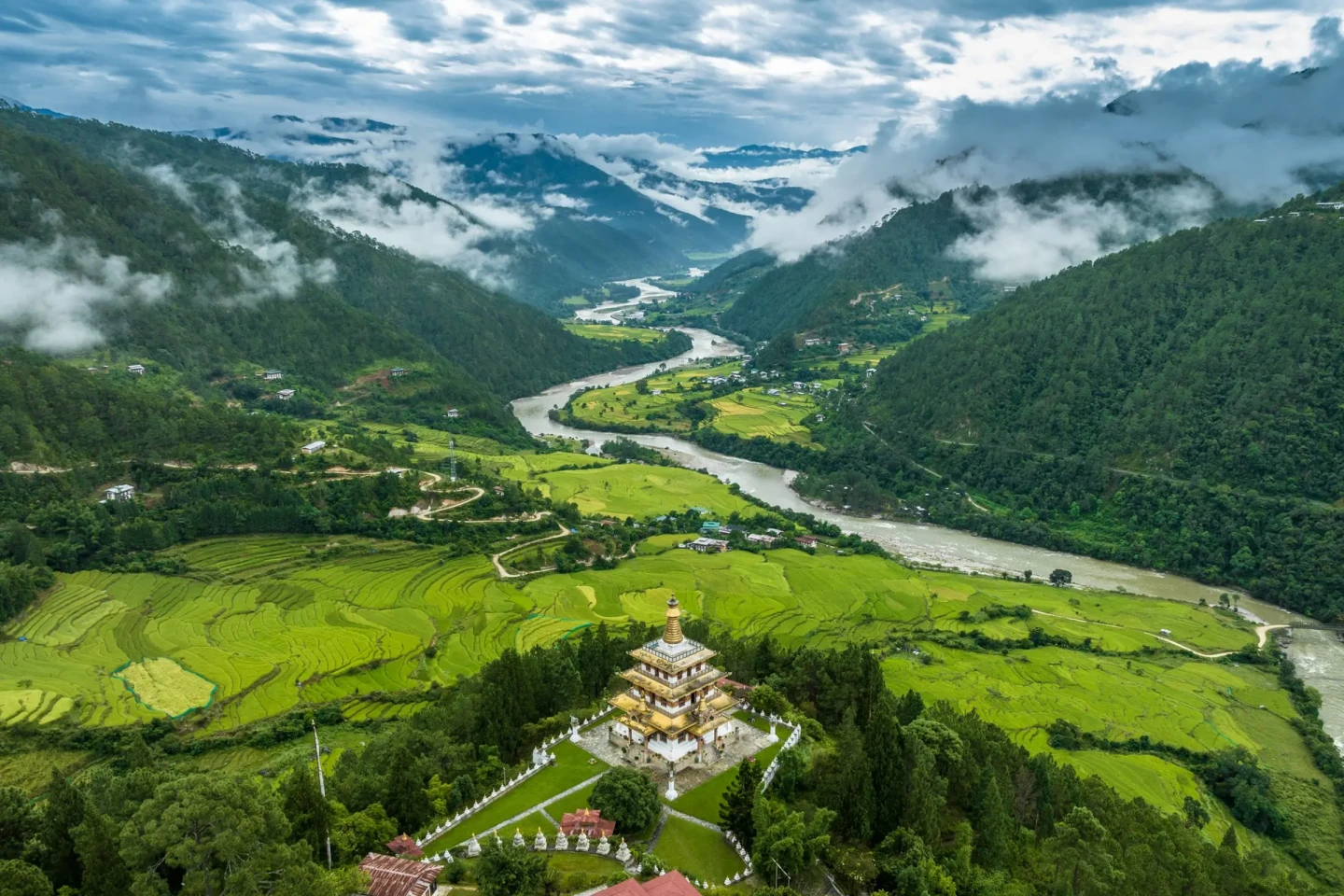
Jangchub means enlightenment, and a chorten is the Bhutanese word for a stupa, a sacred monument that represents the enlightened mind of the Buddha. Chortens appear all over Bhutan: at river crossings, on passes, at the edge of villages and beside temples. They are not buildings you enter. Instead, people walk around them, recite prayers and turn prayer wheels, and many families visit a chorten on auspicious days of the Bhutanese calendar.
A Jangchub Chorten is one of the classic forms of stupa, linked to the moment of the Buddha's enlightenment. Raising 108 of them together turns a single act of devotion into a path that pilgrims can walk.
Why 108?
108 is one of the most sacred numbers in Buddhism. Prayer beads (malas) have 108 beads, the Kangyur, the collected teachings of the Buddha, fills 108 volumes, and the number is linked to the 108 afflictive emotions that practice works to overcome. Walking around a stupa clockwise while reciting prayers is a traditional way to gather merit, and a line of 108 stupas makes a powerful path for that practice.
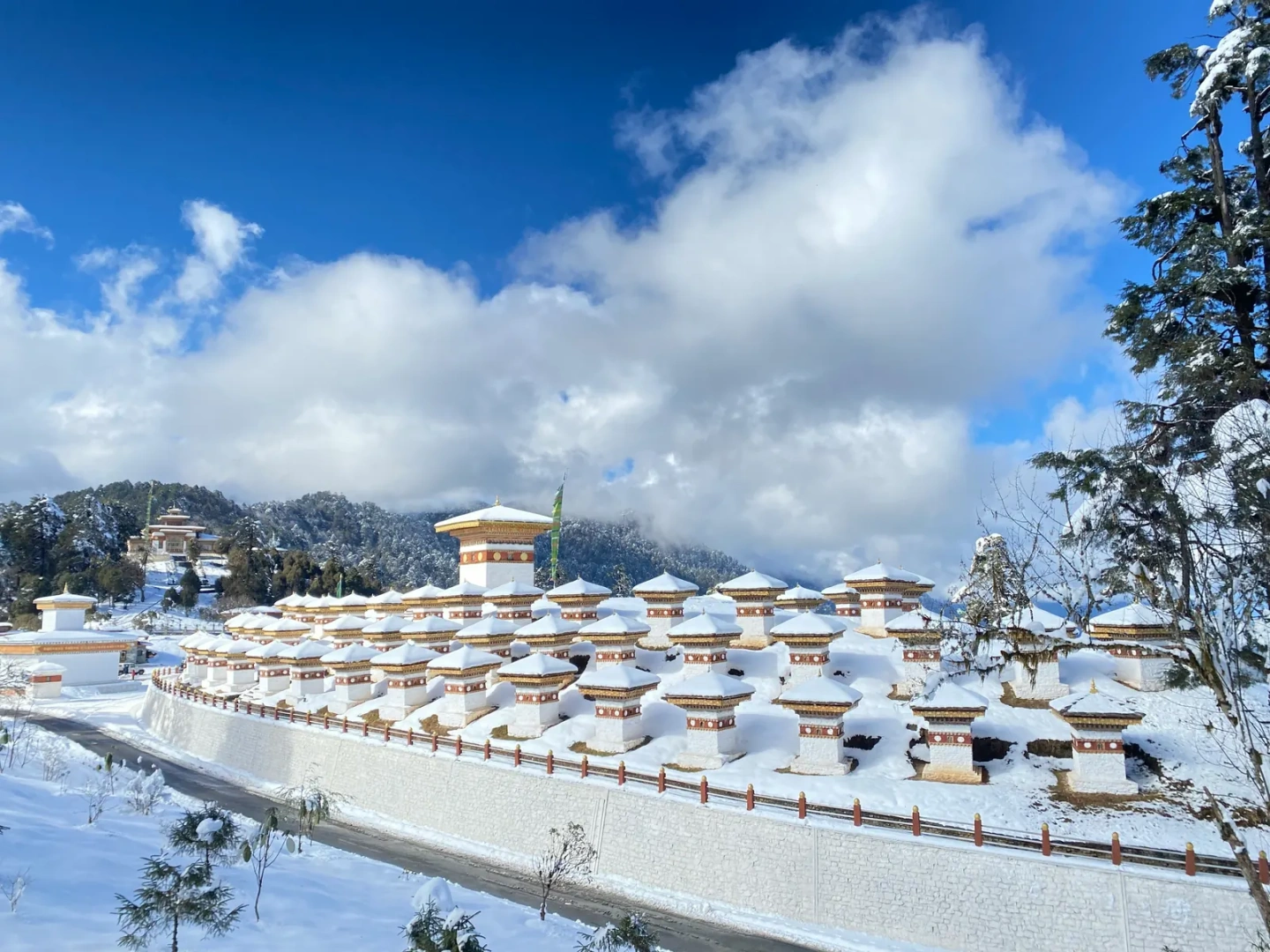
You will notice the number elsewhere in Bhutan too: in the counting of mantras on a mala, in temple offerings, and in the famous chortens on the Dochula Pass. Knowing this before you travel makes each visit richer.
Bhutan's other 108 sites: a pilgrimage route
Gelephu's new stupas join a long tradition. You can link them on one journey from west to south:
- Kichu Lhakhang, Paro: one of Bhutan's oldest temples, traditionally said to be among the 108 temples built in a single day by the Tibetan king Songtsen Gampo in the 7th century.
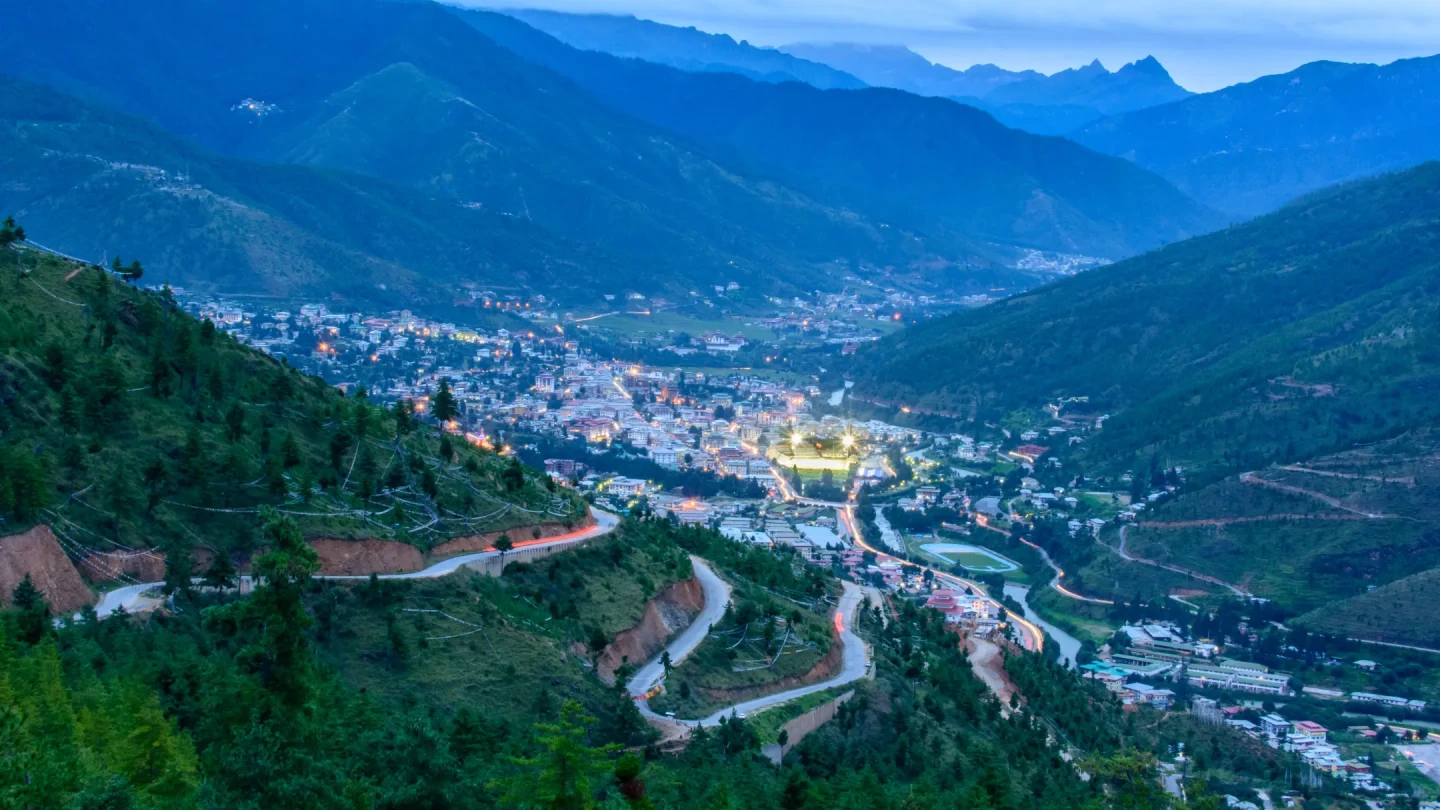
- Dochula Pass, near Thimphu: the 108 Druk Wangyal Chortens on the pass between Thimphu and Punakha, with Himalayan views on clear days.
- Jambay Lhakhang, Bumthang: another of Songtsen Gampo's legendary temples, famous for its autumn festival.
- The 108 Jangchub Chortens, Gelephu: the newest, and the end point of a north-to-south journey through the heart of Bhutan.
Many travellers from India enter or leave through the southern border. See our Guwahati, Samdrup Jongkhar and Gelephu car hire page for road options.
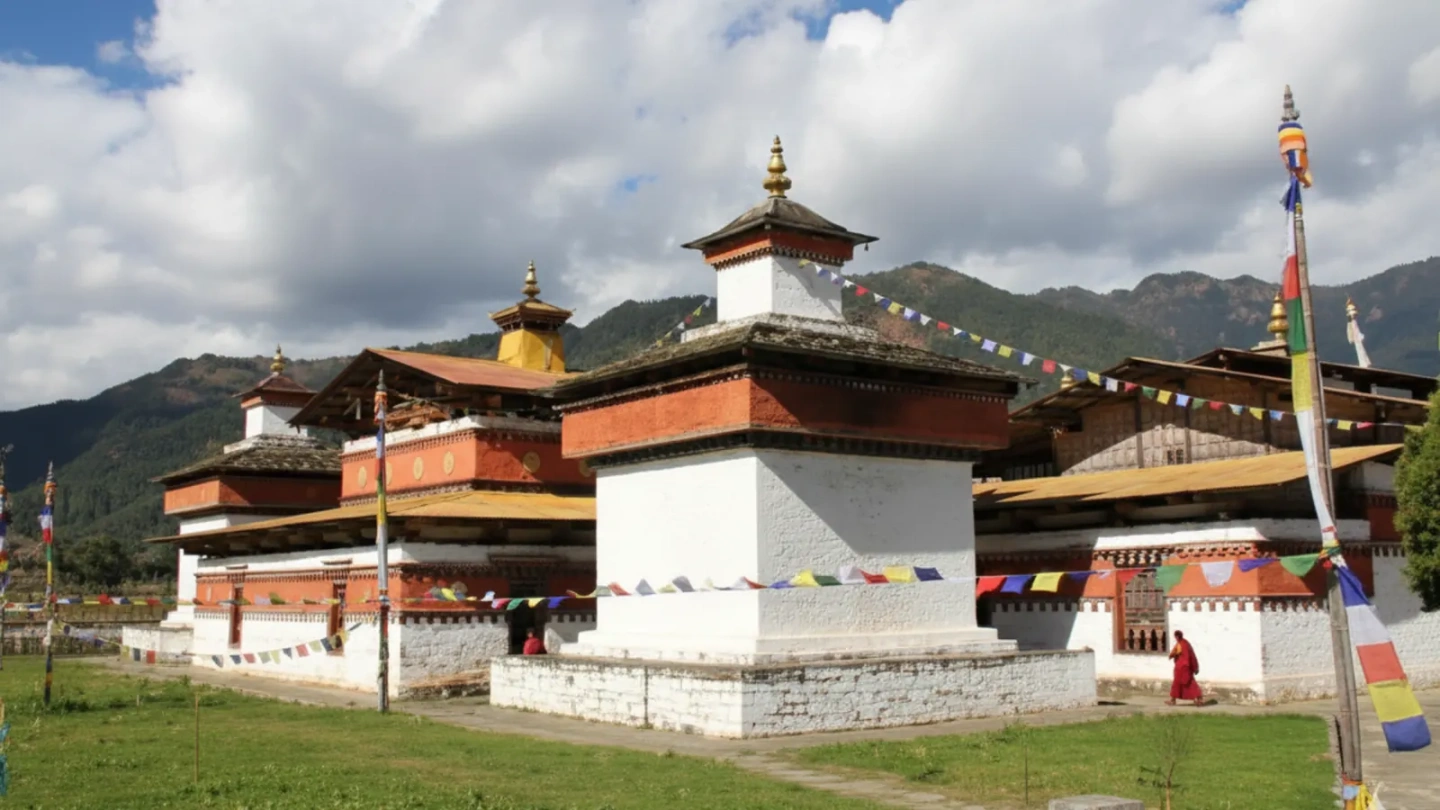
Sample itinerary: a 108 pilgrimage in 12 days
A relaxed pilgrimage from Paro to Gelephu takes about 9 to 11 nights by road, through Thimphu, Punakha, Trongsa and Bumthang, then south through Zhemgang to Gelephu. Here is one way to pace it. We adjust every day to your interests, fitness and the season.
- Day 1: Fly into Paro. Gentle afternoon visit to Kichu Lhakhang and an evening walk in the valley.
- Day 2: Hike to Taktsang (Tiger's Nest), with time to sit quietly at the monastery.
- Day 3: Drive to Thimphu. Visit the Memorial Chorten, where local people circle the stupa through the day.
- Day 4: Cross the Dochula Pass and its 108 chortens, then descend to Punakha.
- Day 5: Punakha Dzong and a walk among the rice fields.
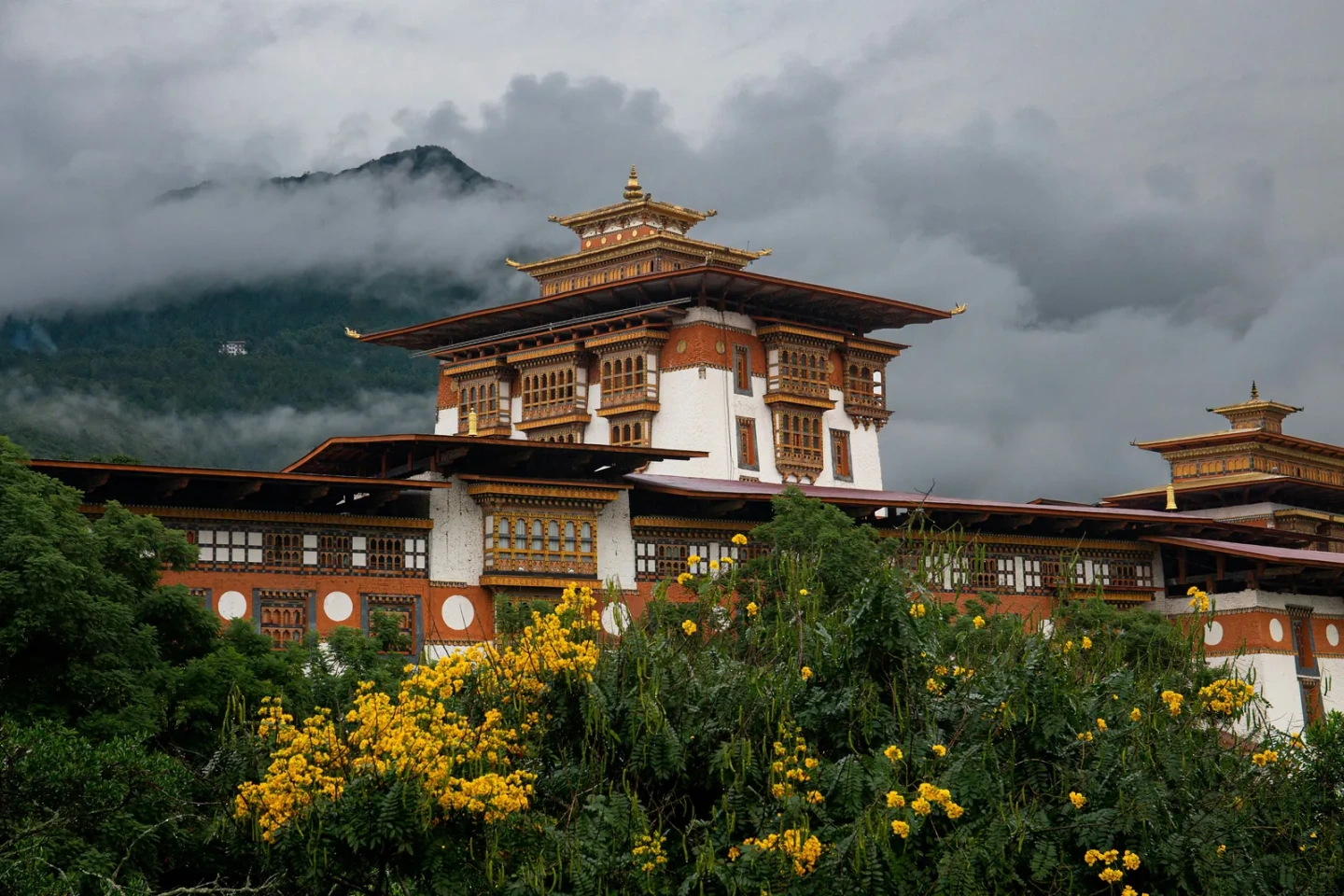
- Day 6: Drive east over the mountains to Trongsa, with its great dzong above the gorge.
- Day 7: Continue to Bumthang, the spiritual heartland of Bhutan.
- Day 8: Jambay Lhakhang, Kurjey Lhakhang and the temples of the Chokhor valley.
- Day 9: Drive south through Zhemgang, as the forest turns from pine to broadleaf.
- Day 10: Arrive in Gelephu. Afternoon at leisure in the lowland warmth.
- Day 11: A day for the 108 Jangchub Chortens, subject to visitor access on your dates.
- Day 12: Exit through the southern border towards Assam, or drive back north inside Bhutan.
Can tourists visit the 108 stupas?
The stupas are now a permanent sacred site in Gelephu Mindfulness City. Access arrangements for visitors around the site, and the opening of the southern border gate for tourists, are still being settled after the November event. We confirm the current position for your dates before we finalise your itinerary, and we plan an alternative route if the southern gate is not open.
Standard Bhutan entry rules apply: the Sustainable Development Fee, a visa for most nationalities, and a licensed guide for travel beyond Thimphu and Paro. Most visitors pay an SDF of USD 100 per adult per night (confirmed until 31 August 2027), USD 50 for children aged 6 to 11, and nothing for children under 6. Indian nationals pay INR 1,200 per person per night. Check your fees with our Trip Cost Calculator.
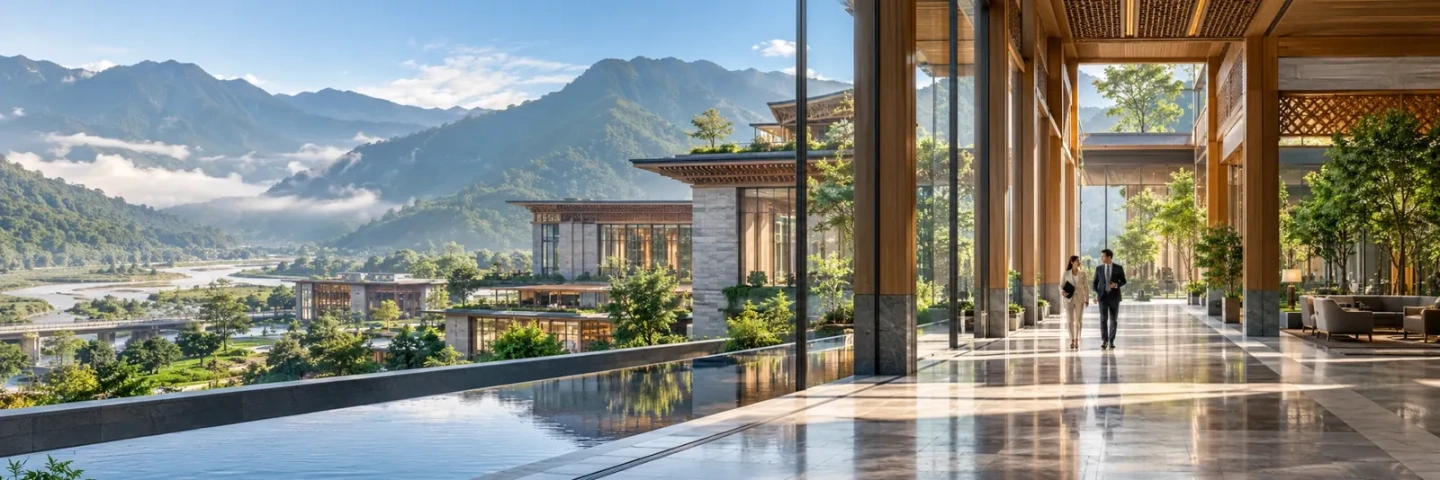
Gelephu Mindfulness City
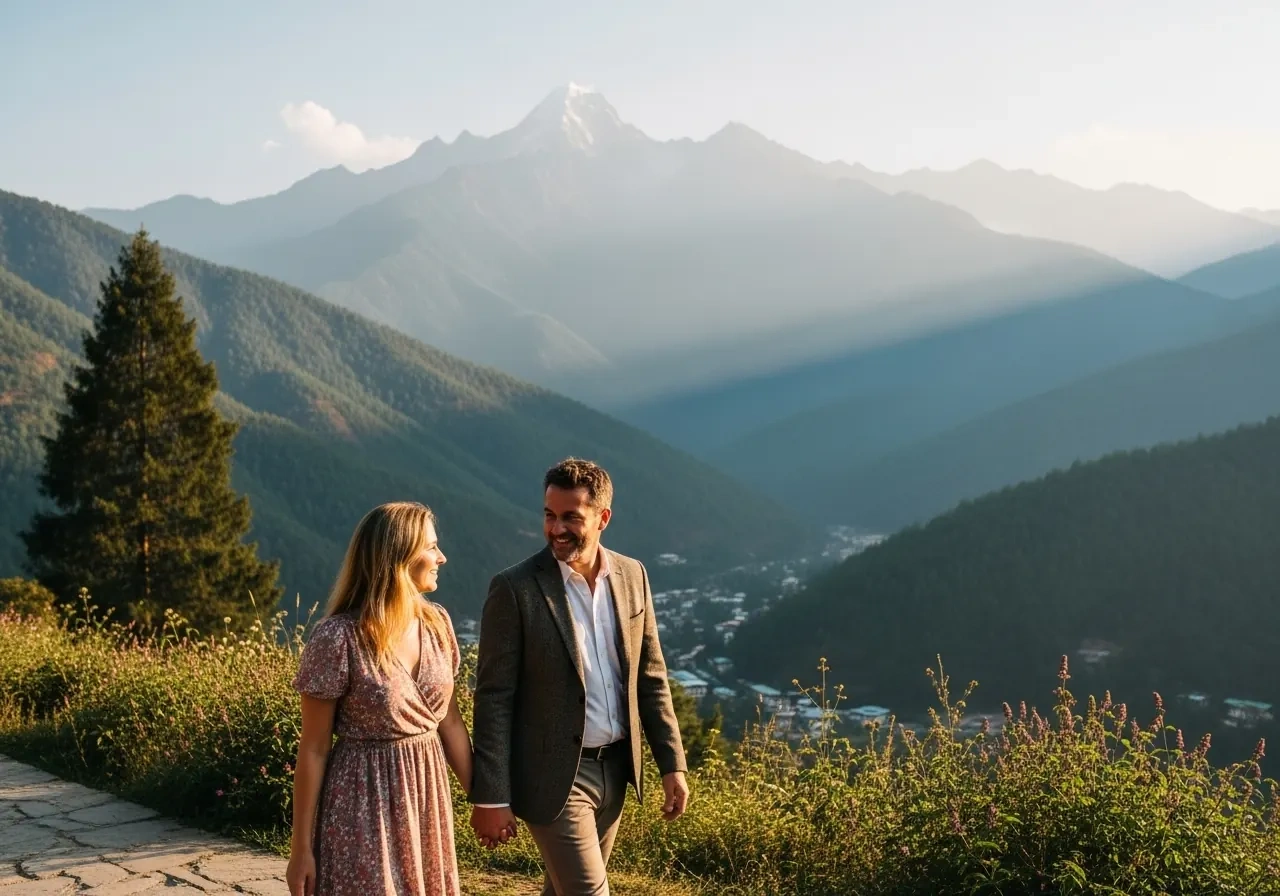
The stupas stand within Gelephu Mindfulness City, the special administrative region announced by His Majesty The King in December 2023 and planned around mindfulness, sustainability and Gross National Happiness. Much of the city is still being designed or built, and images of the future city, including the one on this page, are illustrative architectural renders rather than photographs. Read our guide to visiting Gelephu Mindfulness City for what you can see today.
Best time to go
Gelephu sits in the warm southern foothills, so it suits a different calendar from the high valleys. The cooler, drier months from October to March are the most comfortable in the south, and October and November also bring clear mountain views at Dochula and in Bumthang. The summer monsoon, roughly June to September, brings heavy rain and hot, humid days in Gelephu, and roads can be slowed by landslides. If you would like to time your journey with a festival such as the one at Jambay Lhakhang, see our Bhutan festival calendar.
How to visit respectfully
- Walk around stupas clockwise, keeping them on your right.
- Dress modestly, with shoulders and knees covered.
- Ask your guide before taking photographs of ceremonies or monks.
- Do not climb on stupas, sit on their steps or touch offerings.
- Do not fly drones near sacred sites without the proper permission.
- Keep voices low and give way to local pilgrims who are praying.
What to pack
- Light, breathable clothing for Gelephu, plus warm layers for the high passes and Bumthang.
- A long-sleeved shirt and long trousers or skirt for temples and dzongs.
- Comfortable walking shoes that slip off easily, as you remove them in many shrine rooms.
- Sun hat, sunscreen and insect repellent for the lowlands.
- A small mala, if you have one, for counting prayers as you walk.
How we help
We plan the whole pilgrimage: the route and pacing, licensed guides who can explain the meaning of each site, cars with experienced drivers for the long mountain roads, hotels, permits and the border crossing. We also keep track of the latest visitor arrangements at Gelephu and tell you plainly what is and is not confirmed for your dates. Start with our free Bhutan trip planner or send us a message.
Planning a 108 stupas pilgrimage? Message us on WhatsApp +975 17661648 or email [email protected].
Frequently asked questions
When were the 108 stupas in Gelephu built?
The outer structures of all 108 Jangchub Chortens were raised in a single day on 1 November 2026 by tens of thousands of volunteers, after months of preparing the sacred relics placed inside and a consecration ceremony of about 21 days.
Where are the 108 stupas in Bhutan?
The new 108 stupas stand along the Mao Chhu river at Gelephu in Sarpang district, in Gelephu Mindfulness City. Bhutan also has the older 108 chortens on the Dochula Pass between Thimphu and Punakha.
Why are there 108 stupas?
108 is a sacred number in Buddhism: malas have 108 beads, the Kangyur has 108 volumes, and the number stands for the 108 afflictive emotions that practice aims to overcome.
How big are the Gelephu stupas?
Each stupa is about 15 metres tall, and they are set roughly 108 metres apart in a single line along the Mao Chhu river.
Can foreign tourists visit the Gelephu stupas?
The stupas are a permanent site, but visitor access and the southern border arrangements are still being finalised. Contact us and we will confirm the current position for your travel dates.
How many days do I need for a 108 pilgrimage?
A relaxed journey from Paro to Gelephu, taking in Kichu Lhakhang, Dochula, Jambay Lhakhang and the Gelephu stupas, takes about 9 to 11 nights by road.
How should I walk around a stupa?
Always walk clockwise, keeping the stupa on your right. Many Bhutanese recite prayers or count mantras on a mala as they walk.
More guides: Dochula Pass 108 chortens; Bumthang temples.