




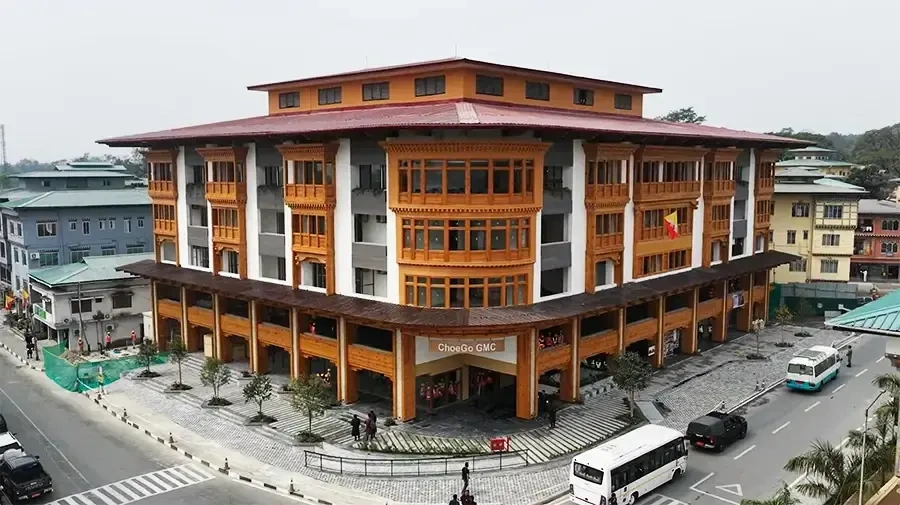
Gelephu Mindfulness City (GMC) is Bhutan's new special administrative region on the southern border with Assam. His Majesty King Jigme Khesar Namgyel Wangchuck announced it on 17 December 2023, in his National Day address, as a city built around mindfulness, sustainability and Bhutan's philosophy of Gross National Happiness. It is still at an early stage, and for travellers it is already becoming a destination in its own right, above all since the raising of the 108 stupas in November 2026.
This is a practical visitor guide: what there is to see in and around Gelephu today, how to get there from inside Bhutan or from India, when to go, and how to fit the south into a wider journey through the kingdom.
What is Gelephu Mindfulness City?
GMC is a special administrative region with its own laws, set in Sarpang district in the southern foothills of Bhutan. It is planned as a city where development, nature and wellbeing are designed together, guided by the same values of mindfulness and Gross National Happiness that shape the rest of the country. For a visitor, the simplest way to think of it is as a new chapter in Bhutan's story, being written in a warm, green corner of the kingdom that few travellers have seen until now.
What you can see today
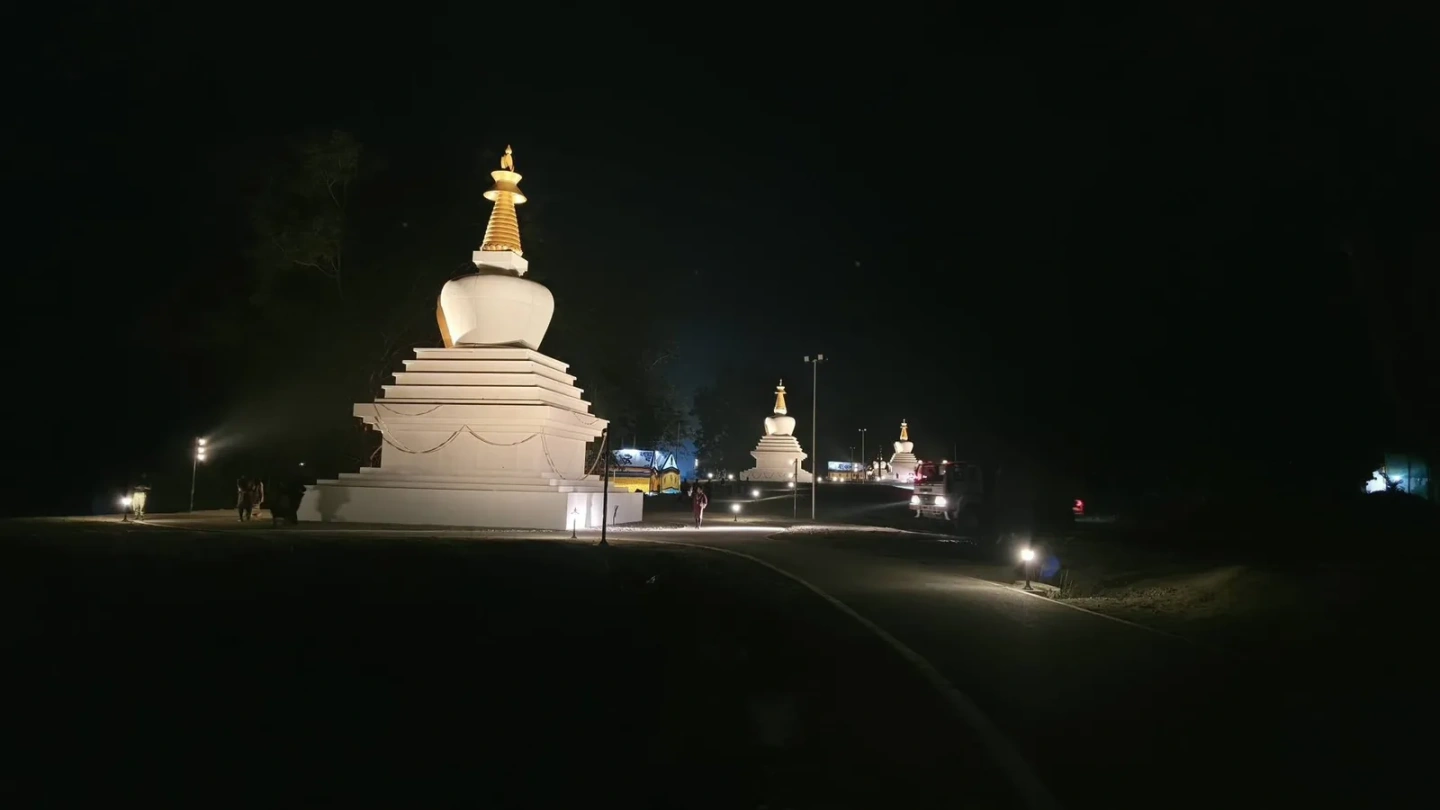
- The 108 Jangchub Chortens: a line of 108 stupas along the Mao Chhu river, each about 15 metres tall, raised in a single day on 1 November 2026. Visitor access around the site is still being settled, and we confirm it for your dates.
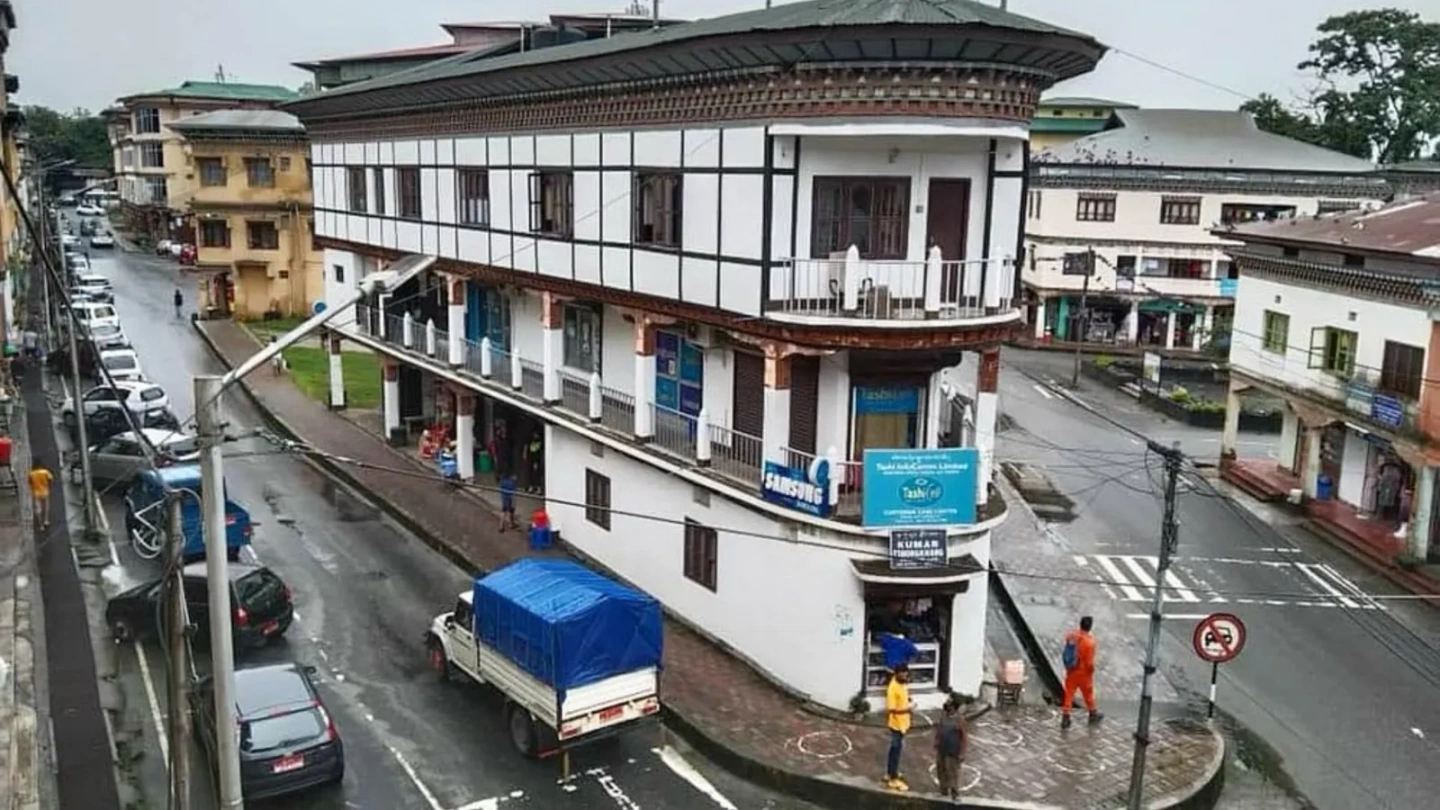
- Gelephu town: a warm, lowland town with markets and a very different feel from the high valleys of Paro and Thimphu.
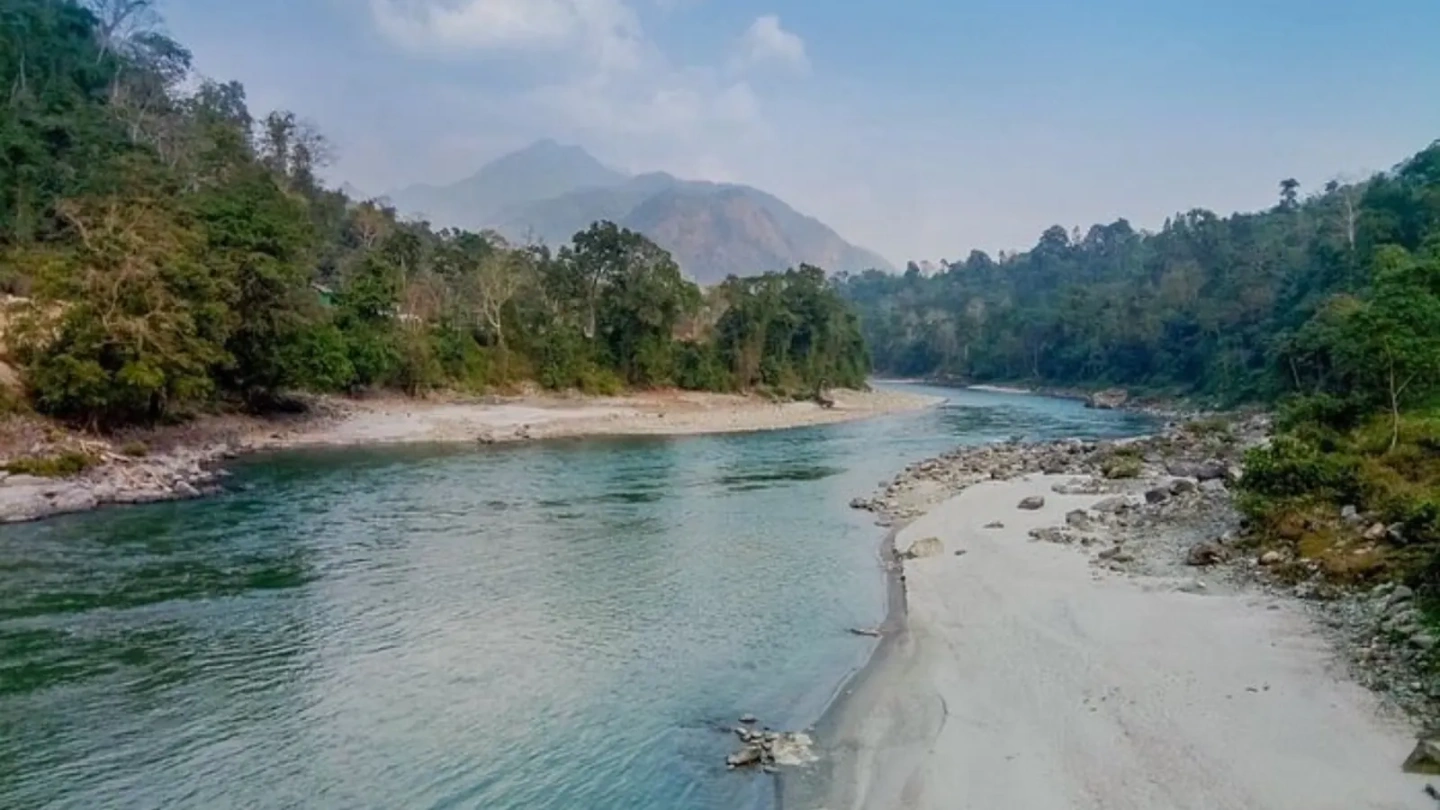
- The Mao Chhu and its riverbanks: wide views across the river plain, best in the soft light of early morning or late afternoon.
- The southern foothills: forests, rivers and the gateway road north towards Zhemgang, Trongsa and Bumthang.
Much of the city itself, including its planned international airport, is still being designed or built. Visit with the right expectations: this is a chance to see a new city taking shape, not a finished resort.
Gelephu town and the south
Gelephu has long been one of the main gateways between Bhutan and India. Life here moves at a lowland pace: the air is warm, the vegetation is lush, and the markets mix Bhutanese goods with produce from the plains. You will hear several languages, see Hindu shrines as well as Buddhist temples, and eat a wider range of food than in the high valleys, including fresh tropical fruit in season.
For travellers who have already seen Paro and Thimphu, the south shows another side of Bhutan entirely. It is a good place to slow down for a day or two, walk by the river and talk to your guide about how the region is changing.
How to get to Gelephu
- From inside Bhutan: by road from Thimphu via Wangdue and Tsirang, a long day's drive through the hills. You can also arrive from the north, from Trongsa through Zhemgang.
- From Assam, India: overland from Guwahati, roughly 6 hours by road. Check with us before you travel that the Gelephu border gate is open to tourists on your dates. If it is not, we route you through Samdrup Jongkhar or Phuentsholing.
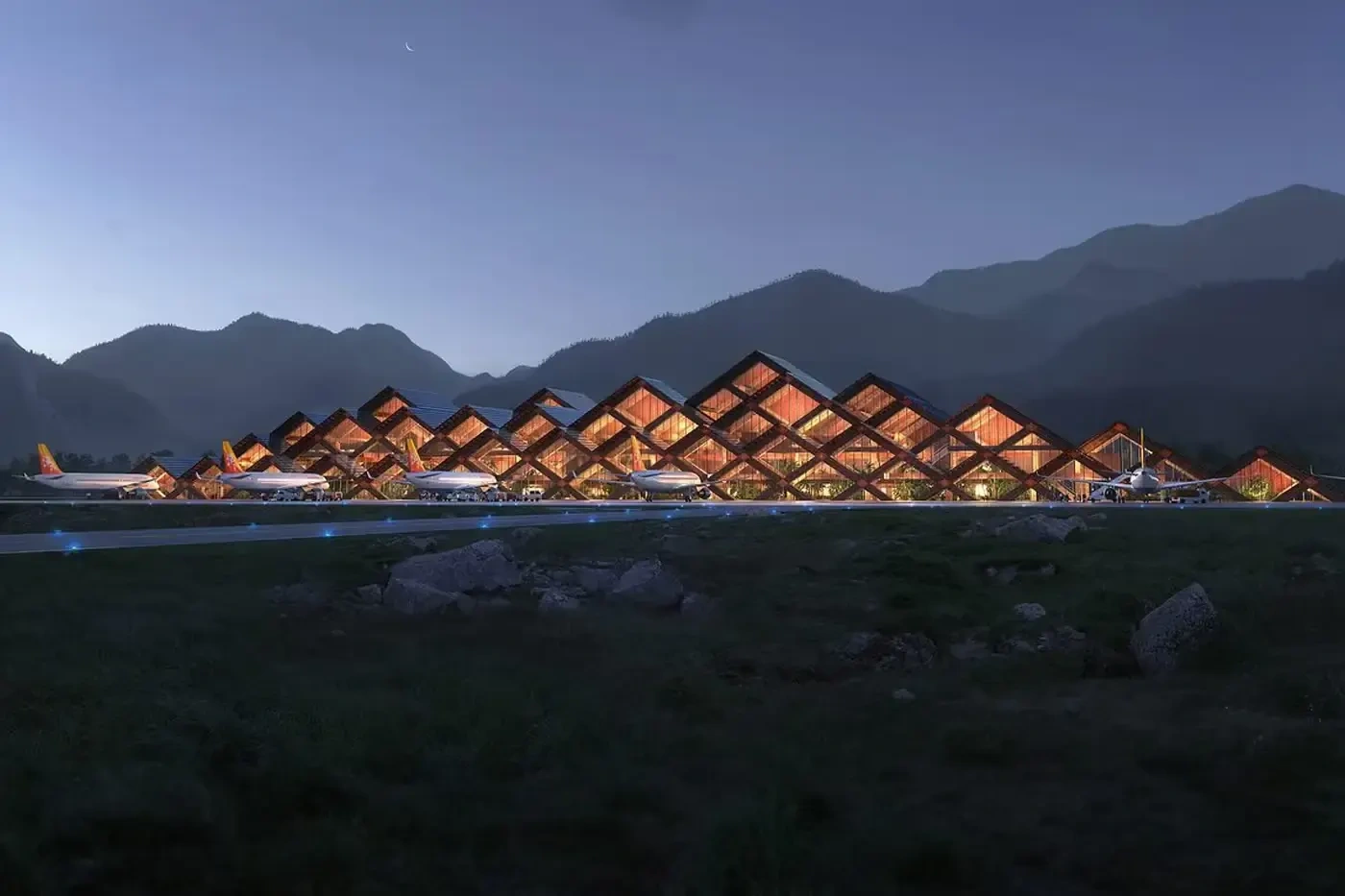
- By air: a new international airport is planned and under construction for Gelephu, and no opening date has been announced. Until it opens, international visitors fly into Paro.
We provide cars with drivers and licensed guides for the whole journey. See Guwahati to Bhutan car hire and Bhutan car rental with driver.
A note on the renders
Some images of Gelephu Mindfulness City on this page, including the airport, are architectural renders. They are illustrative only and show plans and ideas, not finished buildings. What you see on the ground will depend on how far construction has progressed by the time you visit, and we are always happy to tell you honestly what is there now.
Nature near Gelephu
The southern belt of Bhutan is rich in forest and wildlife. East of Gelephu lies Royal Manas National Park, Bhutan's oldest protected area, which adjoins Manas National Park across the border in India. Its subtropical forests and grasslands are home to a remarkable range of birds and mammals, including the golden langur. Visits depend on the season, road conditions and permits, so ask us early if you would like to include the park. Birdwatchers will also enjoy the forests along the road north towards Zhemgang.
Best time to visit
The south is warm all year. The most comfortable months are October to March, when days are pleasant and nights cool. April and May grow hot and humid. The monsoon, roughly June to September, brings heavy rain, high rivers and occasional road delays, though the forests are at their greenest. If you are combining Gelephu with the high valleys, October and November give you the best of both: clear mountain views in the north and gentle warmth in the south.
Sample itineraries
Coast to coast: Paro to Gelephu in 10 days
- Days 1 to 2: Fly into Paro. Kichu Lhakhang, Paro Dzong and the hike to Taktsang (Tiger's Nest).
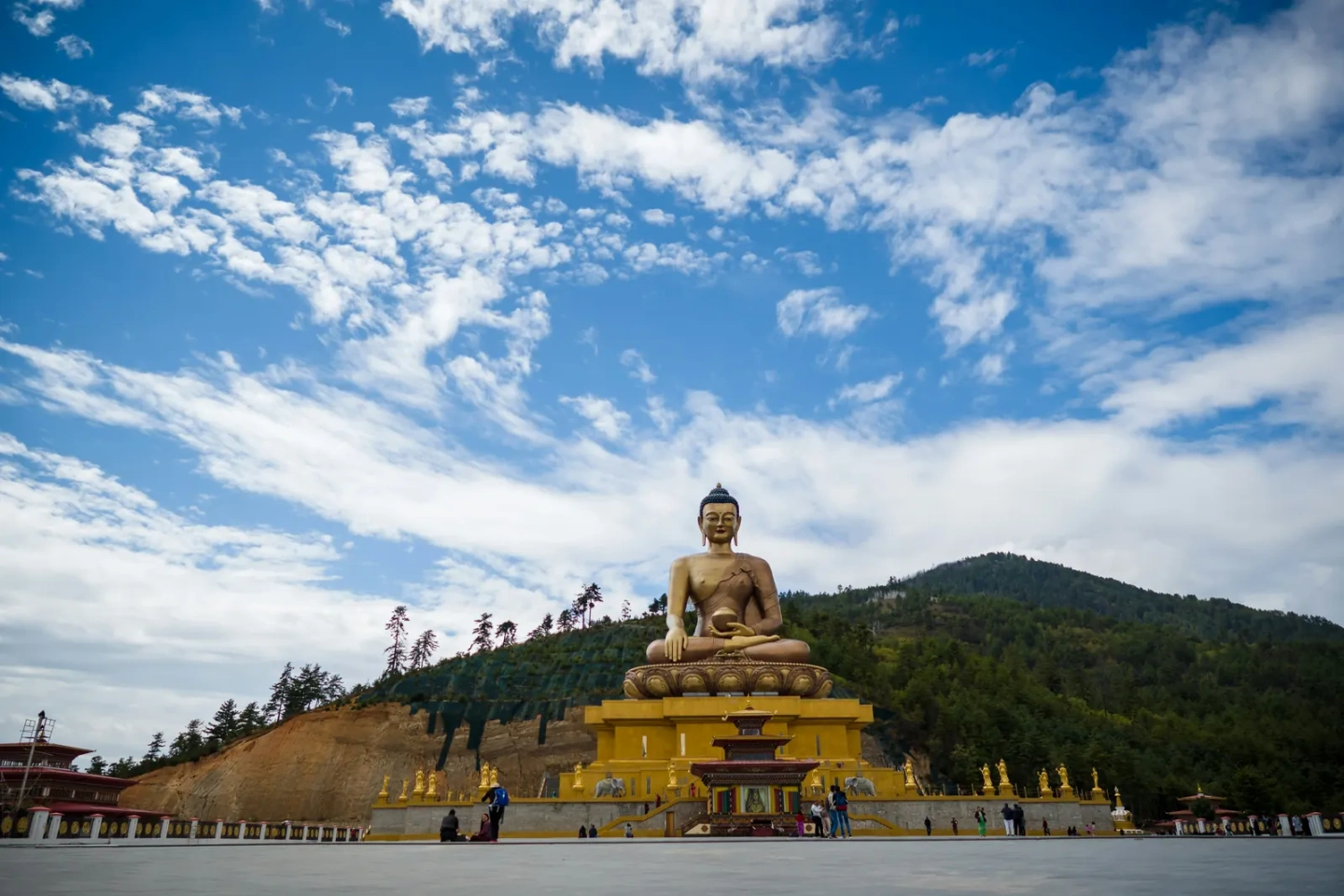
- Day 3: Thimphu: the Buddha Dordenma, the Memorial Chorten and the weekend market if your dates allow.
- Days 4 to 5: Over the Dochula Pass to Punakha, with its dzong and riverside walks.
- Days 6 to 7: East to Trongsa and on to Bumthang and its ancient temples.
- Day 8: South through Zhemgang to Gelephu.
- Day 9: Gelephu: the 108 stupas (subject to access), the town and the riverbanks.
- Day 10: Exit towards Guwahati, or return north inside Bhutan.
Short southern visit from Guwahati in 5 days
- Day 1: Drive from Guwahati to Gelephu, about 6 hours, if the gate is open to tourists.
- Day 2: Gelephu and the 108 stupas.
- Day 3: Drive north through Tsirang to Wangdue and Punakha.
- Day 4: Punakha Dzong and the Dochula Pass.
- Day 5: Continue to Thimphu or Paro for your onward journey.
Both routes are starting points. Send us your dates and interests and we will shape the days around them, or try our free Bhutan trip planner.
Entry rules
Standard Bhutan rules apply in Gelephu: the Sustainable Development Fee, a visa for most nationalities, and a licensed guide beyond Thimphu and Paro. Most visitors pay an SDF of USD 100 per adult per night (confirmed until 31 August 2027) and a visa fee of USD 40. Indian nationals pay an SDF of INR 1,200 per person per night and need no visa. Check your fees with our Trip Cost Calculator.
Practical tips
- Pack light, breathable clothing for the south and warm layers for the passes on the way.
- Bring insect repellent, sunscreen and a refillable water bottle.
- Dress modestly at temples and sacred sites, with shoulders and knees covered.
- Keep your passport or permit to hand: there are checkpoints on the main roads.
- Allow extra time for road journeys, especially in the monsoon.
- Ask your guide before photographing people, ceremonies or construction sites.
How we help
We arrange the route, permits, licensed guides, cars and drivers, and hotels in Gelephu and along the way. Because arrangements in the south are still changing, we check border-gate and site access for your dates and plan a back-up route so your journey runs smoothly either way.
Want to include Gelephu in your trip? Message us on WhatsApp +975 17661648 or email [email protected].
Frequently asked questions
What is Gelephu Mindfulness City?
A special administrative region in southern Bhutan, announced by His Majesty The King on 17 December 2023, planned as a city built around mindfulness, sustainability and Gross National Happiness.
Can tourists visit Gelephu Mindfulness City?
Yes, Gelephu can be visited with a licensed guide as part of a Bhutan itinerary. Border-gate arrangements in the south can change, so we confirm entry points for your dates.
How do I get to Gelephu from India?
Gelephu is roughly 6 hours by road from Guwahati in Assam. You can also enter Bhutan at Phuentsholing or Samdrup Jongkhar and drive to Gelephu inside Bhutan.
How do I get to Gelephu from Thimphu?
By road via Wangdue and Tsirang, a long day's drive. Many travellers break the journey or arrive from the north through Trongsa and Zhemgang as part of a longer route.
Does Gelephu have an airport?
A new international airport is planned and under construction for Gelephu Mindfulness City, with no opening date announced yet. Until it opens, international visitors fly into Paro.
What is the best time to visit Gelephu?
October to March is the most comfortable time in the warm south. The monsoon from roughly June to September brings heavy rain.
Are the pictures of the new city real?
Images of the future city, such as the airport, are architectural renders and are illustrative only. Much of the city is still being designed or built.