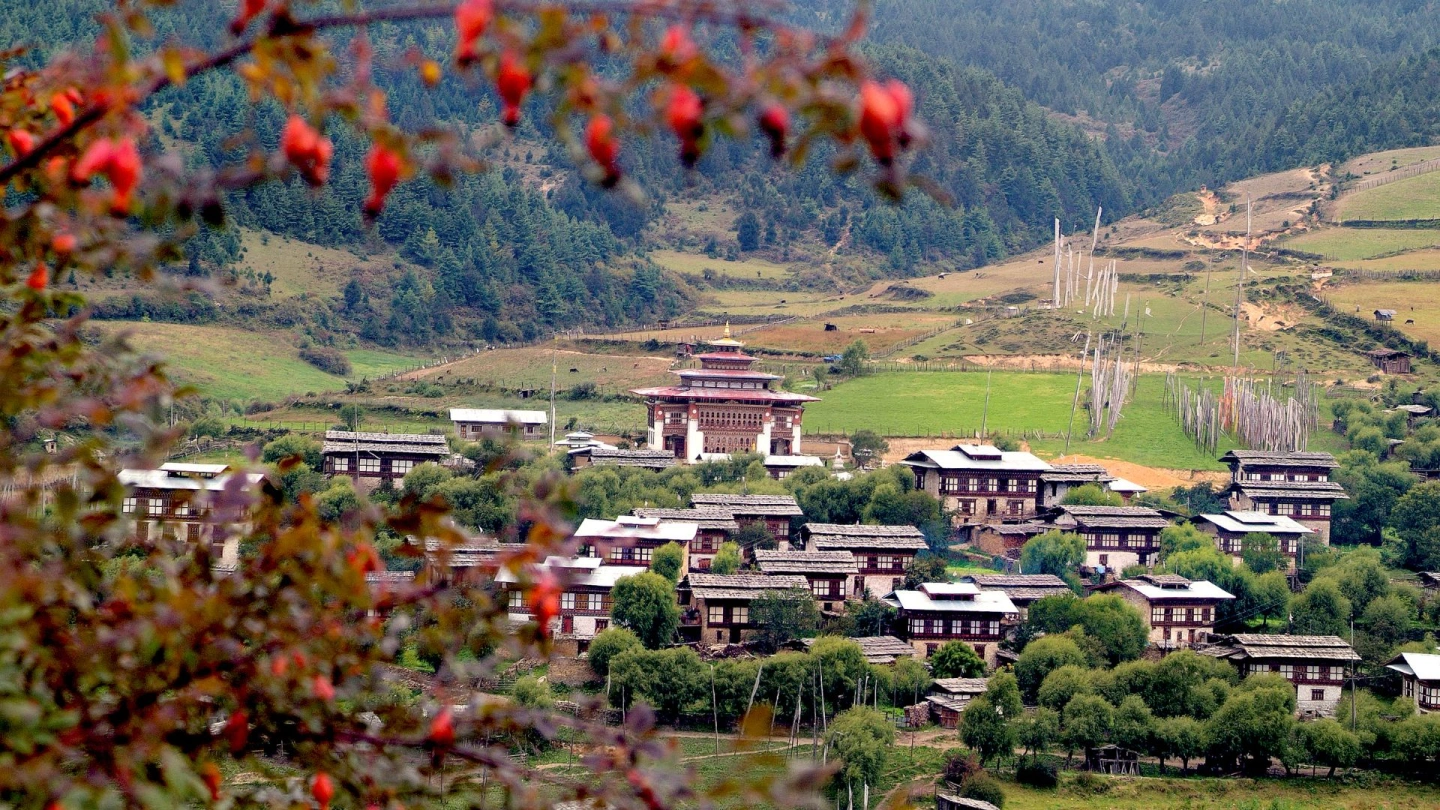
Bumthang is often called the spiritual heartland of Bhutan. Its four valleys hold some of the oldest and most sacred temples in the country, places linked to Guru Rinpoche, the Tibetan king Songtsen Gampo and the treasure revealer Pema Lingpa. It is also a gentle, open landscape of buckwheat fields, apple orchards, pine forest and wooden farmhouses, where the pace of life slows noticeably.
This guide introduces the main temples of Bumthang, the legends behind them, how to get there, the best time to visit and how to plan a few unhurried days in the valleys.
What is Bumthang?
Bumthang is a district in central Bhutan made up of four main valleys: Chumey, Choekhor (also called Jakar), Tang and Ura. Choekhor, with the town of Jakar, is the main centre and home to most of the famous temples. The valleys sit at around 2,600 to 4,000 m, so the climate is cool, with cold winters and fresh summers.
Bumthang is a long day's drive east of Punakha via Trongsa, crossing high passes and passing through forests and small villages. There are also domestic flights to Bathpalathang airport near Jakar on some days, so check schedules if you prefer to fly one way.
History and meaning: the great temples of Bumthang
Jambay Lhakhang
Jambay Lhakhang is one of the oldest temples in Bhutan. According to tradition, it was built in the 7th century by the Tibetan king Songtsen Gampo as one of 108 temples raised across the Himalaya in a single day to subdue a great demoness lying across the land. Jambay Lhakhang is said to pin down her left knee. Its partner in western Bhutan is Kyichu Lhakhang in Paro.
Each autumn, Jambay Lhakhang hosts the Jambay Lhakhang Drup, one of Bhutan's most spectacular festivals. Its highlight is the mewang, a fire blessing in which people pass under a burning arch to cleanse themselves of misfortune. The festival also includes a sacred midnight dance. Dates follow the lunar calendar; see our festival calendar.
Kurjey Lhakhang
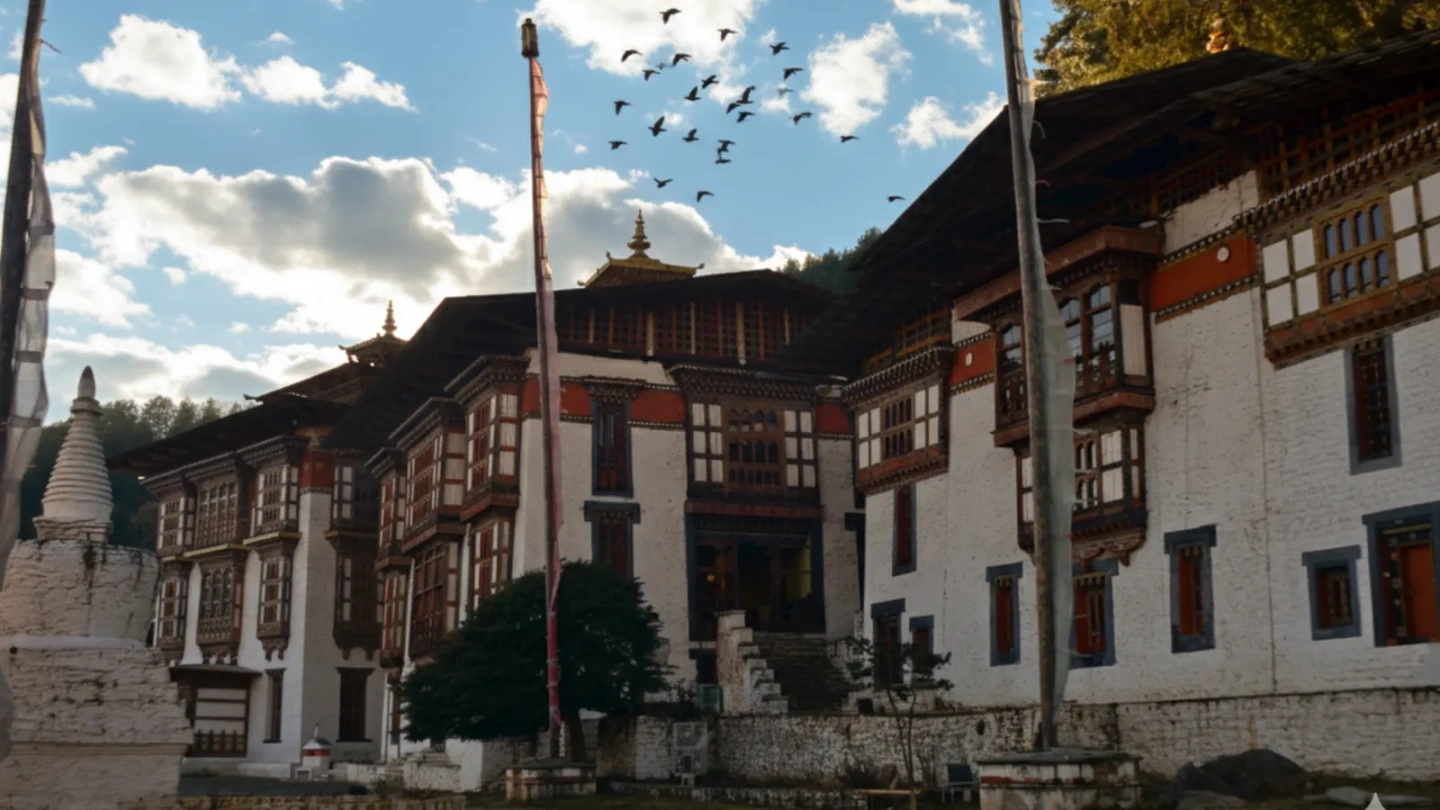
Kurjey Lhakhang is a complex of three temples set against a cliff near the Chamkhar Chhu. According to legend, Guru Rinpoche meditated here in the 8th century, leaving the imprint of his body on the rock of a cave, which is now enclosed within the oldest of the temples. Kur means body and jey means imprint. The site has close links to Bhutan's royal family and is traditionally associated with royal cremations. A row of chortens surrounds the complex, and a large cypress tree is said to have grown from Guru Rinpoche's walking stick.
Tamshing Lhakhang
Across the river from Kurjey, Tamshing Lhakhang was founded in 1501 by Pema Lingpa, the most famous of Bhutan's treasure revealers. It contains some of the oldest surviving paintings in Bhutan and a chain mail coat said to have been made by Pema Lingpa himself. According to tradition, pilgrims who carry the coat around the inner sanctuary three times gain merit. A footbridge links Tamshing with Kurjey, so the two are easily visited together.
Jakar Dzong
Jakar Dzong, the castle of the white bird, overlooks the town of Jakar and the Choekhor valley. It serves as the administrative and monastic centre of Bumthang and its high whitewashed walls are a fine sight from the valley floor. Your guide will tell you the legend of the white bird that settled on the hill and chose the site.
Mebar Tsho, the Burning Lake
In the Tang valley lies Mebar Tsho, the Burning Lake, a deep pool in the river. According to legend, Pema Lingpa dived into the water holding a burning butter lamp and returned with treasures, with the lamp still alight. It is a quiet, sacred place where pilgrims offer butter lamps. Take care on the rocks, which can be slippery.
Tharpaling Monastery
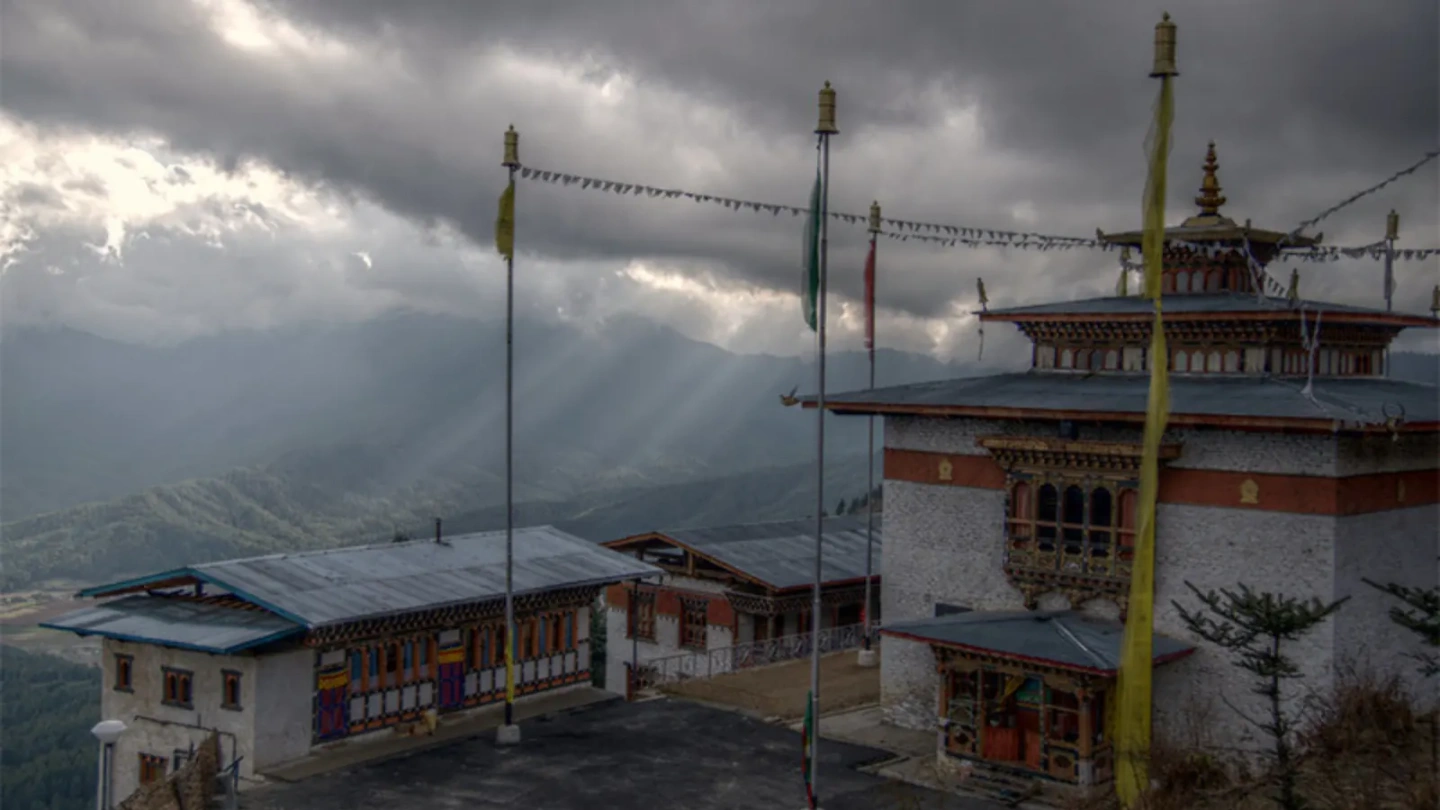
Tharpaling Monastery sits high above the Chumey valley, reached by a winding road through forest. It is associated with the great Nyingma master Longchenpa and is home to a community of monks. Views from the monastery over the Chumey valley are wide and peaceful.
Ura valley
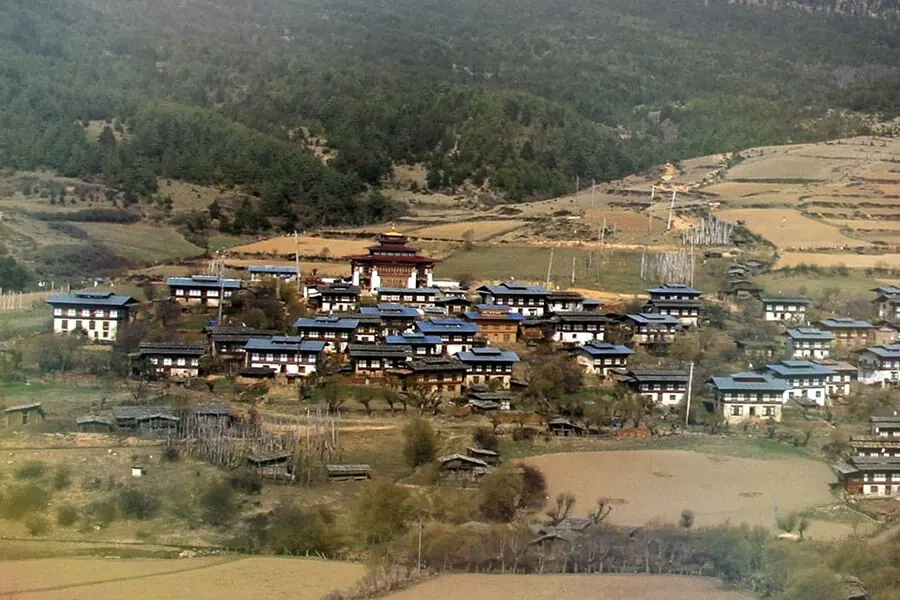
Ura is the highest of the four valleys, a cluster of stone houses and cobbled lanes on a gentle slope. It feels a world away from busier parts of Bhutan, and a short village walk gives a good sense of traditional life in the east. It is a pleasant drive from Jakar along a road that climbs over a high pass.
How to visit
A licensed guide is required for travel beyond Thimphu and Paro under current rules, and your guide arranges route permits along the way. With our car and driver and guide service, you can travel at a comfortable pace from Paro or Thimphu through Punakha and Trongsa to Bumthang.
Allow at least two full days in Bumthang to see the main temples without rushing. Three days lets you add the Tang valley and Mebar Tsho, a visit to Tharpaling or a walk in the countryside. The Chumey valley is known for yathra weaving, colourful woollen cloth made on traditional looms, and you can often watch weavers at work and buy directly from them. Our souvenirs guide has tips on buying textiles.
Best time to visit
Spring (March to May) and autumn (late September to November) are generally the best times to visit Bumthang, with pleasant days and clear skies. Autumn brings the Jambay Lhakhang Drup and other festivals, while spring sees apple blossom and wildflowers.
Summers are mild and green but wet. Winters are cold and can bring snow on the passes, though days are often sunny and the valleys very quiet. See our page on the best season to visit Bhutan.
Tips and etiquette
- Dress modestly for temple visits: long sleeves and long trousers or skirt. Remove hats and shoes where requested.
- Walk clockwise around temples, chortens and prayer wheels.
- No photography inside temples. Your guide will tell you where photos are allowed.
- Be respectful at Mebar Tsho: it is a sacred site, not a swimming spot.
- Dress warmly: Bumthang is cooler than western Bhutan, especially in the mornings and evenings.
- Be patient on the road. Mountain roads are slow and winding; enjoy the stops along the way.
Combining Bumthang with nearby sights
Bumthang works best as part of a longer journey. On the way east you can visit Punakha Dzong, walk to Chimi Lhakhang, see the cranes in the Phobjikha valley in winter, and stop at Trongsa Dzong. Our 10-day itinerary covers this route and returns to Paro for the hike to Tiger's Nest. For travellers interested in meditation and sacred sites, our meditation retreat guide suggests ways to spend quiet time in monasteries.
Fees and how we help
The Sustainable Development Fee (SDF) is currently USD 100 per adult per night (confirmed until 31 August 2027), USD 50 for children aged 6 to 11, and free for children under 6. The visa fee is USD 40. Indian nationals pay INR 1,200 per person per night. Fees and rules can change, so we always confirm the current figures for your dates.
We plan the journey to Bumthang at a comfortable pace, arrange your guide and route permits, check domestic flight options if you would like to fly one way, and time your visit around festivals if you wish. Our trip cost calculator gives a first estimate.
Planning a journey to Bumthang? Message us on WhatsApp +975 17661648 or email [email protected]. We reply with a tailored itinerary and quote.
Frequently asked questions
Why is Bumthang called the spiritual heartland of Bhutan?
Its valleys hold many of Bhutan's oldest and most sacred temples, linked to Guru Rinpoche, Songtsen Gampo and Pema Lingpa.
What are the four valleys of Bumthang?
Chumey, Choekhor (Jakar), Tang and Ura.
How old is Jambay Lhakhang?
According to tradition, it was built in the 7th century by Songtsen Gampo as one of 108 temples across the Himalaya.
What is the Burning Lake?
Mebar Tsho, in the Tang valley, where according to legend Pema Lingpa dived in with a burning lamp and returned with treasures, the lamp still alight.
How do I get to Bumthang?
By road, a long day's drive east of Punakha via Trongsa. There are also domestic flights to Bathpalathang airport on some days; check schedules.
How many days do I need in Bumthang?
At least two full days to see the main temples, three if you want to add the Tang valley, Tharpaling or village walks.
When is the Jambay Lhakhang Drup?
It is held in autumn, with dates set by the lunar calendar. Check our festival calendar for the current year.
Do I need a guide to visit Bumthang?
Yes. A licensed guide is required beyond Thimphu and Paro under current rules, and your guide arranges route permits.