








Thimphu and Paro offer some of Asia's most memorable wedding settings: dzongs and pine forests, rice terraces and prayer-flag passes, with Himalayan peaks in the distance. Couples come for an intimate destination wedding, a vow renewal or a traditional Bhutanese blessing ceremony led by a lama.
This guide describes the kinds of setting available in both valleys, what happens at a Bhutanese blessing, the best seasons, a sample wedding itinerary and the practical points to plan early.
Why marry or renew your vows in Bhutan?
A wedding in Bhutan is rarely a large production. Its appeal is intimacy and meaning: a small group of people you love, a ceremony rooted in living tradition, and a landscape that makes every photograph special. For couples who want something personal rather than a big event, Bhutan is a natural fit.
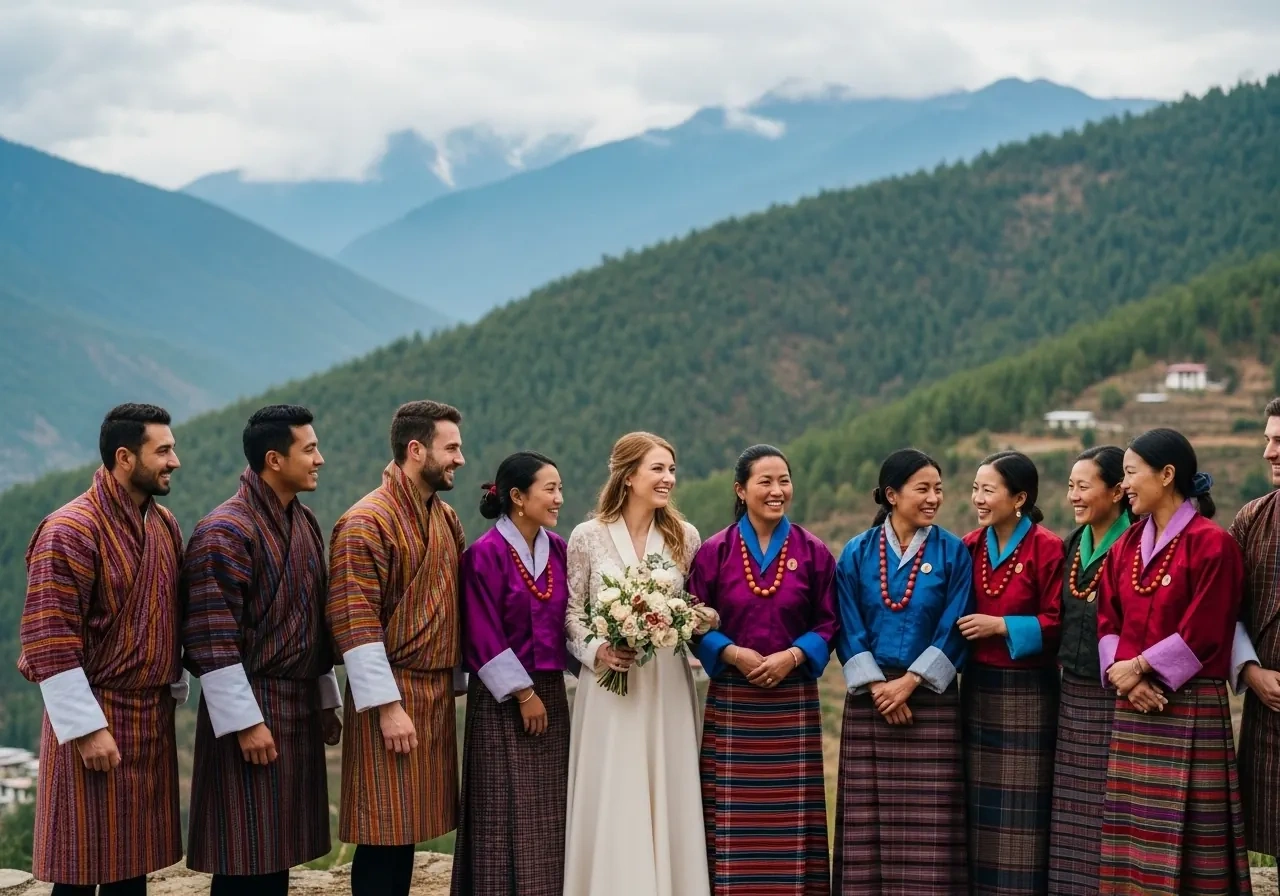
Wedding settings in Thimphu
- Luxury hotels: Thimphu's upscale hotels host intimate ceremonies and receptions, with banquet rooms and valley-view terraces.
- Hillside temples: a blessing ceremony at a quiet lhakhang above the city, arranged with the temple.
- Gardens and forest settings: outdoor spaces in the pine-covered hills around the capital, for smaller gatherings.
- Dochula Pass: photographs among the 108 chortens with the Himalaya behind.
Wedding settings in Paro
- Luxury lodges in the Paro valley: private gardens, forest settings and small-group dining.
- Farmhouses: a traditional Bhutanese setting with local food, a warm welcome and often a hot-stone bath.
- Temple blessings: ceremonies at historic temples in the valley, subject to permission from the temple.
- Riverside and valley views: open settings beside the Paro Chhu or among the terraced fields.
We match the setting to your guest numbers, style and season, and confirm every arrangement before you travel.
A traditional Bhutanese blessing
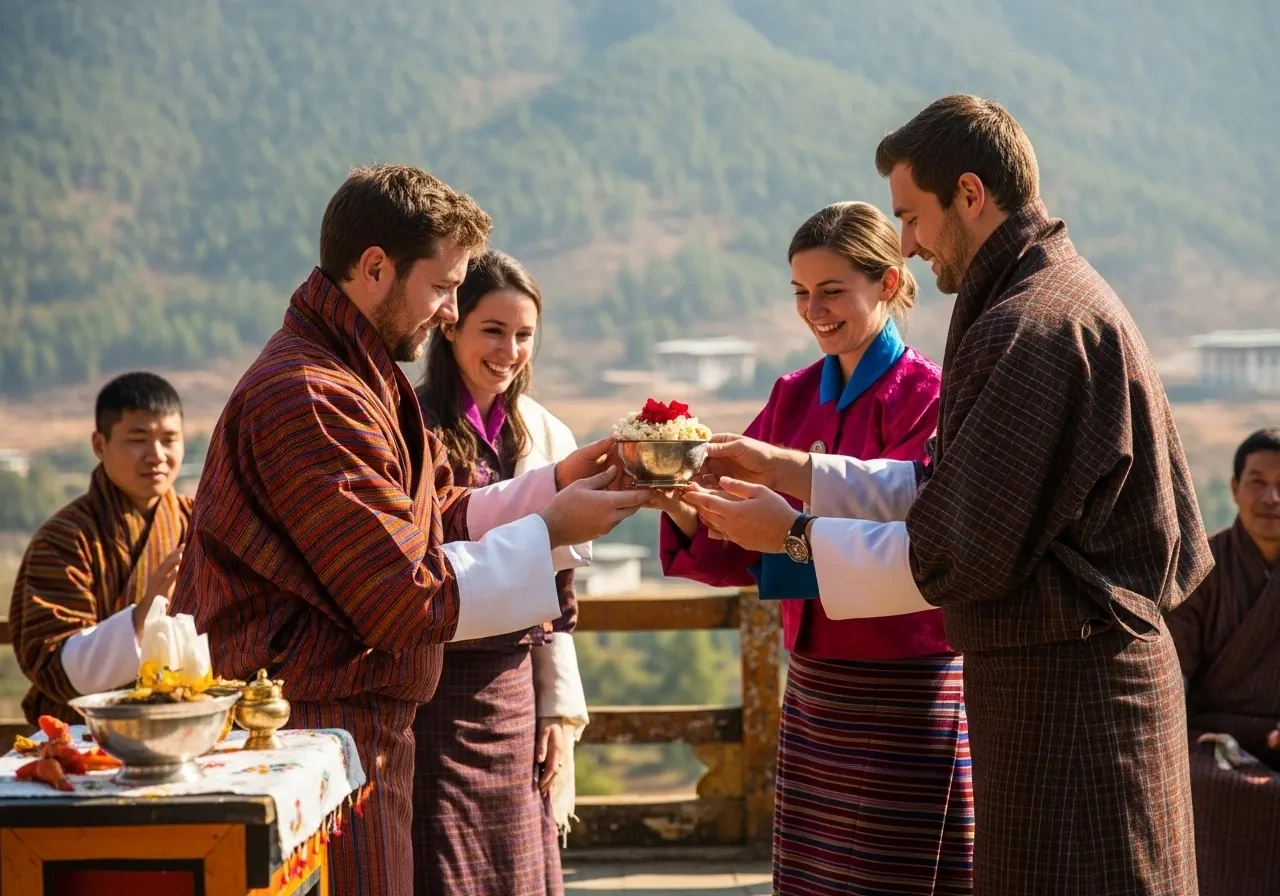
Many couples choose a Buddhist blessing in place of, or as well as, a legal ceremony. A lama performs prayers for long life, harmony and good fortune, often in a temple or a specially prepared shrine room. You wear Bhutanese dress, the gho for the groom and the kira for the bride, and receive white khadar scarves from the lama and your guests as a sign of good wishes.
The ceremony may include butter lamps, offerings and the chanting of prayers. Your guide explains each step as it happens, so you understand what the prayers mean. We arrange the lama, the attire, offerings and photography.
The legal side
A legal marriage at home plus a blessing in Bhutan is often the simplest route, and it is what many couples choose. The requirements for a legal marriage in Bhutan depend on your circumstances, so contact us early and we will explain the options and point you in the right direction for documents. We do not give legal advice, and we recommend you check with the authorities in your home country about recognition of any marriage abroad.
Best seasons for a wedding
Spring (March to May) brings blossom, rhododendrons and mild days, and autumn (September to November) the clearest skies and the best mountain views. Winter is dry and often sunny, with cold nights, and can be lovely for a very small wedding. The summer monsoon is green but brings cloud and rain, which can affect outdoor plans and flights into Paro. Some dates in the Bhutanese calendar are considered especially auspicious, and a lama can advise on them.

Sample itinerary: a 6-night wedding journey
- Day 1: Arrive in Paro and settle in. A welcome dinner for you and your guests.
- Day 2: Paro sightseeing and the dress fitting for your gho and kira.
- Day 3: The blessing ceremony, followed by a celebration lunch or dinner.
- Day 4: Drive to Thimphu via the valley, with an afternoon photo session.
- Day 5: Over the Dochula Pass for portraits among the 108 chortens, then on to Punakha or back to Thimphu.
- Day 6: A farewell day, perhaps the Tiger's Nest hike for those who are keen.
- Day 7: Depart from Paro.
See our Bhutan Wedding Tour for a full itinerary.
Guests and logistics
- Keep guest numbers small: venues and flights into Paro have limited capacity.
- Every guest needs a visa (unless exempt) and pays the Sustainable Development Fee. Check figures with our Trip Cost Calculator.
- A licensed guide accompanies groups beyond Thimphu and Paro, and we can provide more than one guide for larger parties.
- Mountain weather can delay flights. Plan to arrive at least a day or two before the ceremony.
- Let us know about elderly guests or those with limited mobility, so we can choose accessible settings.

Photography
Bhutan is a photographer's dream, but some rules apply. Photography is not allowed inside most temples and dzongs, and drones need permission. Outdoor portraits at the Dochula Pass, in the Paro valley and among prayer flags on the hillsides are usually the highlight. We can suggest the best light and timing for each location.
Etiquette and dress
- Guests should dress modestly at temples, with shoulders and knees covered.
- Many guests enjoy wearing a gho or kira for the ceremony. We arrange fittings for everyone who would like one.
- Accepting and offering white scarves is part of the celebration: your guide will show you how.
- Respect the lama's guidance on timings and the order of the ceremony.
What the couple wear
Most couples marry in national dress. The groom wears a gho, often in a fine hand-woven fabric, with a kera belt and white lagey cuffs, and the bride wears a full-length kira with a wonju blouse, a tego jacket and koma brooches at the shoulders. For a blessing, the couple may also wear ceremonial scarves. We arrange fittings soon after you arrive so that adjustments can be made in time. Read more in our guide to the gho and kira.
Food and celebration
A Bhutanese celebration centres on sharing food. Your wedding meal can feature local dishes such as ema datshi (chillies and cheese), red rice, buckwheat dishes and seasonal vegetables, alongside international food for guests who prefer milder flavours. Butter tea and suja are traditionally offered to guests, and a farmhouse dinner with a hot-stone bath afterwards makes a relaxed end to the day. Tell us about any dietary needs among your guests, and we will plan the menus around them. Traditional songs and dances can also be arranged for the evening, depending on the setting.
Planning tips
- Book 6 to 12 months ahead for spring and autumn, the most popular seasons.
- A legal marriage at home plus a blessing in Bhutan is often the simplest route. Ask us about documents.
- Decide early on your guest list, as it shapes the choice of setting.
- Build in a rest day after arrival for everyone to adjust to the altitude.
How we help
We take care of the whole journey: visas and permits, the lama and ceremony, attire and offerings, settings and meals, photography, guides, cars and hotels for you and your guests. We look after you from the first message to your departure.
Planning your Bhutan wedding? Message us on WhatsApp +975 17661648 or email [email protected].
Frequently asked questions
Can foreigners get married in Bhutan?
Many couples hold a legal marriage at home and a traditional Buddhist blessing ceremony in Bhutan. Contact us and we will explain the options and the documents to look into for your situation.
What are the best wedding venues in Thimphu and Paro?
Luxury hotels and lodges in both valleys host ceremonies and receptions, farmhouses offer a traditional setting, and blessings can be held at temples with permission. We match the venue to your guest numbers and style.
When is the best season for a wedding in Bhutan?
Spring (March to May) and autumn (September to November) bring the clearest weather and the best views.
What happens at a Bhutanese blessing ceremony?
A lama leads prayers for long life and harmony, often with butter lamps and offerings. The couple wear gho and kira and receive white khadar scarves as a sign of good wishes.
How many guests can come to a wedding in Bhutan?
Bhutan suits small, intimate weddings. Flights into Paro and many settings have limited capacity, so tell us your numbers early and we will plan around them.
Can we take wedding photos at the Dochula Pass?
Yes. The 108 chortens of the Dochula Pass, with the Himalaya behind on clear days, are one of the most popular places for wedding portraits.
How far ahead should we plan?
For spring and autumn, start 6 to 12 months ahead so that flights, hotels and the ceremony can be arranged for your preferred dates.









