

Bhutan is one of the few countries where national dress is worn every day. Men wear the gho and women the kira. Both are required in offices, schools and dzongs for Bhutanese citizens, and both are a proud everyday expression of identity.
This guide explains how each garment is made and worn, the scarves that go with them on formal occasions, what visitors should wear, and how to buy a gho or kira of your own.
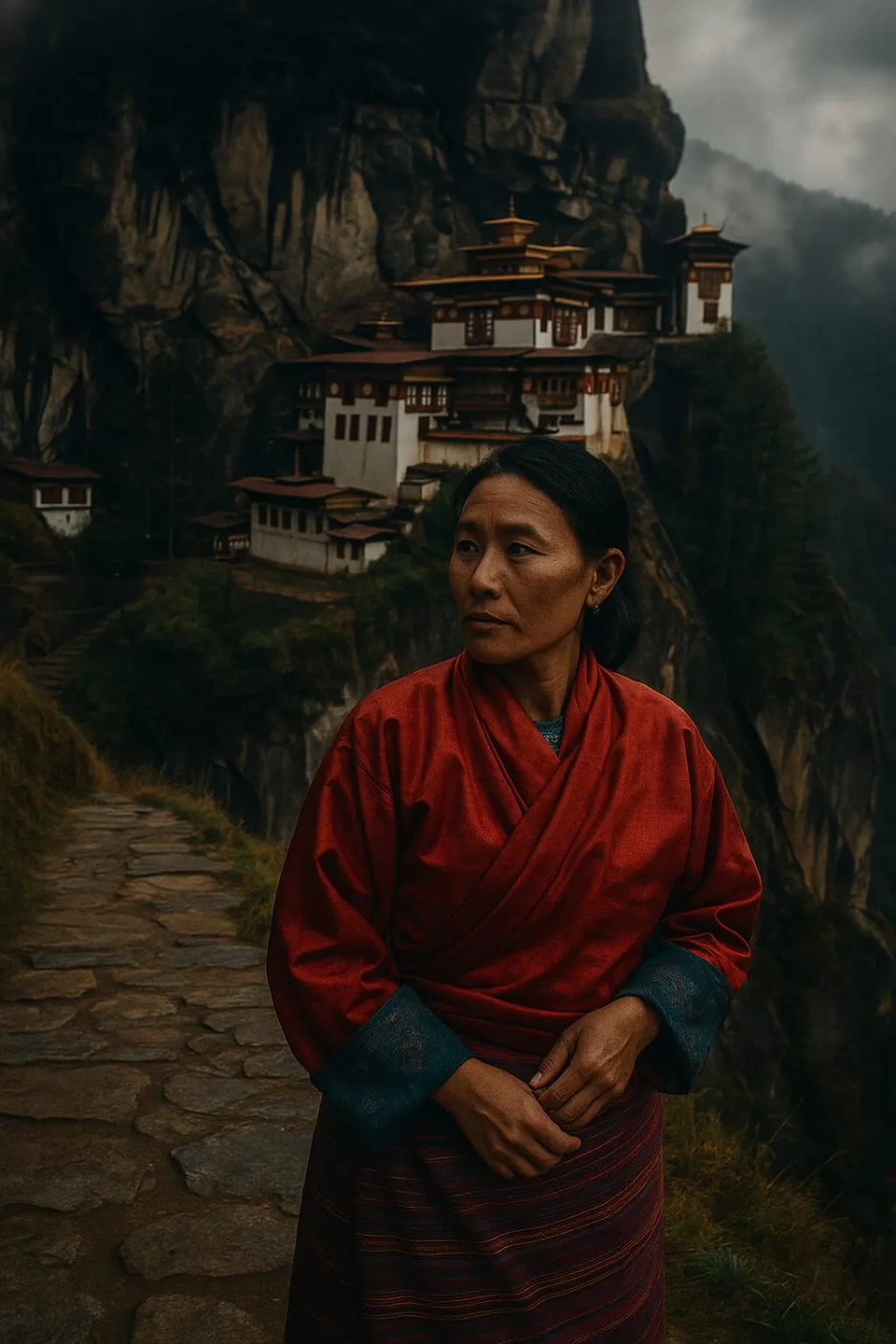
A living tradition
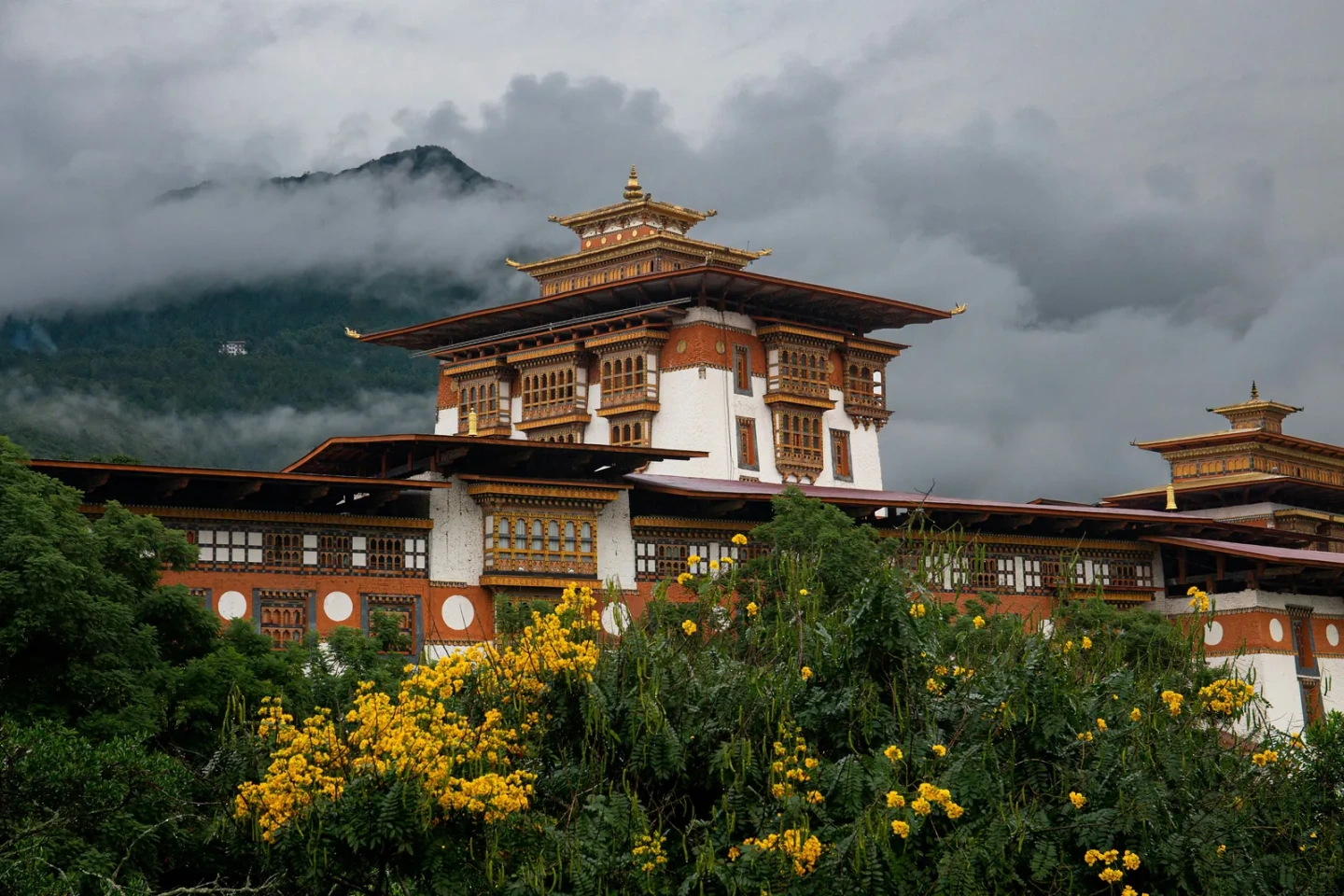
National dress in Bhutan is part of driglam namzha, the traditional code of etiquette and conduct that also shapes how people greet one another, behave in dzongs and show respect to elders. Its roots are often traced to the time of Zhabdrung Ngawang Namgyal, who unified Bhutan in the 17th century. Today you will see the gho and kira everywhere: on civil servants and schoolchildren, shopkeepers and farmers, at markets and at festivals.
The gho: Bhutanese dress for men
The gho is a knee-length robe, folded and tied at the waist with a woven belt called a kera, which forms a large pouch at the front. It is worn with white cuffs (lagey) turned back over the sleeves, and with knee-high socks and shoes.
The pouch formed above the belt is surprisingly practical. Bhutanese men use it to carry a phone, a wallet, papers and, in villages, sometimes a small bowl or even lunch. Everyday ghos are often made of cotton or wool in checks and stripes, while ghos for festivals and formal events may use finer hand-woven cloth or silk.
How a gho is put on
- The robe is put on like a coat, with the right side wrapped under the left.
- It is lifted until the hem is at knee height, and the back is folded into neat pleats.
- The kera is tied tightly at the waist, so the extra cloth falls over it to form the pouch.
- The white lagey cuffs are folded back over the sleeves.
The kira: Bhutanese dress for women
The kira is an ankle-length dress made from a rectangle of woven cloth, fastened at the shoulders with brooches (koma) and belted at the waist. It is worn over a blouse (wonju) with a short jacket (tego) on top.
Today many women wear a two-piece version for everyday life, with a wrap-around skirt in place of the full rectangle, which is easier to put on. The full kira is still worn for festivals, weddings and formal occasions. The cuffs of the wonju are folded back over the sleeves of the tego, adding a contrasting band of colour at the wrist.
Fabrics and patterns
The finest ghos and kiras are hand-woven, and the cloth itself is a work of art. The most prized is Kishuthara, a richly patterned silk brocade from Lhuentse in eastern Bhutan, worn for special occasions. Bumthang's woollen yathra is better known for blankets and jackets, but shows the same love of bold, geometric pattern. Everyday garments are often machine-made, which keeps them affordable and easy to wash.
Scarves and formal dress
On formal occasions and at dzongs, men wear a ceremonial scarf, the kabney, and women a narrower sash, the rachu, worn over the left shoulder. The colour of a man's kabney shows his rank: ordinary citizens wear white, while other colours are reserved for holders of particular offices and titles, with saffron yellow worn by His Majesty The King and the Je Khenpo, the chief abbot. The way the kabney is draped and adjusted when greeting a senior person is itself part of driglam namzha.
Children and school uniform
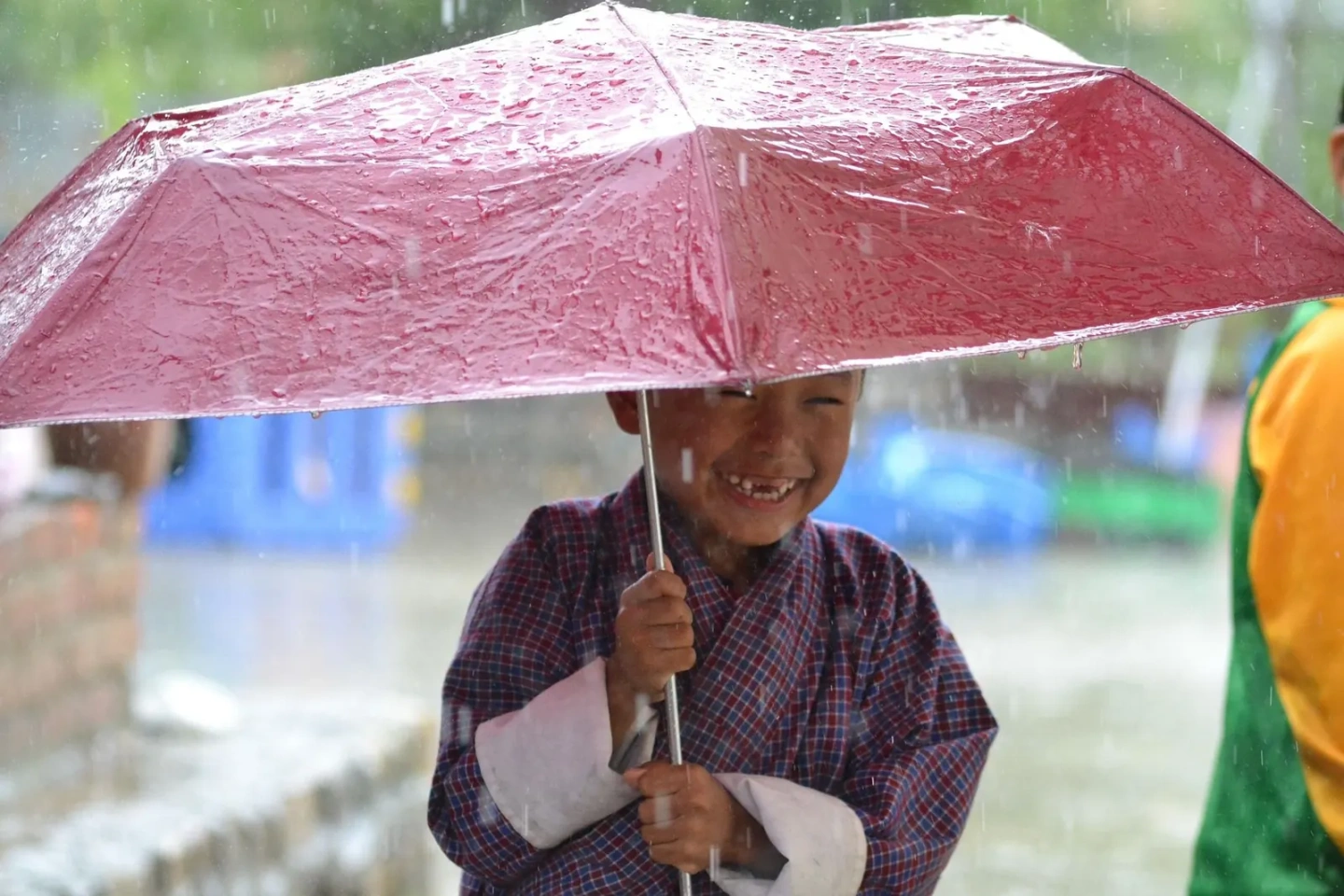
From an early age, Bhutanese children wear the gho and kira to school, often in a school's own colours. Seeing groups of schoolchildren in national dress walking along a mountain road is one of the everyday sights that stays with visitors. Children's ghos and kiras are also lovely gifts to take home.
Should visitors wear a gho or kira?
Visitors are not required to wear national dress, but many love to try it, especially for festivals, weddings and photographs. Bhutanese people generally take it as a warm compliment when a visitor wears national dress respectfully. Your guide can help you dress in a gho or kira correctly, as tying the kera or fastening the koma takes practice.
When visiting dzongs and temples in your own clothes, wear modest clothing with long sleeves and long trousers or skirts, and avoid shorts, sleeveless tops and caps. A scarf or shawl is handy for covering your shoulders.
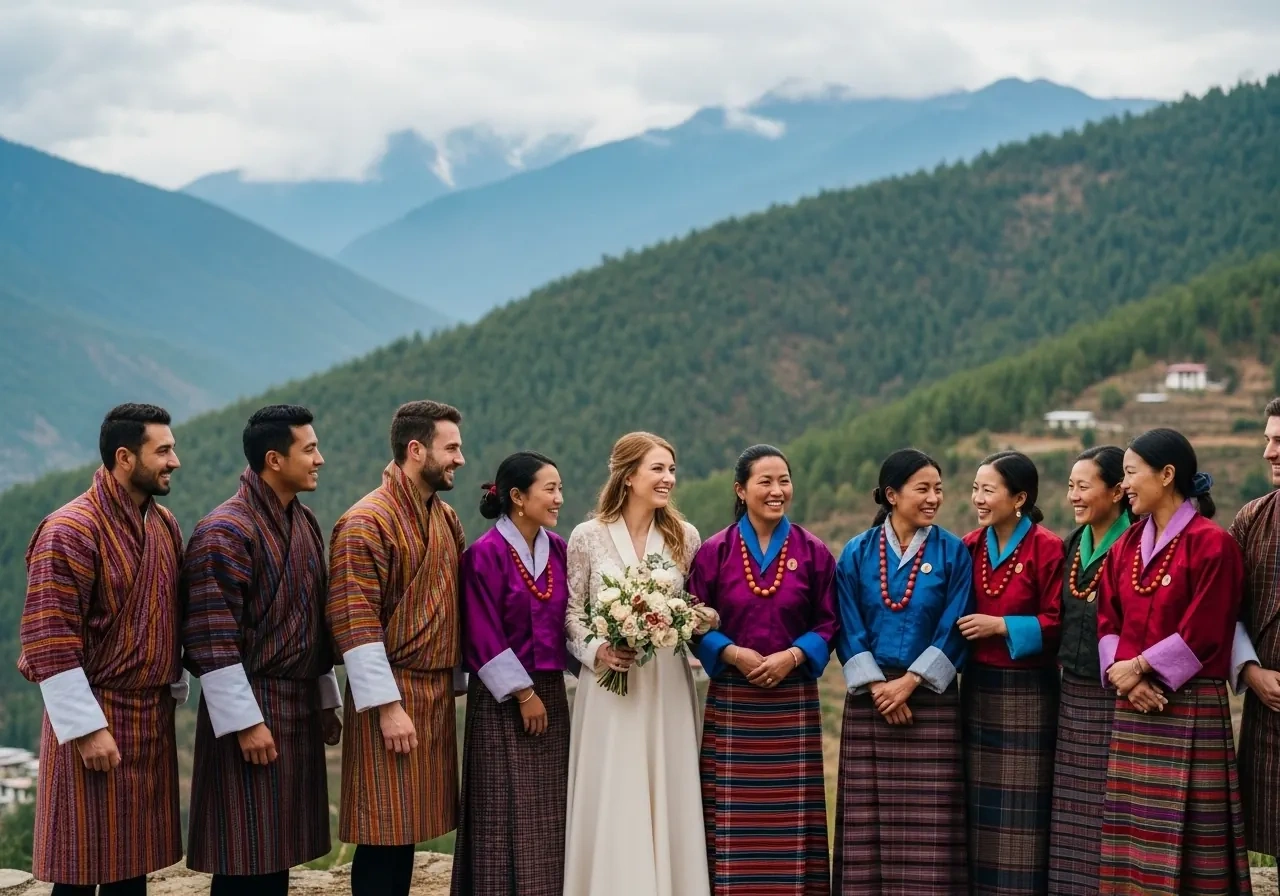
If you are invited to a Bhutanese home or a family celebration, wearing national dress is a thoughtful gesture, and your hosts will often help you adjust it.
Weddings and festivals
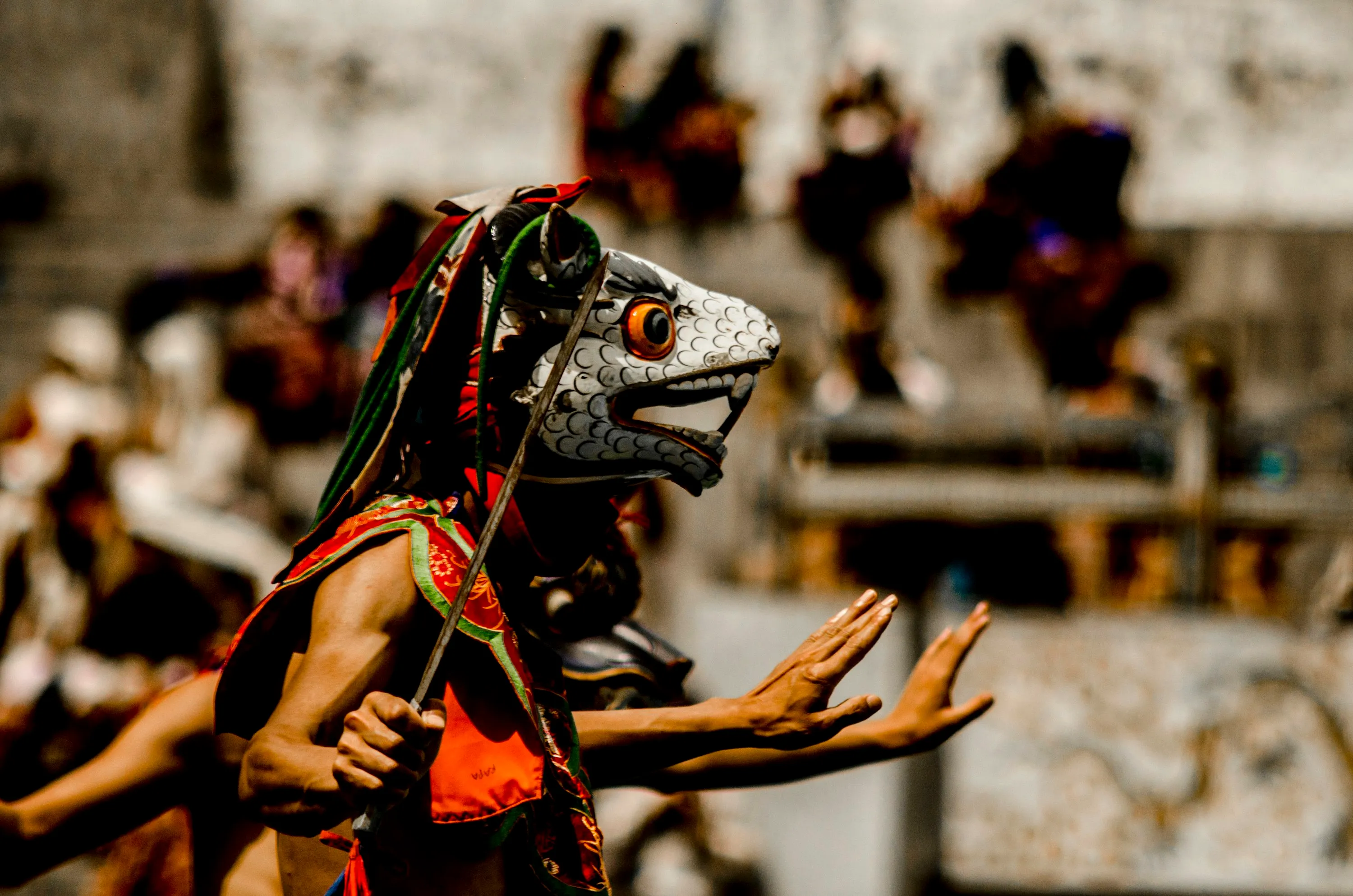
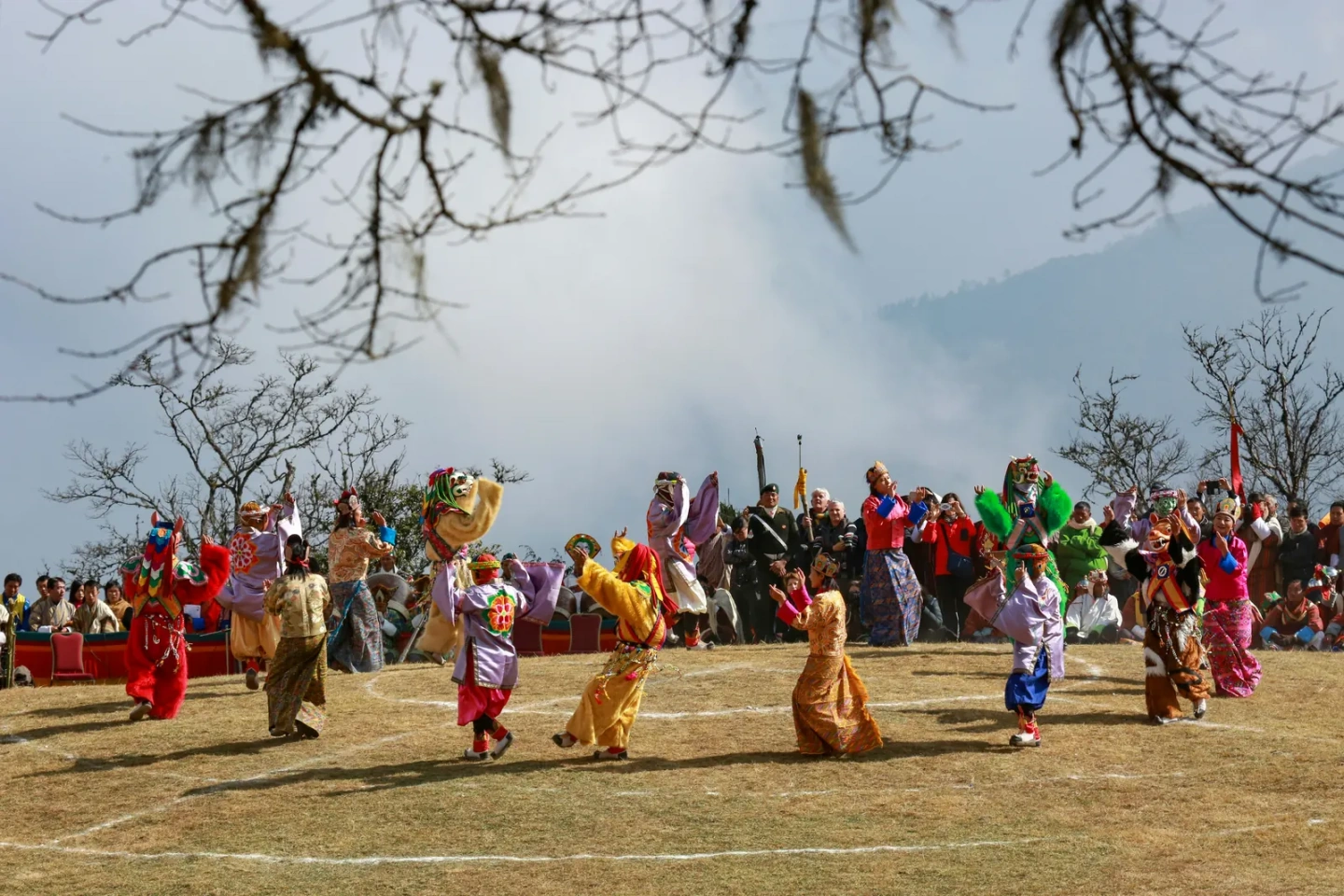
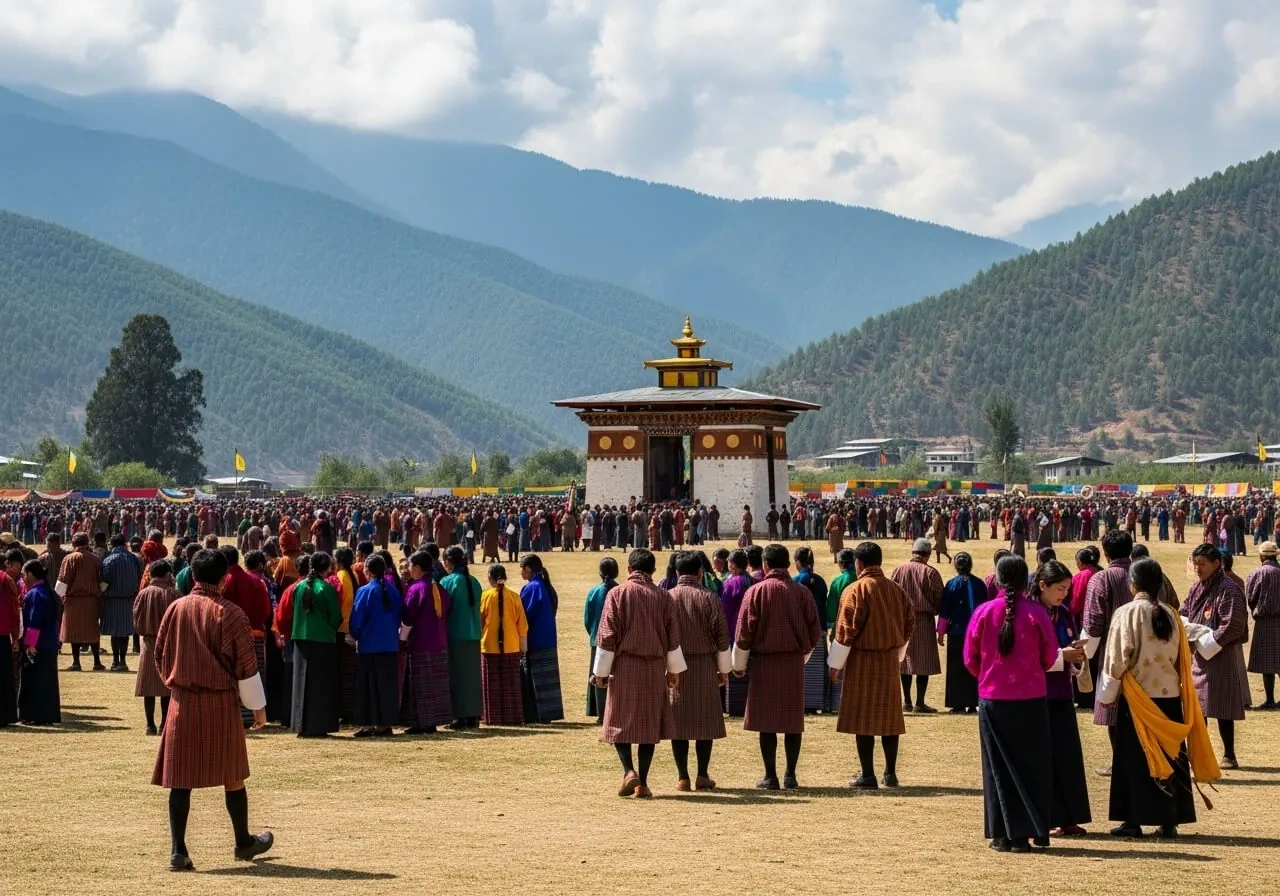
National dress comes into its own at celebrations. At a tsechu (festival), families arrive in their finest ghos and kiras, and the courtyard of the dzong becomes a sea of colour. Couples who hold a blessing ceremony in Bhutan usually wear national dress too, and guests often join them. See our festival calendar and our Bhutan Wedding Tour.
Tips for visitors wearing national dress
- Ask your guide or hotel staff to help you dress the first time, as the folds and belt take practice.
- Tie the kera firmly: a loose belt lets the gho slip down during the day.
- For men, knee-high socks and smart shoes complete the look. Trainers are best avoided at formal events.
- For women, comfortable flat shoes work well with a kira on uneven festival grounds.
- Do not wear a kabney or rachu unless your guide advises it, as these carry meaning in Bhutanese etiquette.
- Bring a warm layer: a gho or kira can feel cool in the high valleys in the evening.
Colours and occasions
There are no strict rules about the colours of an everyday gho or kira, and you will see every shade from deep reds and blues to soft pastels. For formal occasions, people choose their finest cloth, often with intricate woven patterns. At festivals, the brightest and richest garments come out, and many families keep special kiras and ghos that are passed down and worn only on important days. Choosing a colour you love is the best guide for a visitor.
Buying a gho or kira
- Sizing: a gho is adjusted at the waist, so a single size fits a range of heights. Tell us your height and chest measurement for a good fit.
- Fabric: cotton for everyday wear and warm weather, wool for winter, and silk or fine hand-woven cloth for special occasions.
- Accessories: a kera belt, lagey cuffs, a wonju and tego for a kira, and koma brooches complete the outfit.
- Care: hand-wash or dry-clean hand-woven pieces, and store them folded rather than hung.
Shop for a gho for men in our marketplace, or see our Bhutan souvenirs guide.
How we help
On a tour, we can arrange a fitting with a tailor or a visit to a weaver, and your guide will help you dress for a festival or ceremony. From home, we can advise on sizes and styles and help you choose from our marketplace.
Need help with sizing or styles? Message us on WhatsApp +975 17661648 or email [email protected].
Frequently asked questions
What is the Bhutanese dress for men called?
The gho: a knee-length robe tied at the waist with a woven belt called a kera.
What is the Bhutanese dress for women called?
The kira: an ankle-length dress worn with a wonju blouse and a tego jacket.
Do tourists have to wear a gho or kira in Bhutan?
No, but modest clothing is expected at dzongs and temples. Many visitors enjoy wearing national dress for festivals and photographs.
What is a kabney?
A ceremonial scarf worn by men on formal occasions and at dzongs. Its colour shows rank, and ordinary citizens wear white. Women wear a narrower sash called a rachu.
What is the pouch in a gho used for?
The kera belt creates a large pouch at the front of the gho, which men use to carry everyday items such as a phone, wallet and papers.
What is the most prized fabric for a kira?
Kishuthara, a richly patterned hand-woven silk from Lhuentse in eastern Bhutan, is among the most prized and is worn for special occasions.
Can I buy a gho or kira online?
Yes. Our marketplace offers traditional Bhutanese clothing, starting with the gho for men, and we can help with sizing and styles.