










Bhutanese food is warming, hearty and built around one ingredient above all: chilli. In Bhutan, chillies are treated as a vegetable rather than a seasoning, and the national dish combines them with melted cheese. Add red rice, buckwheat from the high valleys, butter tea and a glass of home-made ara, and you have a cuisine that reflects the mountains it comes from. This guide covers the dishes to try, how to manage the heat and what vegetarians can expect.
Bhutanese food at a glance
- National dish: ema datshi, chillies cooked with cheese.
- Staple: red rice, often served with every meal.
- Regional specialities: buckwheat noodles and pancakes in Bumthang, buckwheat dumplings in Haa.
- Drinks: suja (butter tea) and ara (local spirit).
- Vegetarian: easy, with many vegetable and cheese dishes.
- Spice: you can ask for less chilli.
Datshi: the heart of Bhutanese cooking
Datshi means cheese, and it gives its name to a family of dishes that appear at almost every meal. The cheese is a soft local cheese, melted into a sauce with the main ingredient.
- Ema datshi: green or red chillies cooked with cheese, onion and sometimes tomato. The national dish, and often very hot.
- Kewa datshi: potatoes in cheese sauce, usually milder and a good first choice.
- Shamu datshi: mushrooms in cheese sauce, especially good in the wild mushroom season.
- Datse: the soft cheese itself, made from cow's milk.
Datshi is eaten with rice, and a spoonful of sauce over a plate of red rice is one of the most comforting meals in Bhutan.
Red rice and staples
Bhutanese red rice is a semi-milled rice grown in the Paro valley and other areas. It cooks quickly, has a slightly nutty flavour and a soft, sticky texture. You will find it at nearly every meal, alongside white rice in many hotels. Buckwheat and maize are also traditional staples in higher and drier regions.
Meat dishes
- Phaksha paa: pork cooked with chillies and often radish or dried greens. Rich and filling.
- Jasha maru: spicy diced chicken with garlic, ginger, tomato and chilli.
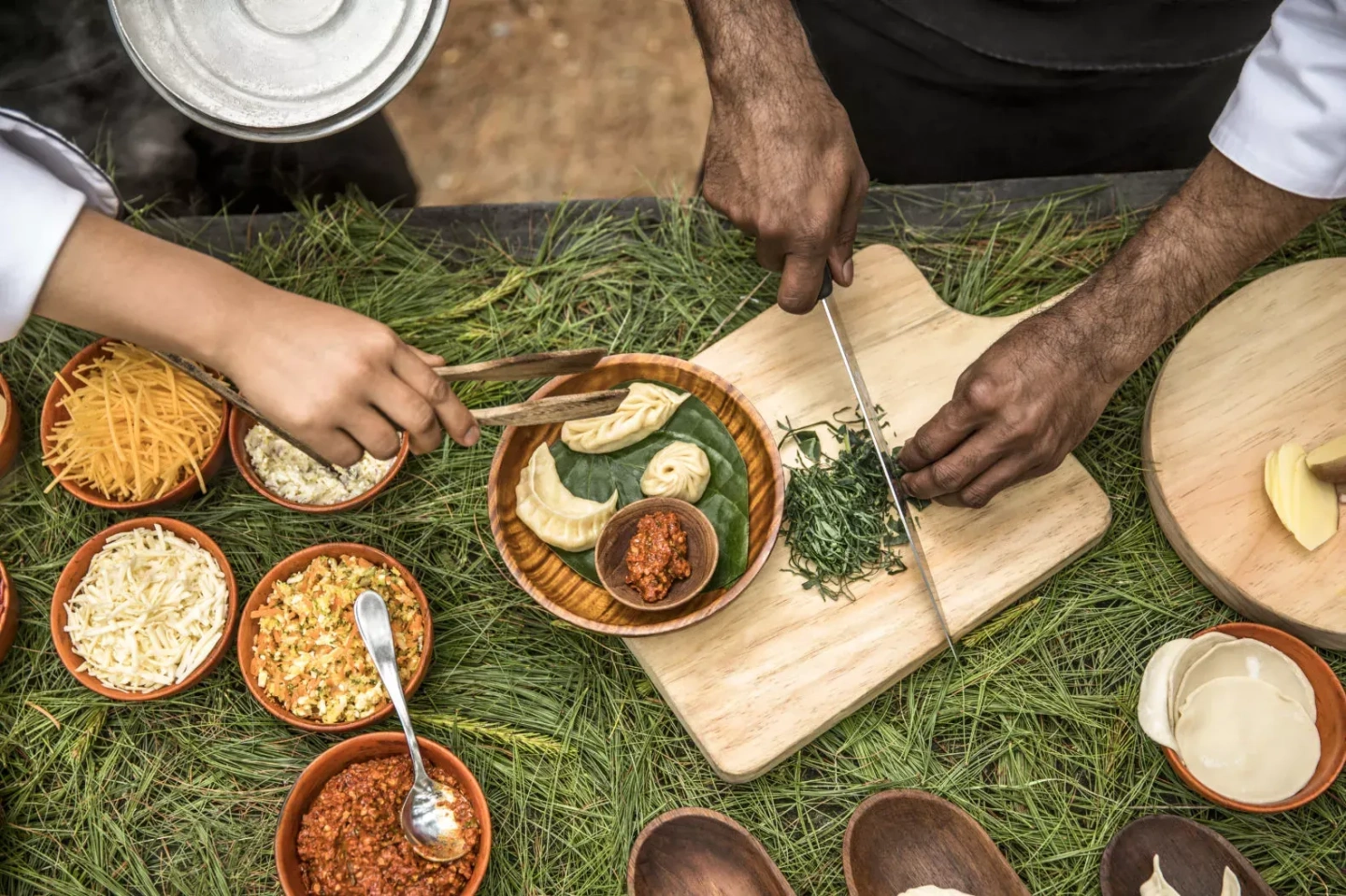
- Momos: steamed dumplings filled with meat, cheese or vegetables, served with a fiery chilli sauce. A favourite snack.
- Dried meat: dried beef and pork are traditional in colder regions and appear in many stews.
Because of the Buddhist reluctance to take life, much of the meat sold in Bhutan is imported, and slaughter is avoided on auspicious days. You may notice that meat is less prominent in some religious months.
Buckwheat specialities from the valleys
Some of the most distinctive dishes come from the high valleys, where buckwheat grows better than rice.
- Puta: buckwheat noodles from Bumthang, often served with butter and chilli. Try them on a trip to the temples of Bumthang.
- Khur-le: buckwheat pancakes, eaten with curries or ezay, the Bhutanese chilli relish.
- Hoentay: buckwheat dumplings from the Haa Valley, filled with turnip greens, cheese and spices. A special dish often made at Losar, the New Year.
Drinks: suja and ara
Suja is butter tea, made by churning tea with butter and salt. It is savoury rather than sweet, and many visitors find it an acquired taste, but it is welcome on a cold day and you will be offered it in homes and monasteries. Sweet milk tea, known as ngaja, is also popular.
Ara is a local spirit distilled from rice, maize, millet or wheat. It is often served warm, sometimes with butter and egg, and is part of hospitality in village homes. Drink it slowly, and wait until you have acclimatised; our altitude guide explains why.
Snacks and street food
- Zow: a crunchy snack of fried or puffed rice, often with butter and sugar, served with butter tea.
- Momos: sold in small cafés across the towns.
- Ezay: a fresh chilli relish served on the side of many meals.
- Seasonal fruit: apples, oranges and other fruit in the markets.
Doma: a cultural note
You will notice many Bhutanese chewing doma, also called paan: areca nut wrapped in a betel leaf with a little lime. It is offered as a gesture of hospitality and friendship, and the red stains you see on pavements come from it. Visitors are not expected to try it, and it is fine to decline politely.
Vegetarian food in Bhutan
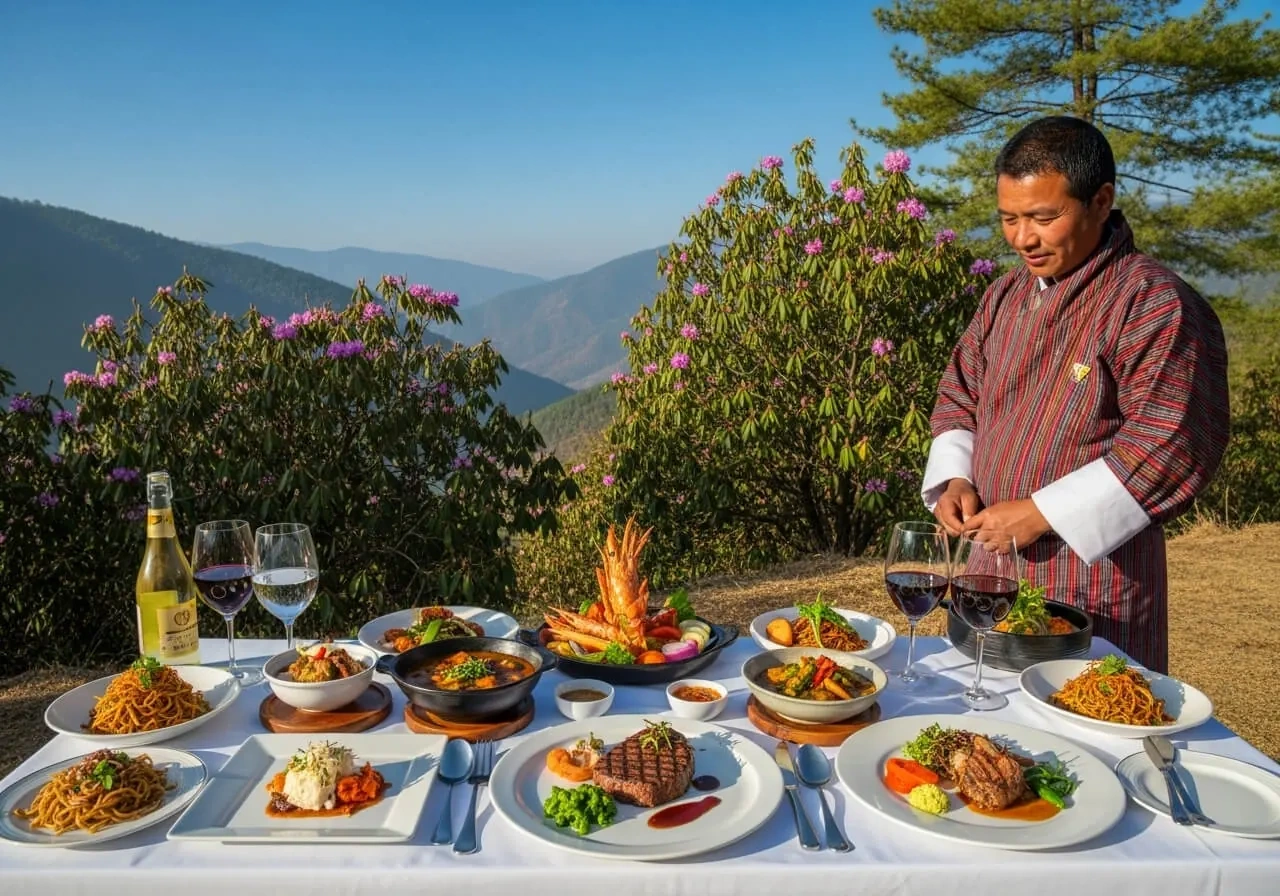
Bhutan is an easy country for vegetarians. Datshi dishes, vegetable curries, dal, red rice, buckwheat dishes and cheese momos are widely available, and hotel buffets almost always include several vegetarian options. Vegan travellers will find it harder, because cheese and butter are so common, but with notice we can ask hotels and restaurants to prepare suitable dishes.
Let us know about any dietary needs, allergies or religious requirements when you plan your trip, and we will pass them on to hotels and your guide.
Managing the chilli
Bhutanese food can be very hot. Hotels and restaurants serving visitors usually tone down the spice, but it is always worth saying "less chilli" when you order. Try kewa datshi before ema datshi, take a spoonful of ezay to taste before adding more, and keep some rice on your plate to balance the heat.
Where you will eat
Most hotels serve buffet meals with a mix of Bhutanese, Indian, Chinese and Continental dishes. In towns, small restaurants and cafés offer local food and momos. The most memorable meals are often in farmhouses, where families cook over wood fires and serve dishes made with their own produce.
We can arrange a farmhouse meal or a cooking class during your trip, where you help prepare ema datshi, momos or other dishes with a local family. It is one of the best ways to understand daily life in Bhutan. Ask us when planning, or add it to a 5-day or 7-day itinerary.
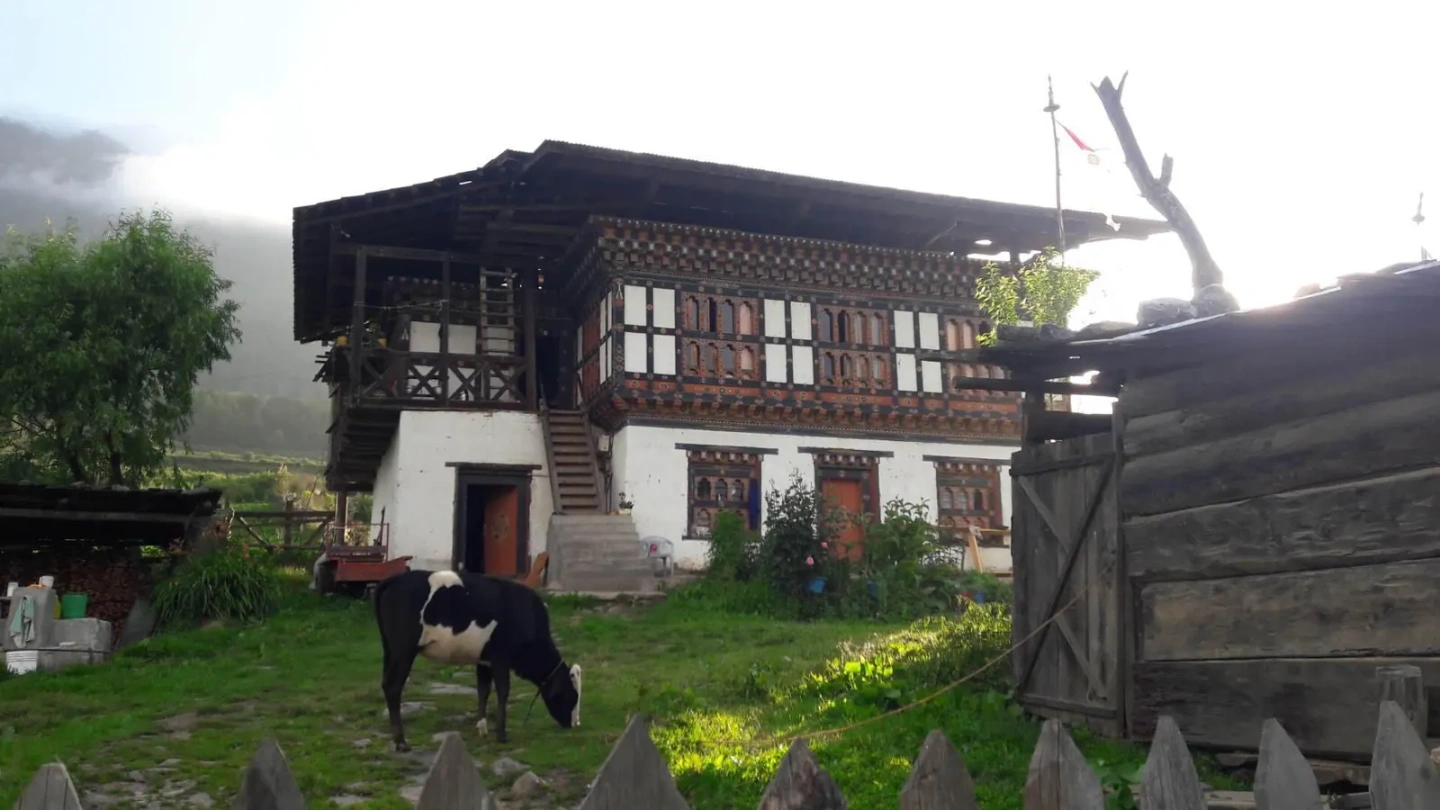
Table manners and etiquette
Meals in Bhutan are relaxed, but a few customs are worth knowing. When offered food or drink in a home, it is polite to decline once or twice before accepting; your host will usually insist, and this is part of the exchange. Many Bhutanese eat with their right hand, especially at home, but you will always be given a spoon if you prefer. Try a little of everything offered, and leave a small amount on your plate when you have had enough, otherwise your host may keep refilling it.
Before drinking, some Bhutanese dip a finger in their cup and flick a few drops into the air as an offering. You do not need to do this yourself, but it is a lovely tradition to notice.
Food tips for travellers
- Drink bottled, boiled or filtered water; see our safety guide.
- Carry small cash for cafés and markets; see money in Bhutan.
- Try one new dish a day, starting mild.
- Accept butter tea graciously when offered, even if you only sip it.
- Ask your guide to recommend a local café for momos.
Would you like a farmhouse meal or cooking class? Message us on WhatsApp +975 17661648 or email [email protected]. We reply with a tailored itinerary and quote.
Frequently asked questions
What is the national dish of Bhutan?
Ema datshi, made from chillies and local cheese. It is eaten with rice at almost every meal.
Is Bhutanese food very spicy?
It can be. Chillies are treated as a vegetable. Hotels usually reduce the spice for visitors, and you can always ask for less chilli.
Is Bhutan good for vegetarians?
Yes. Many dishes are vegetarian, including datshi dishes, vegetable curries and cheese momos. Vegan travel is harder because of dairy, so let us know in advance.
What is suja?
Suja is Bhutanese butter tea, made with tea, butter and salt. It is savoury and often offered in homes and monasteries.
What is ara?
Ara is a local spirit distilled from grains such as rice, maize or millet. It is often served warm in village homes.
What are the regional specialities?
Puta (buckwheat noodles) and khur-le (buckwheat pancakes) from Bumthang, and hoentay (buckwheat dumplings) from the Haa Valley.
Can I take a cooking class in Bhutan?
Yes. We can arrange a cooking class or farmhouse meal with a local family as part of your itinerary.









