




Baku’s Heydar Aliyev International Airport (GYD), on the Absheron Peninsula east of the city, is where almost every Azerbaijani journey to Bhutan begins. Compared with many countries, Azerbaijan is relatively well placed for the Himalayas: there is only a two-hour time difference, and a range of carriers connect Baku with the hubs that feed Bhutan’s flights. There are no direct services, however, so this page explains how to plan the connection from the capital.
Heydar Aliyev International: Your Baku Departure
The airport is an easy drive from central Baku along the main highway. From here, our Azerbaijan guide describes several possible first legs: Azerbaijan Airlines or Flydubai to Dubai, IndiGo or Azerbaijan Airlines towards Delhi (often via Istanbul or Doha), and connections with Qatar Airways or Turkish Airlines towards Bangkok. Airlines revise these networks regularly, so check current schedules before choosing a route.
Which Hub Suits a Baku Traveller?
Bhutan’s flights are operated only by Drukair (Royal Bhutan Airlines) and Bhutan Airlines, landing at Paro International Airport, the country’s only international airport. Your aim from Baku is to reach one of their gateway cities with time to spare. Our country guide highlights three in particular:
- Delhi: a popular choice, reached from Baku with IndiGo or Azerbaijan Airlines, often via Istanbul or Doha.
- Bangkok: reached by transiting with Qatar Airways or Turkish Airlines.
- Kathmandu: reached via Turkish Airlines or Flydubai.
Our guide also notes that a Drukair service from Dubai has operated seasonally. Because seasonal routes come and go, treat it as something to ask about rather than to count on, and confirm with your tour operator when you plan.
For many Baku residents, Delhi is the most straightforward option because of the range of routes into it. Kathmandu appeals to travellers who would like to add a few days in Nepal, and Bangkok suits those planning a longer Asian holiday. The return journey can use a different gateway from the outbound one if that suits your plans, and we can book the Paro sectors accordingly.
Baku to Paro in Practice: An Example
To illustrate, one possible trip looks like this. You take an evening flight from Baku to Istanbul, connect overnight to Delhi and arrive in the morning. You rest at a hotel near the airport for the remainder of the day, then fly Drukair or Bhutan Airlines to Paro the following morning. Your guide meets you at arrivals and drives you into the valley.
Even when the connections look tidy on paper, we recommend that rest day in the gateway. The approach into Paro is visual-only, and weather can cause delays, so a buffer keeps your itinerary safe.
Two Hours Ahead: Baku and Bhutan Clocks
Azerbaijan keeps UTC+4 all year and does not observe daylight saving. Bhutan keeps UTC+6, also without clock changes. Bhutan is two hours ahead of Baku in every season. When it is 10am in Baku, it is noon in Paro.
That small difference is a real advantage, and it is one of the reasons Bhutan works well even for a shorter break from Azerbaijan. Jet lag is minimal, and most travellers from Baku feel at home in Bhutan from the first evening, which means you can start sightseeing in earnest on day one.
The Caspian Climate vs Bhutan’s Valleys
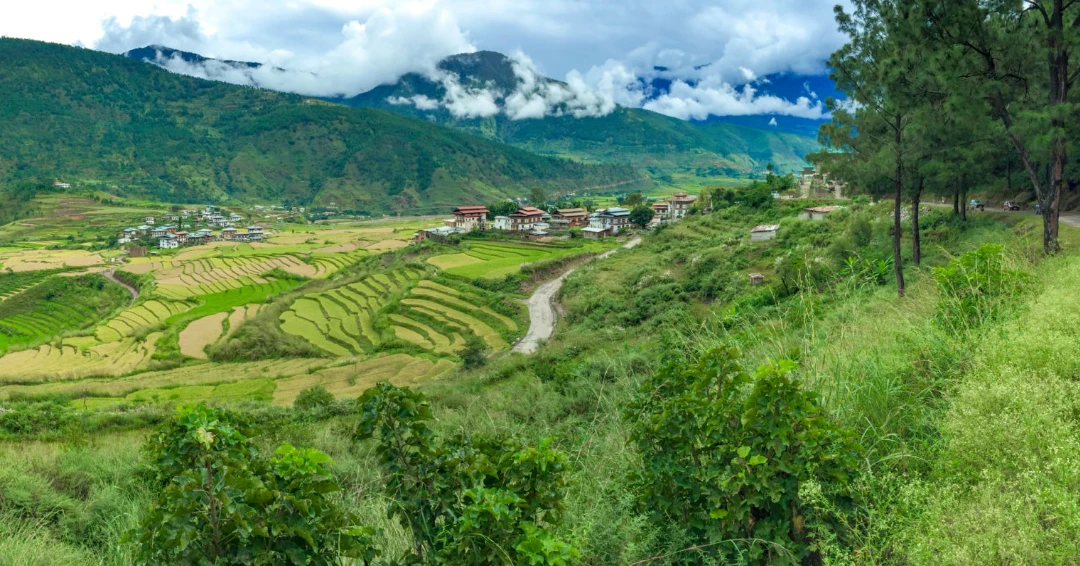
Baku is known for its strong winds, hot, dry summers and cool, damp winters by the Caspian Sea. Bhutan’s weather follows a different logic. Spring (March to May) and autumn (September to November) are the peak travel seasons. Summer means monsoon rain from June to August, while December to February is cold and clear, more so at altitude.
Spring is an appealing escape from Baku’s blustery late winter, while autumn trades the end of the Caspian summer for clear mountain views. Our Azerbaijan guide mentions Paro Tshechu in spring; Thimphu Tshechu takes place in autumn. Both dates follow the lunar calendar and change each year.
Visa and Fees for Azerbaijani Citizens
Azerbaijani nationals need a Bhutan visa. It is applied for online in advance and usually arranged through a licensed Bhutanese tour operator. On arrival in Paro, you present the approval letter and the visa is stamped into your passport; our Azerbaijan guide notes a visa fee of approximately USD 40.
- SDF: currently USD 100 per adult per night for most international visitors; confirm the latest rate with the Department of Tourism before booking.
- Insurance: travel insurance for your entire stay is required.
- Money: the ngultrum is pegged 1:1 to the Indian rupee; ATMs are mainly in towns.
Suggested Durations from Baku
Because the journey is relatively short and the time change small, travellers from Baku can make good use of even a compact trip. Four or five nights covers Paro and Thimphu. A week adds Punakha and the Dochula pass. Ten nights or more brings in central Bhutan, and two weeks allows a trek in spring or autumn.
Baku Travellers’ FAQ
Is there a direct flight from Baku to Bhutan?
No. You will connect through a hub such as Istanbul, Doha or Dubai and an Asian gateway such as Delhi, Bangkok or Kathmandu.
Will jet lag be a problem?
Unlikely. Bhutan is only two hours ahead of Baku, so most visitors adjust almost immediately.
Can you book the Drukair or Bhutan Airlines flight?
Yes. We routinely arrange this sector so it fits your visa, itinerary and long-haul tickets.
For a wider overview of visas, routes and itineraries for Azerbaijani travellers, see our full guide How to Travel to Bhutan from Azerbaijan. Contact us when you are ready to plan your trip from Baku.