




Bhutan and Nepal sit side by side in the Himalaya, and many travellers weigh one against the other. Both offer mountains, monasteries and warm hospitality, but they are very different trips. Nepal is larger, more varied and suits a wide range of budgets. Bhutan is smaller, quieter and organised around a particular philosophy of tourism. This guide compares them fairly, so you can decide which is right for you, or whether to combine both.
Bhutan and Nepal at a glance
- Cost model: Bhutan has a daily Sustainable Development Fee; Nepal has no daily fee.
- Crowds: Bhutan is quieter; Nepal's main sights and trails can be busy in peak seasons.
- Trekking: Nepal has more routes and teahouse treks; Bhutan's treks are mostly camping and very quiet.
- Culture: Bhutan has a living Vajrayana Buddhist culture; Nepal blends Hindu and Buddhist traditions.
- Travel style: Bhutan trips are guided; Nepal suits independent travel too.
- Connection: flights link Kathmandu and Paro, so you can combine both.
Cost and entry
The biggest difference is how each country approaches tourism. Bhutan follows a policy often described as "high value, low volume". Most international visitors pay a Sustainable Development Fee of USD 100 per adult per night, confirmed until 31 August 2027, which supports health, education and conservation. Indian nationals pay INR 1,200 per night. Visitors also travel with a licensed guide. Our visa and SDF guide explains the details, and the trip cost calculator helps you estimate a budget.
Nepal has no daily fee. A visa on arrival is generally available for many nationalities at Kathmandu airport and some land borders, though rules vary by nationality, so check current rules before you travel. Nepal can be travelled on a very wide range of budgets, from simple guesthouses to luxury lodges, which makes it attractive for longer trips and budget-minded travellers.

Crowds and atmosphere
Bhutan receives far fewer visitors than Nepal. Even at well known sights such as Tiger's Nest or Punakha Dzong, you will rarely feel crowded, and many valleys see only a handful of visitors a day. Towns are small and calm, and there are no traffic lights in the capital.
Nepal is livelier. Kathmandu and its old city squares are full of energy, markets and traffic, and Pokhara is a busy, relaxed lakeside base. Popular trekking routes can be crowded in the main autumn and spring seasons, though quieter routes exist for those who look. Many travellers enjoy this energy; others prefer Bhutan's stillness.
Trekking
Nepal is one of the world's great trekking destinations. It has far more routes than Bhutan, including famous treks in the Everest and Annapurna regions, and many follow teahouse trails where you sleep and eat in lodges along the way. Teahouse trekking is usually cheaper and easier to organise, and it suits independent trekkers and those on short timelines.
Bhutan's treks are fewer and mostly involve camping, with a crew, pack animals and a cook. They are very quiet: you may walk for days without meeting another group. Routes range from short treks near Paro to the demanding Snowman Trek, among the hardest in the Himalaya. Our trekking tours page explains the options, and our altitude guide covers how to prepare.
Culture and heritage
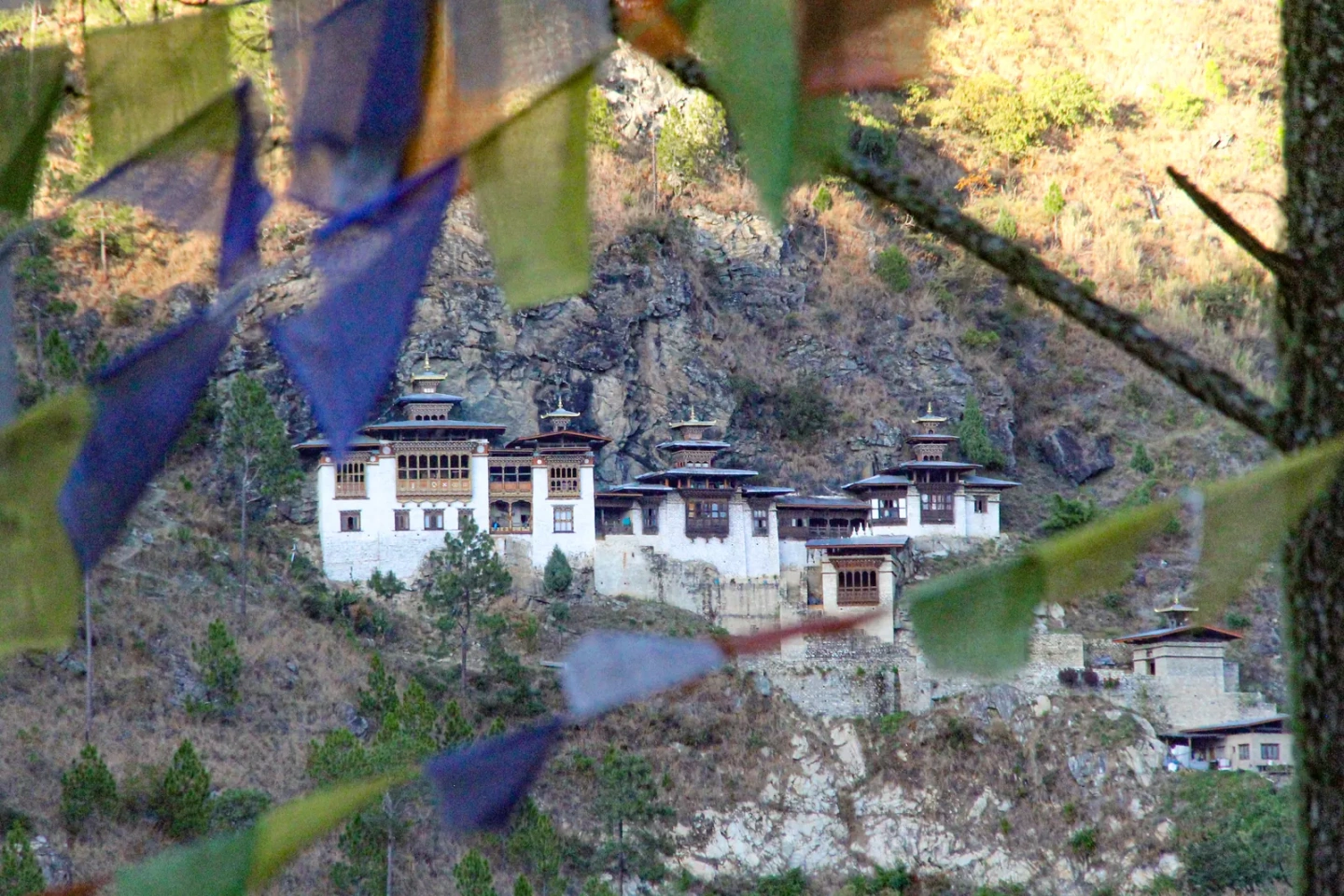
Bhutan's culture is a living Vajrayana Buddhist tradition. Dzongs, the great fortress monasteries, still serve as both religious and administrative centres. Monks, festivals and prayer flags are part of everyday life, and many Bhutanese wear national dress. Festivals such as tshechus bring whole communities together; see our festival calendar.
Nepal offers a rich blend of Hindu and Buddhist traditions. The Kathmandu Valley alone holds a remarkable concentration of heritage: palace squares, Hindu temples, great stupas and centuries of Newar art and architecture. Beyond the valley, Lumbini, the birthplace of the Buddha, and mountain communities with their own traditions add further depth. For travellers interested in history and religious diversity, Nepal is wonderful.
Scenery and wildlife
Nepal has eight of the world's fourteen peaks above 8,000 m, including Everest, and its mountain views are hard to match. It also has lowland national parks such as Chitwan, known for rhinos and wildlife safaris.
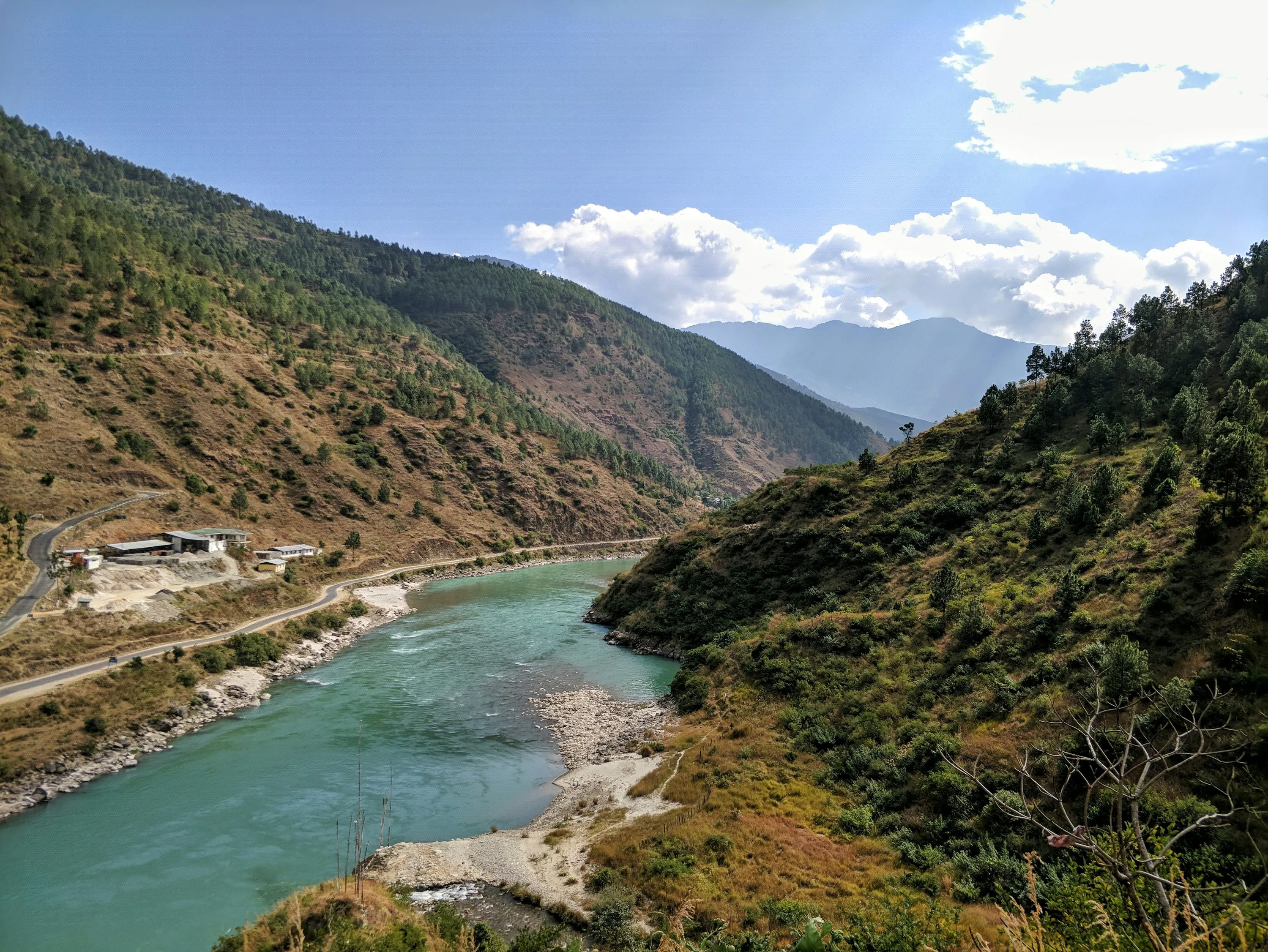
Bhutan's peaks are less famous but beautiful, and around 70 percent of the country is forested. Views from passes such as Dochula stretch across the eastern Himalaya on clear days, and the Phobjikha Valley hosts black-necked cranes in winter.

When to go
The best seasons are similar in both countries. Autumn, from about late September to November, brings clear skies and mountain views, and is the peak season for trekking in Nepal and for festivals in Bhutan. Spring, from about March to May, is also popular, with rhododendrons in bloom. The summer monsoon brings rain to both, while winter is cold in the hills but often clear. In Bhutan, winter is a quieter time to visit, and the Black-necked Crane Festival in Phobjikha takes place in November. Our best time to visit Bhutan guide has more detail.
Getting there and combining both
Flights between Kathmandu and Paro, operated by Drukair and Bhutan Airlines, connect the two countries. On clear days the flight passes close to the high Himalaya, and some travellers see Everest from the window. Schedules change, so check current flights when planning. Our guide to travelling to Bhutan from Nepal covers visas, the SDF, flights and itineraries.
Combining both countries in one trip works well. A common pattern is a week or more in Nepal for Kathmandu, trekking or wildlife, followed by five to seven days in Bhutan. Our 5-day and 7-day Bhutan itineraries fit neatly after a Nepal visit.
Who should choose which
Choose Bhutan if you
- want quiet sights and a calm pace
- are interested in living Buddhist culture and dzong architecture
- prefer a guided, well organised trip
- want to see a festival in a small community setting
- value a destination that limits visitor numbers
Choose Nepal if you
- want classic teahouse treks such as Everest or Annapurna
- are travelling on a tighter budget or for a long time
- enjoy independent travel and lively cities
- are drawn to Hindu and Buddhist heritage in the Kathmandu Valley
- want wildlife safaris in the lowlands
Choose both if you
- have two weeks or more
- want contrast: Nepal's energy and Bhutan's stillness
- want to trek in Nepal and explore culture in Bhutan
There is no wrong answer. Both countries are rewarding, and many travellers who visit one return for the other. If you would like help planning the Bhutan part of a combined trip, we are happy to suggest a route.
Thinking of Bhutan, Nepal or both? Message us on WhatsApp +975 17661648 or email [email protected]. We reply with a tailored itinerary and quote.
Frequently asked questions
Is Bhutan or Nepal better to visit?
It depends on what you want. Bhutan suits travellers seeking quiet, guided cultural travel. Nepal suits trekkers, budget travellers and those who enjoy lively cities. Many people visit both.
Is Bhutan more expensive than Nepal?
Usually yes, because Bhutan charges a Sustainable Development Fee of USD 100 per adult per night for most visitors, confirmed until 31 August 2027. Nepal has no daily fee.
Do I need a visa for Nepal?
Many nationalities can get a visa on arrival in Nepal, but rules vary, so check current rules for your nationality before you travel.
Is trekking better in Nepal or Bhutan?
Nepal has more routes and affordable teahouse treks, including Everest and Annapurna. Bhutan's treks are fewer, mostly camping and very quiet.
Can I fly from Kathmandu to Paro?
Yes. Drukair and Bhutan Airlines operate flights between Kathmandu and Paro. Schedules change, so check current flights when planning.
Can I visit Bhutan and Nepal in one trip?
Yes. A common plan is a week or more in Nepal followed by five to seven days in Bhutan, linked by a Kathmandu to Paro flight.
Which is less crowded, Bhutan or Nepal?
Bhutan receives far fewer visitors, so its sights are generally quieter. Nepal's popular sights and treks can be busy in peak seasons.