

San Salvador’s international flights leave from El Salvador International Airport (SAL), on the Pacific coastal plain south of the capital. For Salvadorans, Bhutan is one of the most distant destinations imaginable, almost exactly on the opposite side of the globe in terms of time. There are no direct flights, and the journey involves several connections across North America or Europe and Asia. This page explains how to plan the trip from the capital.
Leaving San Salvador: SAL and the First Sector
The drive from San Salvador down to the airport takes you from the hills to the coast, so leave enough time for traffic. Our El Salvador guide notes that Salvadoran travellers typically depart from SAL and route through major hubs in the United States, Europe or Asia before connecting to a flight into Bhutan. Airline networks change, so check current schedules and transit requirements for any country you pass through.
Routing Across the World to Paro
Whatever path you take across the Atlantic or Pacific, the final stages are the same. You need to reach one of the cities from which Bhutan’s two airlines, Drukair (Royal Bhutan Airlines) and Bhutan Airlines, fly to Paro International Airport, Bhutan’s only international airport. Common gateways include Delhi, Kolkata, Kathmandu, Bangkok, Singapore and Dhaka. No route should be assumed to run on any given day.
- Via a US hub: then across the Pacific towards Bangkok or Singapore.
- Via a European hub: then east towards Delhi or Kathmandu.
- Final sector: Drukair or Bhutan Airlines into Paro.
Because of the distance, we strongly recommend at least one planned overnight stop, ideally in the Asian gateway, before you fly on to Bhutan.
A Possible San Salvador–Paro Journey
As an example only, you might fly from San Salvador to a European hub overnight, rest during a long layover, and continue to Delhi. After a full night at an airport hotel, you board the Paro flight the next morning and are met by your guide on arrival. The whole journey, including rest, is likely to span three calendar days.
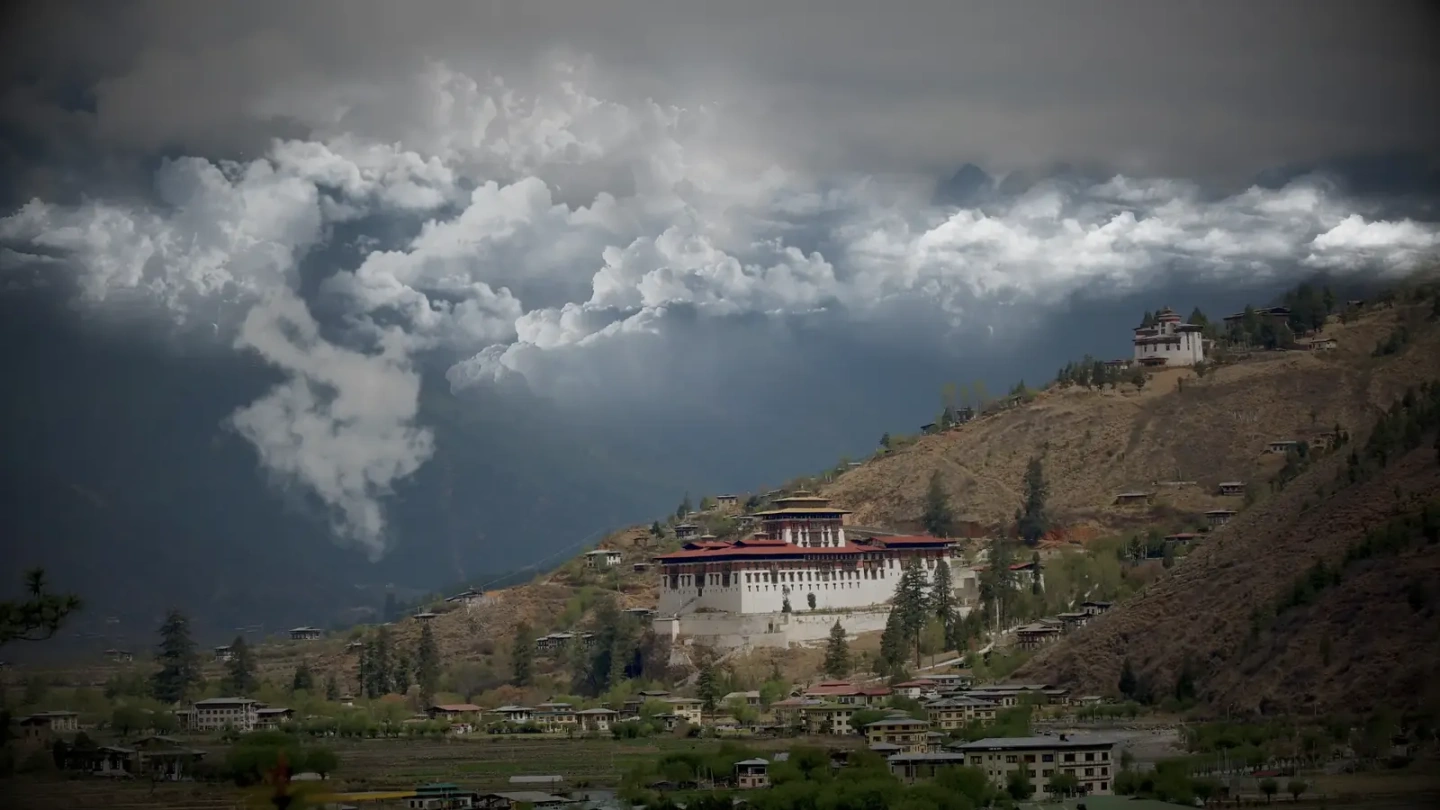
Weather around Paro can delay flights, and the approach is visual-only. Our El Salvador guide underlines the remote nature of Bhutan’s airport, which is one more reason to keep a buffer before the final leg and on the way home.
Twelve Hours Apart: San Salvador and Bhutan
El Salvador keeps Central Standard Time (UTC−6) throughout the year and does not use daylight saving. Bhutan keeps UTC+6, also with no clock changes. That makes Bhutan exactly twelve hours ahead of San Salvador. When it is 8am in San Salvador, it is 8pm in Paro.
A twelve-hour shift turns day into night, and it takes time to adjust. Use your gateway stopover to begin shifting your sleep, spend time in daylight once you arrive, and plan a gentle first two days. Most visitors feel properly settled by day four.
Dry and Rainy Seasons, Home and Away
San Salvador has a warm climate with a clear split between a dry season, roughly November to April, and a rainy season from about May to October. Our El Salvador guide notes that Bhutan’s spring aligns well with Salvadoran dry-season preferences. In Bhutan, March to May and September to November are the favourite seasons. June to August is the monsoon, and December to February brings cold but clear weather, especially at altitude.
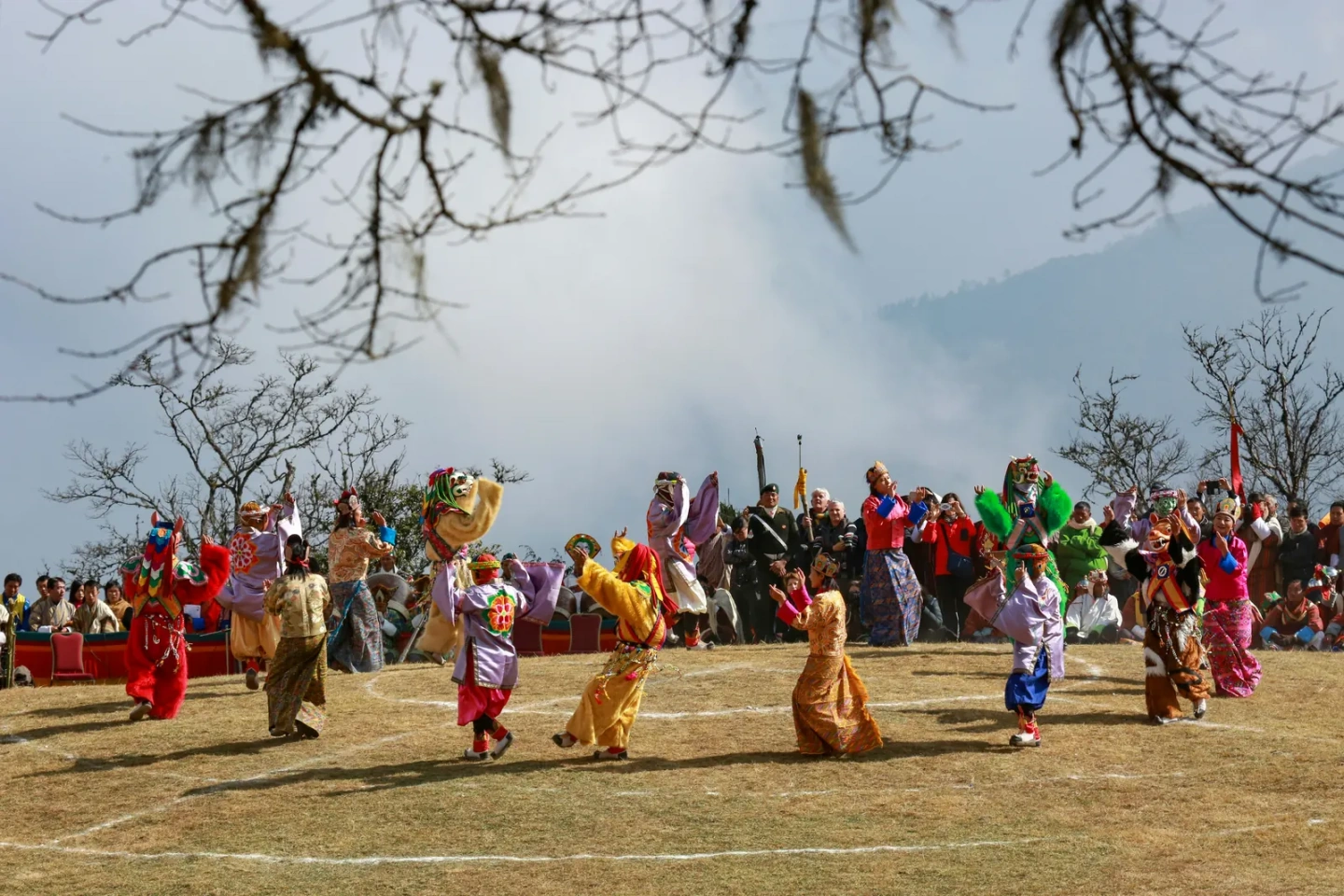
Spring in Bhutan offers flowering rhododendrons and Paro Tshechu, while autumn brings clear mountain views and Thimphu Tshechu. Both festivals follow the lunar calendar. San Salvador’s rainy season overlaps Bhutan’s monsoon, so if you are trying to escape rain, aim for Bhutan’s autumn instead. Pack warm layers for every trip.
Visa, SDF and Insurance for Salvadorans
Salvadoran citizens need a Bhutan visa, applied for online in advance and usually arranged through a licensed Bhutanese tour operator. Our El Salvador guide notes that requirements typically include a passport valid for at least six months beyond your stay, a recent photo and proof of onward travel. The clearance is presented at Paro, where the visa is stamped.
Visitors pay a Sustainable Development Fee of USD 100 per adult per night under current rules for most international travellers, included in the tour price. Confirm the latest rates with the Department of Tourism before making a booking. Travel insurance covering the full stay is required. The ngultrum, pegged 1:1 to the Indian rupee, is used throughout Bhutan, and ATMs are mostly in towns.
Making the Most of the Journey
Given how far you are travelling, we recommend at least eight nights in Bhutan. That allows Paro, Thimphu, Punakha and the Phobjikha valley without feeling rushed. Twelve nights brings in central Bhutan and Bumthang, and two weeks or more makes room for a trek. Some travellers add a few days in their Asian gateway to break the journey on the way home.
San Salvador FAQ
How many connections will I need?
Usually at least two: one at a US or European hub and one at an Asian gateway, followed by the flight to Paro.
Is the twelve-hour time difference hard to manage?
It takes a few days. A stopover and a light first couple of days in Bhutan help considerably.
When is the best time to go from El Salvador?
Bhutan’s spring and autumn. Our El Salvador guide notes spring fits well with Salvadoran dry-season travel.
For further information on visas, routes and costs for Salvadoran travellers, read How to Travel to Bhutan from El Salvador. We would be pleased to help you plan your trip from San Salvador.