
Top Destinations
Travelers' Choice


Beyond Expeditions. Beyond Business.
Beyond Imagination.
Top Destinations
Travelers' Choice
Beyond Expeditions. Beyond Business.
Beyond Imagination.
Beyond Expeditions. Beyond Business.
Beyond Imagination.
Beyond Expeditions. Beyond Business.
Beyond Imagination.
Bhutan’s climate is shaped by altitude and by the monsoon. On a single day’s drive you can pass from steamy subtropical forest to cool pine valleys and up to passes where snow can fall in any month. Knowing the pattern helps you choose when and where to travel.
The south is subtropical: hot and humid in summer, mild in winter, and among the wettest parts of the Himalaya during the monsoon.
The central valleys, where most travellers spend their time, are temperate. Summers are warm and green, winters are dry and sunny with cold nights, and spring and autumn are mild and clear.
The high north is alpine. Summers are short and cool; winters are long and harsh, and high passes and trekking routes are often closed by snow.
| Spring March to May |
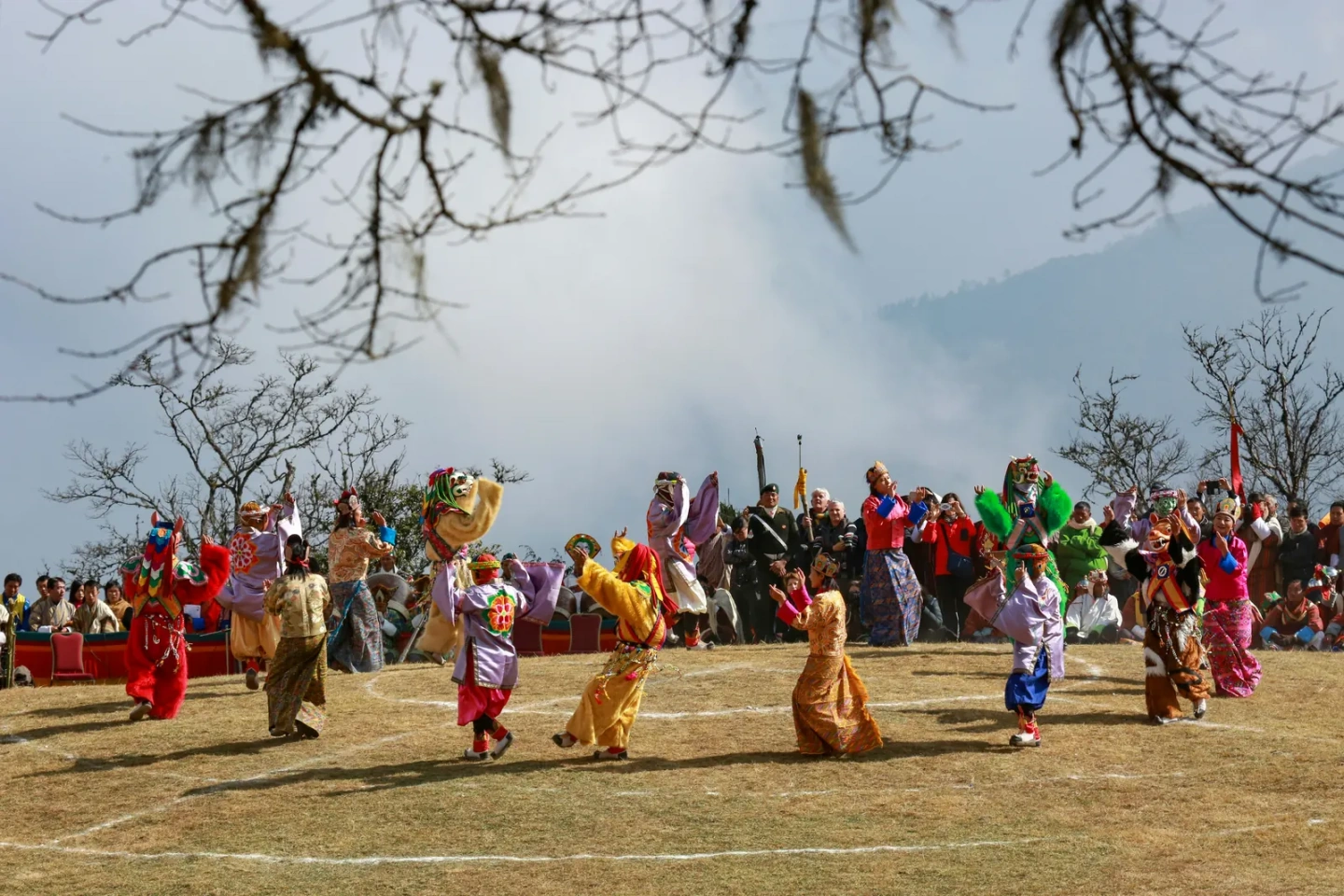
Warming days, rhododendrons and magnolias in bloom, a busy festival season (including Paro Tshechu) and generally good mountain views early in the day |
| Summer June to August |
The monsoon brings regular rain, especially in the afternoon and evening, lush green valleys, fewer visitors and occasional landslides on mountain roads |
| Autumn September to November |
Clearing skies after the monsoon, harvest in the valleys, major festivals such as Thimphu Tshechu, and the classic season for trekking and Himalayan views |
| Winter December to February |
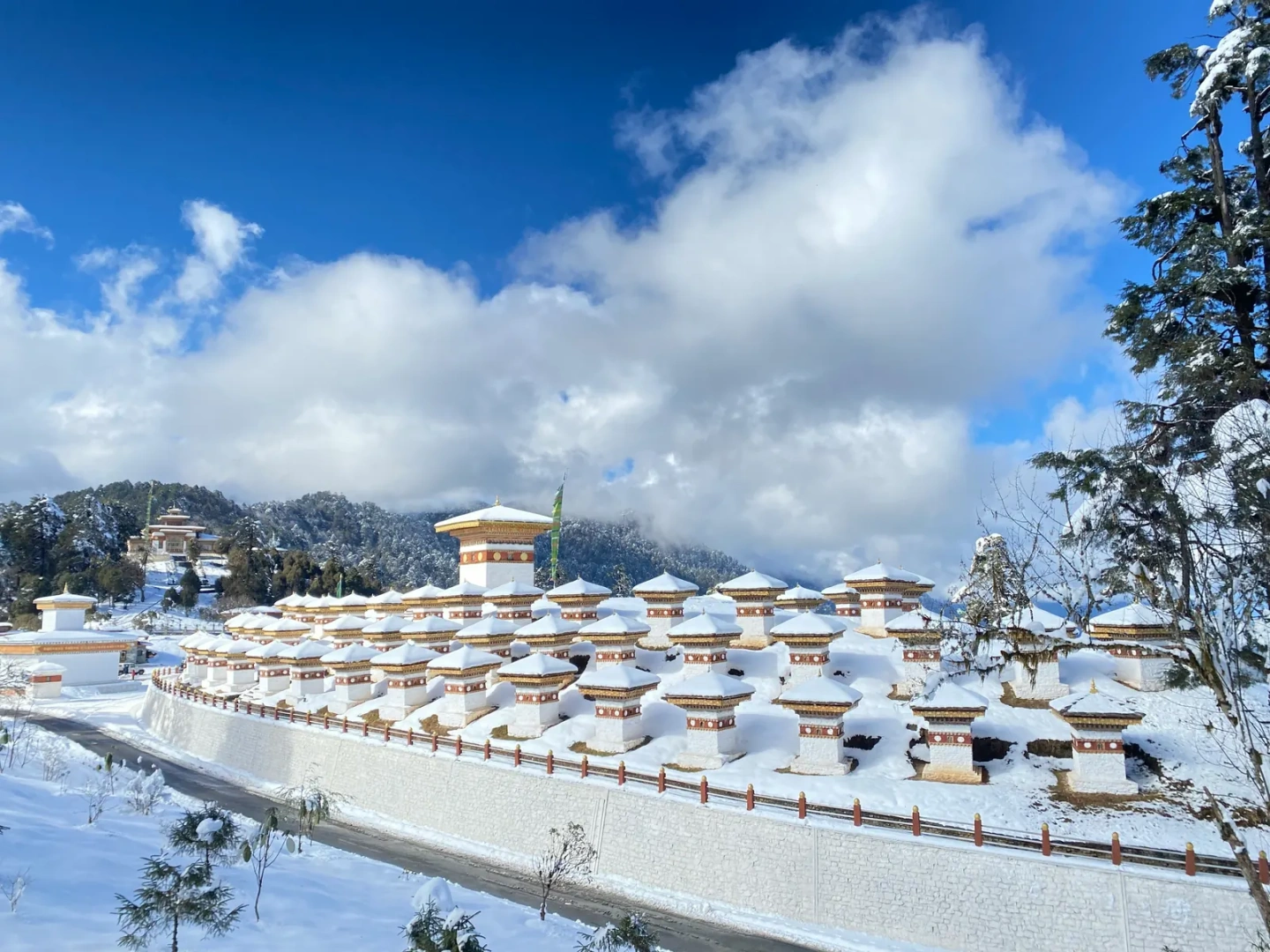
Dry, bright days and cold nights. Snow is common on the high passes and occasional in Thimphu and Bumthang. The black-necked cranes winter in Phobjikha |
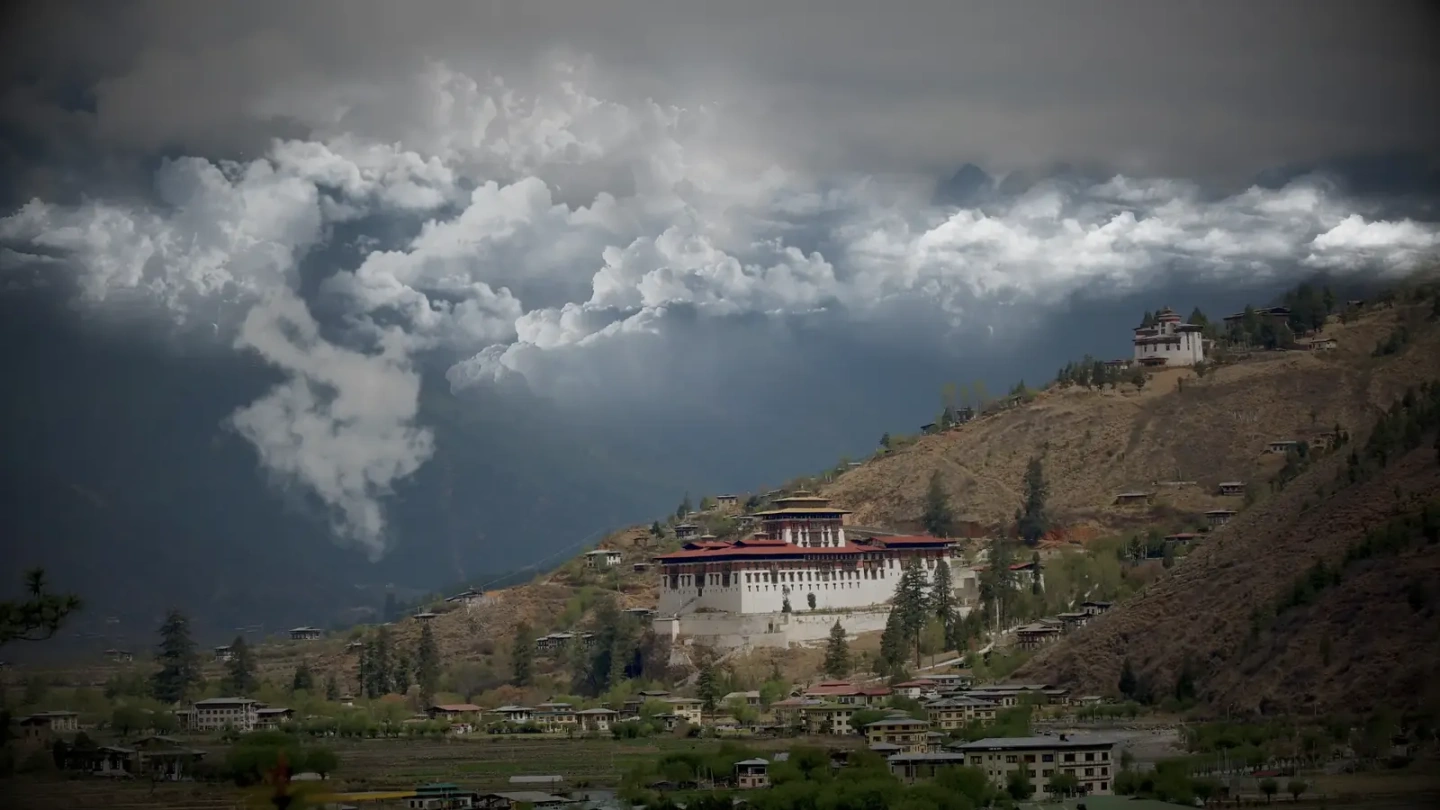
From roughly June to September, moist air from the Bay of Bengal meets the Himalaya and falls as rain. The southern foothills receive by far the most. Some inner valleys, such as Punakha and Wangdue, lie in a partial rain shadow and stay noticeably drier. Rain usually comes in showers rather than all day, and the forests and rice terraces are at their most beautiful.
In the main valleys, summer days are warm and pleasant. Winter days can still be comfortable in the sun, but nights in Paro, Thimphu and Bumthang often fall below freezing. Punakha, lower and warmer, is a favourite winter destination. Above 3,500 metres it can be cold at any time of year, so layers are always worth packing.
Bhutan absorbs more carbon in its forests than it emits, and generates almost all its electricity from rivers. Yet it is exposed to climate change: Himalayan glaciers are retreating and glacial lakes are growing. In 1994 an outburst from Lugge Tsho in the far north sent a flood down the Pho Chhu as far as Punakha. Today the most hazardous lakes are monitored, with early-warning systems along the rivers below.
For month-by-month advice on festivals and trekking, see Best Time to Visit Bhutan.