

Top Destinations
Travelers' Choice


Beyond Expeditions. Beyond Business.
Beyond Imagination.
Top Destinations
Travelers' Choice
Beyond Expeditions. Beyond Business.
Beyond Imagination.
Beyond Expeditions. Beyond Business.
Beyond Imagination.
Beyond Expeditions. Beyond Business.
Beyond Imagination.
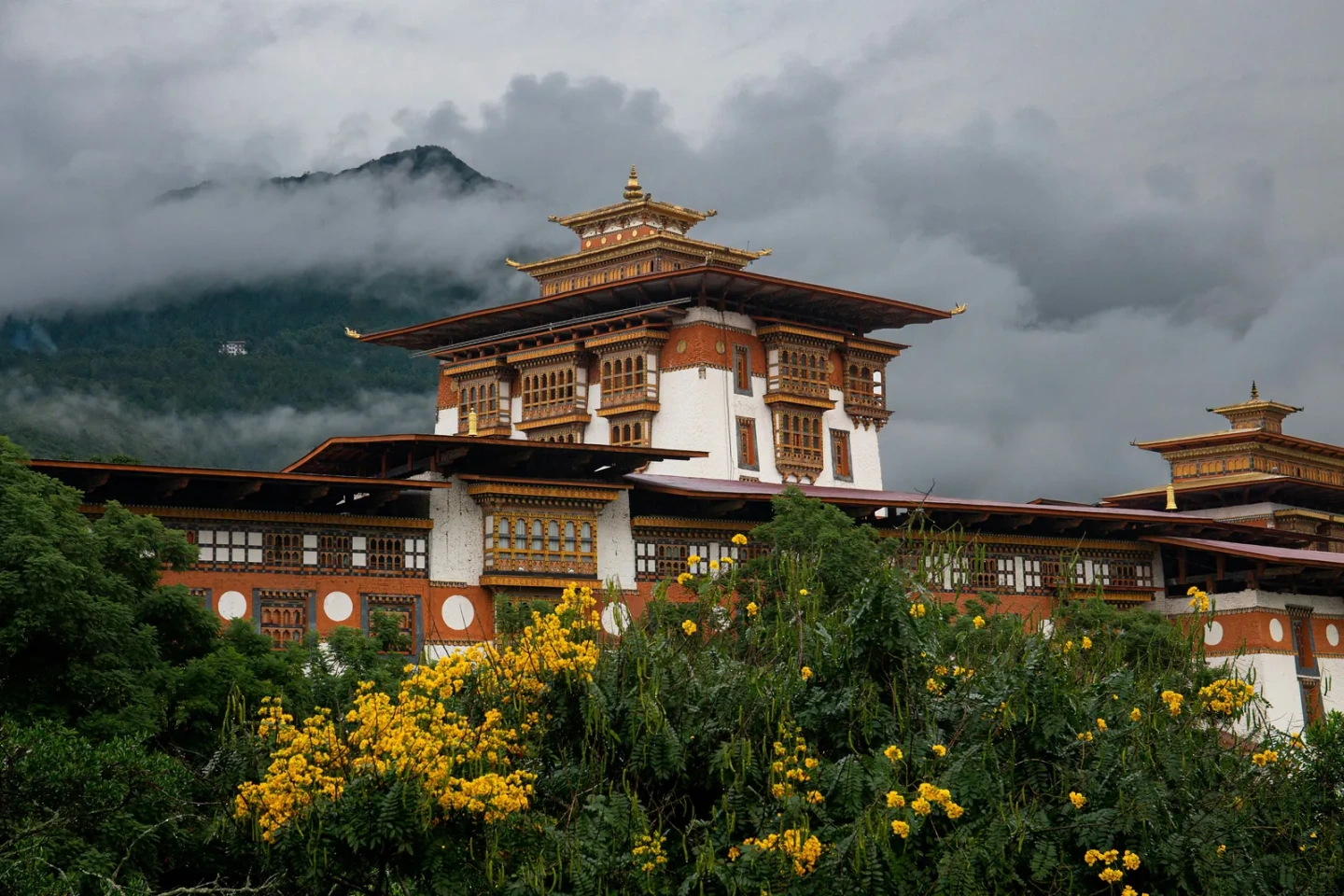
Bhutan’s culture is not a museum piece. Its arts, architecture, dress and festivals are part of everyday life, protected by deliberate national policy and practised with real devotion.
Bhutanese crafts are traditionally grouped as Zorig Chusum, the thirteen arts: painting, clay sculpture, carving in wood, slate and stone, wood turning, carpentry, masonry, bronze casting, blacksmithing, gold and silver smithing, weaving, embroidery and appliqué, paper-making, and cane and bamboo work. They are taught at the National Institute for Zorig Chusum in Thimphu and the College of Zorig Chusum in Trashi Yangtse.
Weaving is Bhutan’s most celebrated art, done mostly by women on back-strap and frame looms. Each region has its own patterns, and the finest pieces, such as the brocade kushuthara of Lhuentse, can take months to complete. Visit the Royal Textile Academy in Thimphu to see the best.
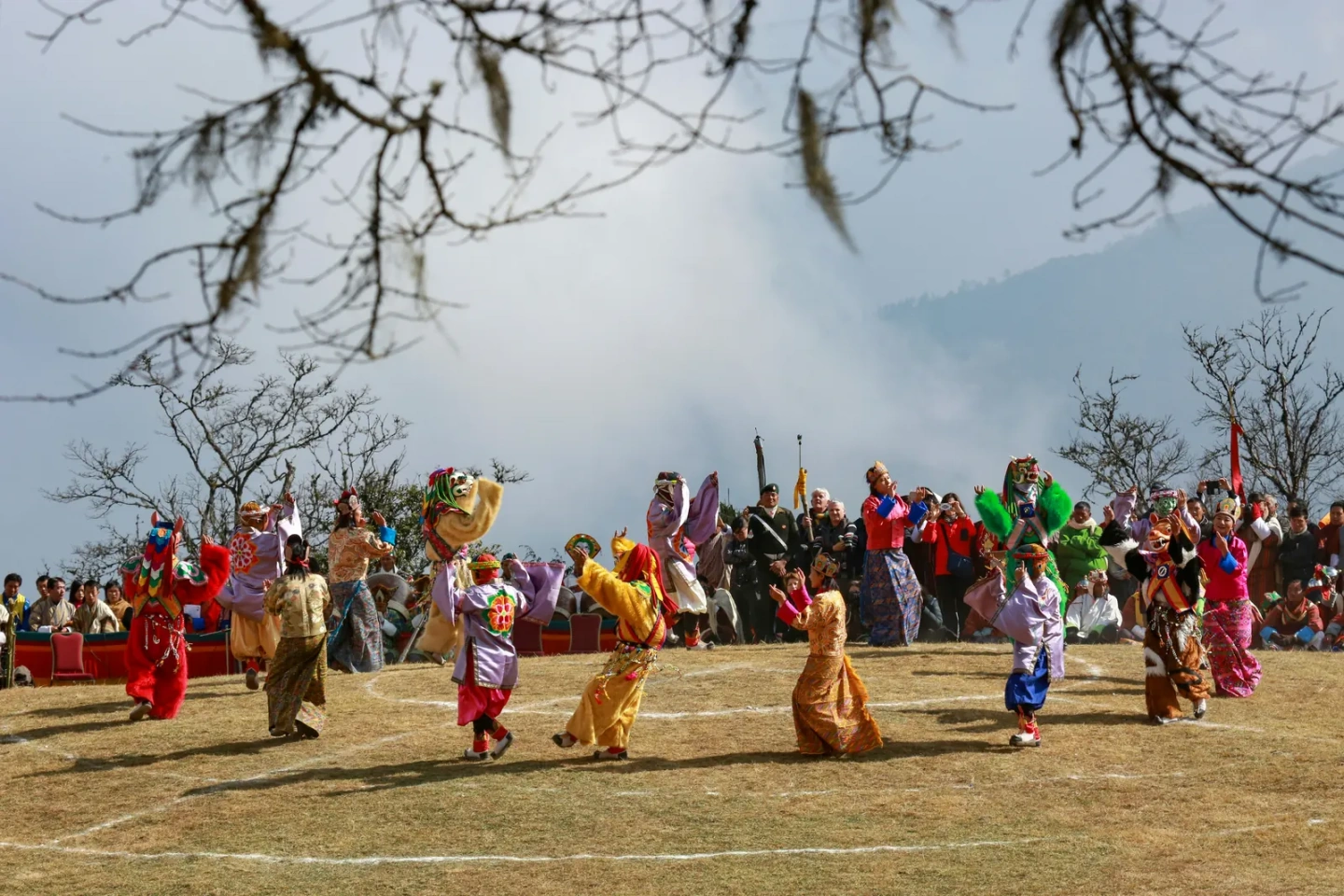
Tshechus, held in honour of Guru Rinpoche, are the great festivals of the year. Monks and laymen perform masked dances called cham, which teach Buddhist stories and bless all who watch. At many festivals a giant appliqué thongdrel is unrolled before dawn; simply seeing it is believed to bring liberation. Paro and Thimphu tshechus are the best known, but village festivals are often the most memorable.
Traditional music includes zhungdra, slow and solemn songs with roots in the 17th century, and boedra, lighter court songs. Modern Bhutanese pop, known as rigsar, blends local melodies with keyboards and is everywhere on the radio. Circle dances accompany festivals and archery matches.
Archery is the national sport, played over a regulation range of 145 metres with bamboo or modern compound bows, and accompanied by song, dance and good-natured heckling. Khuru (darts) and degor, a game of throwing flat stones, are also popular.
Classical Buddhist learning was long the basis of Bhutanese education, and monastic schools still train thousands of monks and nuns. Modern schooling, taught largely in English, spread from the 1960s. The Royal University of Bhutan was founded in 2003. Television and the internet arrived only in 1999, and since then Bhutan has developed its own film, music and media scene.
Explore more in Unique Culture & Traditions and Fascinating Festivals.