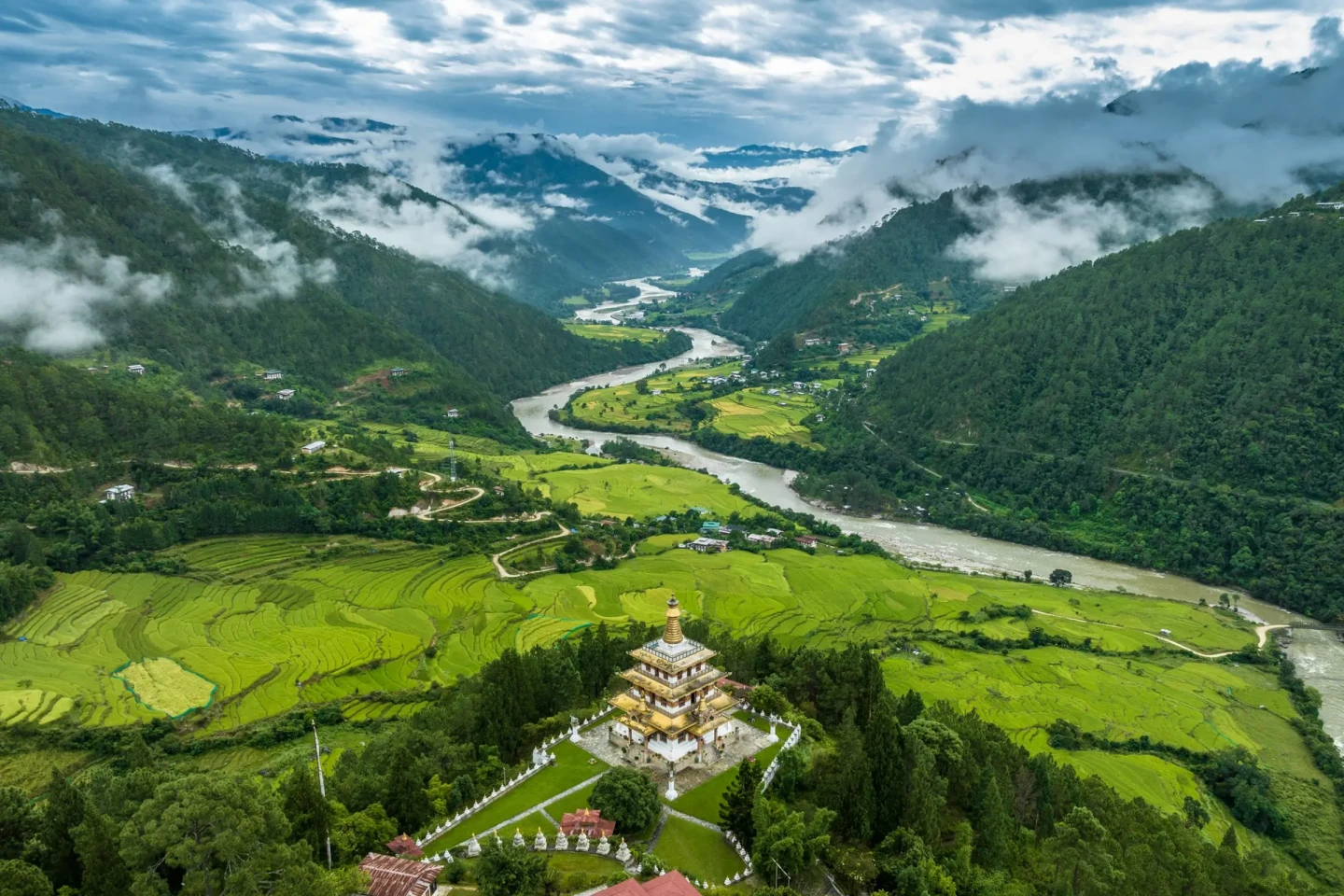
For travellers in Port-au-Prince, Bhutan is one of the longer journeys you can make, spanning the Atlantic and most of Asia before the final descent into the Paro valley. The capital's gateway is Toussaint Louverture International Airport (PAP), and from there every route to Bhutan involves several connections. Services at PAP have been disrupted at times in recent years, so before you plan anything, confirm with the airlines that the flights you need are actually operating. With that check made, this page sets out how the trip usually works.
First Steps from Toussaint Louverture
From Port-au-Prince the first flight typically heads north or east rather than towards Asia. The Haiti guide describes travellers flying to Miami or New York in the United States, or sometimes to Paris, and then picking up long-haul services onward. American Airlines and Air France are the carriers it mentions for this part of the trip.
Because of the distance, it is worth thinking of the journey in three parts: Port-au-Prince to a North American or European hub, that hub to an Asian gateway, and the Asian gateway to Paro. Each part has its own airline and its own risk of delay, so allow generous connection times between them.
Gateways in Asia for Haitian Travellers
Only two airlines fly into Bhutan, Drukair (Royal Bhutan Airlines) and Bhutan Airlines, so your route must end at a city they serve. From Port-au-Prince, the gateways usually considered are:
- Delhi, often reached through Paris or via the United States;
- Bangkok, a convenient place to rest after the long-haul crossing;
- Singapore, another option for the final Bhutanese sector;
- Kathmandu, if you would like to add Nepal to the trip.
The Haiti guide estimates total travel time at 30 to 50 hours including layovers. That spread reflects how much depends on the connections you choose, so check current schedules carefully and let your tour operator line up the Bhutan leg with your arrival.
An Example Route: Port-au-Prince via Paris to Paro
The outline below is only an example of how the pieces might fit, not a fixed itinerary.
- Day 1: fly from Toussaint Louverture with Air France and connect in Paris for an overnight flight towards Delhi.
- Day 2: land in Delhi and rest at an airport hotel; after that many hours in the air, a full night's sleep is worth more than a tight connection.
- Day 3: take Drukair to Paro and meet your Bhutanese guide on arrival.
A similar pattern works through Miami or New York with American Airlines. Whatever the routing, keep one buffer night on the way home too, because the visual approach into Paro means weather can hold flights on the ground.
Haitian Clocks Against Bhutan Standard Time
Haiti observes daylight saving time, moving between UTC−5 in the northern winter and UTC−4 from spring to autumn. Bhutan stays on UTC+6 all year. In practice, Bhutan is 11 hours ahead of Port-au-Prince during Haiti's winter time and 10 hours ahead while Haitian clocks are on summer time.
That is close to a day-for-night swap. Midday in Port-au-Prince is late at night in Thimphu. Expect several days of adjustment, plan a gentle first day in Paro, and try to shift your sleep a little in the week before you leave.
Tropical Port-au-Prince vs Bhutan's Four Seasons
Port-au-Prince is warm all year, with rainy spells and an Atlantic hurricane season that runs from June to November. Bhutan's calendar has sharper contrasts. Spring (March to May) and autumn (September to November) are the favourite seasons for visitors. Summer (June to August) brings the monsoon, and winter (December to February) is cold but clear, especially at altitude.
Coming from the Caribbean heat, many Haitian travellers find the Bhutanese autumn a refreshing change, and packing warm layers is essential in any season. Spring adds flowering hillsides and the Paro Tshechu festival, while autumn brings Thimphu Tshechu. Festival dates follow the lunar calendar, so check them each year before booking flights.
Visa, SDF and Insurance for Haitian Citizens
Haitian passport holders need a visa for Bhutan. It is applied for online before travel and is usually handled by a licensed Bhutanese tour operator such as Manifest Bhutan Expeditions, which submits your passport details and photograph and forwards the approval once it is issued. The Haiti guide also notes that proof of travel insurance forms part of the application.
The Sustainable Development Fee is currently USD 100 per adult per night for most international visitors and is paid as part of your trip. Rates can change, so check the latest rates with the Department of Tourism before booking. Your insurance must cover your whole stay in Bhutan. You should also check whether your transit countries, such as the United States or France, require their own visas or transit permissions for Haitian passport holders.
Trip Lengths That Justify the Journey
With two or three travel days in each direction, a longer stay usually makes more sense from Port-au-Prince:
- 7 nights: Paro and Thimphu with time to recover from the journey.
- 9 to 10 nights: a broader circuit through the western and central valleys.
- 12 nights or more: for a festival, a trek or a combined trip with Nepal or Thailand.
Port-au-Prince FAQ
How long does it take to reach Bhutan from Port-au-Prince?
The Haiti guide estimates 30 to 50 hours including layovers. Building in an overnight stop in Asia is usually more comfortable.
Which carrier flies the last leg into Paro?
Either Drukair or Bhutan Airlines, the only two airlines that fly into Bhutan.
Should I buy flexible tickets?
Yes, where you can. Weather affects Paro, and long multi-carrier trips benefit from fares that allow changes.
To explore every aspect of travel from Haiti, including routes from other parts of the country, see How to Travel to Bhutan from Haiti.