

Pyongyang, the capital of the Democratic People's Republic of Korea, is the country's main air hub, with international flights leaving from Pyongyang Sunan International Airport (FNJ) north of the city. Options from there are limited compared with most capitals, so a journey to Bhutan calls for careful planning. This page sets out the typical route, the time change, the seasonal picture and the entry steps for travellers starting in Pyongyang.
Leaving Pyongyang: Sunan International and Air Koryo
Our North Korea guide explains that travellers typically leave Pyongyang with Air Koryo, the national airline, to transit points such as Beijing in China or Vladivostok in Russia, which are among the few direct routes available. Because frequencies are limited, this first leg determines the shape of the whole trip. Confirm it first and plan everything else around it.
It also helps to share your confirmed Air Koryo date with your Bhutanese tour operator as early as possible. They can then look for a Paro flight that leaves enough slack after your arrival in the gateway city, rather than squeezing the connections into a single day. A little extra time on the ground is far cheaper than rebooking a missed flight.
Make sure you understand the documentation needed to depart and to transit China or Russia. Requirements depend on your passport and circumstances, and they should be confirmed with the relevant authorities well before travel.
Beijing as the Main Bridge to South Asia
From Beijing, the guide notes, connections can be made to the main gateways for Bhutan, including Delhi in India, Bangkok in Thailand and Kathmandu in Nepal, with Air China or other international carriers. From these gateways, Bhutan's two airlines, Drukair (Royal Bhutan Airlines) and Bhutan Airlines, fly to Paro.
- Pyongyang to Beijing with Air Koryo.
- Beijing to Delhi, Bangkok or Kathmandu with Air China or another carrier.
- Gateway to Paro with Drukair or Bhutan Airlines.
Routing via Vladivostok is possible but generally less convenient for reaching South Asia. Check current schedules on every leg, as they can change at short notice.
Pyongyang to Paro: An Illustrative Route
The plan below is an example of the sequence, not a commitment to particular flights or days.
Day one: fly from Sunan to Beijing with Air Koryo and stay overnight near the airport, giving a comfortable margin for the next connection. Day two: fly from Beijing to Bangkok and rest overnight. Day three: take the Drukair or Bhutan Airlines flight to Paro, where your guide meets you on arrival.
Two overnight stops may sound cautious, but they are sensible here. Limited frequencies out of Pyongyang mean a single delay could otherwise ripple through the journey, and Paro's visual-only approach means weather can hold flights back as well.
Gaining Three Hours: Pyongyang vs Bhutan Time
North Korea uses UTC+9 all year, without daylight saving. Bhutan keeps UTC+6, also with no seasonal change. Bhutan is therefore three hours behind Pyongyang. When it is noon in Pyongyang, it is 9am in Paro.
Gaining time as you fly west is usually gentle on the body. You may wake early on the first morning, which is a fine time to watch the light come up over the Paro valley.
Korean Winters vs Himalayan Seasons
Pyongyang has cold, dry winters and hot, humid summers, with much of its rain falling in July and August. Bhutan's year has a familiar shape in some ways. Its summer (June to August) is also the monsoon, while spring (March to May) and autumn (September to November) are the most popular times to visit. Winter (December to February) is cold but clear, especially at altitude.
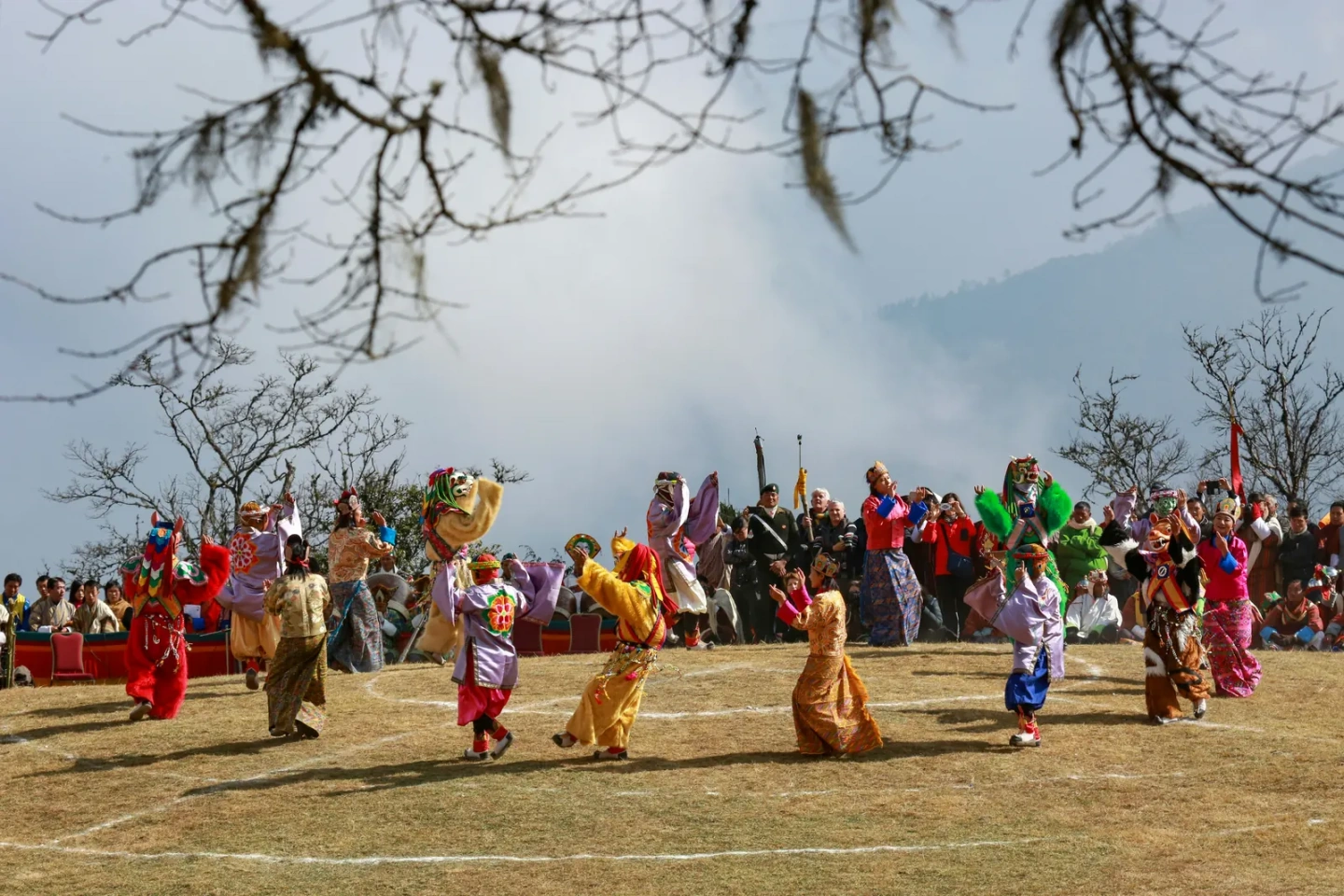
Travellers used to Pyongyang winters will find Bhutan's cold season manageable, with sunny days and crisp nights. Spring and autumn bring the major festivals, Paro Tshechu and Thimphu Tshechu, though their dates follow the lunar calendar and change every year.
Visa, SDF and Insurance from North Korea
North Korean citizens need a Bhutan visa arranged in advance. It is applied for online and usually handled by a licensed Bhutanese tour operator. Our guide notes that Bhutan does not have diplomatic representation in North Korea, but no embassy visit is required: once approved, the visa is issued electronically and stamped on arrival at Paro.
- SDF: USD 100 per adult per night for most international visitors. Check the latest rates with the Department of Tourism before booking.
- Insurance: required for the whole stay in Bhutan.
- Transit documents: confirm requirements for China, Russia, India, Thailand or Nepal as applicable.
Bhutan's currency is the ngultrum, pegged to the Indian rupee at par. ATMs are mainly in towns, so carry some cash.
Suggested Stays for Travellers from Pyongyang
- Five to six nights: Paro and Thimphu, with monasteries, markets and short walks.
- Eight to ten nights: an extended route into the central valleys.
- Twelve nights or more: time for a trek or a festival visit.
Given the limited first-leg options, add one flexible day at each end of your trip where you can.
Common Questions about Leaving Pyongyang for Bhutan
Is Beijing or Vladivostok the better transit?
Beijing generally offers more onward connections to Delhi, Bangkok and Kathmandu, which is why our guide highlights it.
Do I need to visit a Bhutanese embassy?
No. The visa is processed online and stamped on arrival, so an embassy visit is not part of the process.
Can my tour operator book the Paro flight?
Yes, licensed operators commonly book the Drukair or Bhutan Airlines segment to match your visa dates.
For the full country overview, including additional routing and seasonal notes, read How to Travel to Bhutan from North Korea, then contact our team to discuss your plans from Pyongyang.