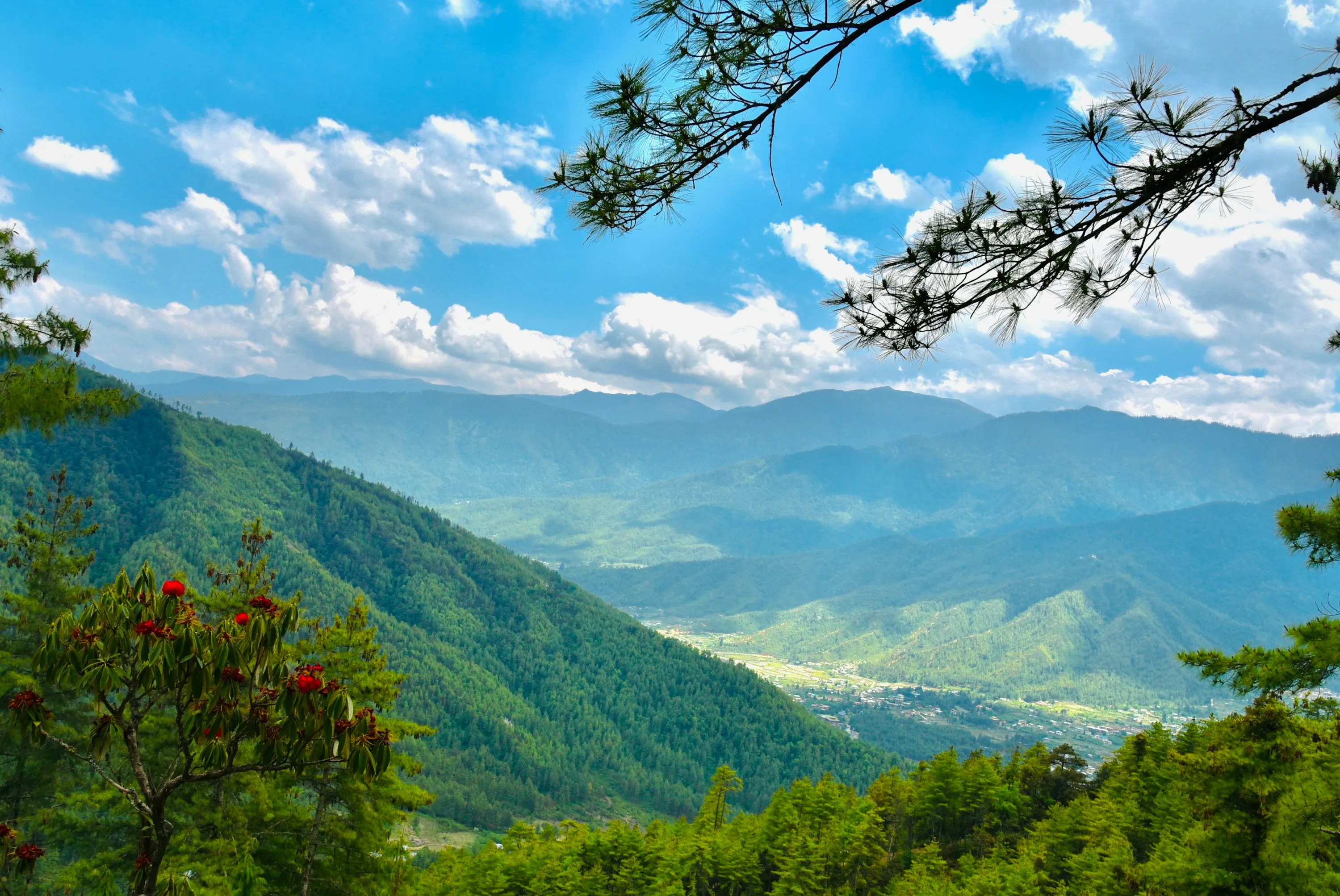
Port Louis, the bustling harbour capital on the north-west coast of Mauritius, is about an hour’s drive from the island’s international gateway, Sir Seewoosagur Ramgoolam International Airport (MRU) at Plaine Magnien in the south-east. From there, Mauritian travellers can reach Bhutan in a couple of days via a Gulf, Turkish or southern African hub and an Asian gateway. There are no direct flights, but the route is well understood. This page explains how to plan it from the capital.
Port Louis to Plaine Magnien: The Drive to SSR
The journey across the island from Port Louis to the airport can be slow at peak times, particularly through the central towns, so set off with time to spare. Our Mauritius guide notes that common routes begin with carriers such as Air Mauritius, Emirates or Turkish Airlines, heading to transit points like Dubai, Istanbul or Johannesburg. Check current schedules for each, as frequencies vary by season.
Dubai, Istanbul or Johannesburg?
Each of these hubs leads to the same set of Asian gateways, typically Delhi, Bangkok or Kathmandu, from which Drukair (Royal Bhutan Airlines) and Bhutan Airlines fly to Paro International Airport. These are the only two airlines serving Bhutan, and Paro is the only international airport.
- Dubai with Emirates: a common routing northward towards India and Nepal.
- Istanbul with Turkish Airlines: a wide network that reaches several Asian gateways.
- Johannesburg: useful when Air Mauritius schedules fit best, followed by a long-haul connection.
Our Mauritius guide notes that Bhutan’s carriers run restricted schedules, typically a handful of weekly departures on a given route. That means the Paro flight should be fixed first, with your other flights arranged around it.
For many Mauritians, Delhi is a natural gateway given the strong links between the two countries, while Bangkok suits travellers who want to add a few days in Thailand on the way home.
Port Louis to Paro: An Example Itinerary
As an illustration only, you could leave Port Louis in the evening, fly overnight to Dubai, and connect the following morning to Delhi. After a night at a hotel near Delhi’s airport, you board a Drukair or Bhutan Airlines flight to Paro, where your guide meets you. The first afternoon is kept easy, perhaps with a stroll along Paro’s main street.
Our Mauritius guide describes the Paro approach as confined to visual flying in daylight and prone to weather disruption. Keep the overnight in your gateway city; it costs little and protects the whole trip.
Time Difference: Mauritius vs Bhutan
Mauritius is on UTC+4 all year with no daylight saving, and Bhutan is on UTC+6, also without clock changes. Bhutan is two hours ahead of Port Louis. When it is 6pm in Port Louis, it is 8pm in Paro.
With only two hours to adjust, jet lag is rarely significant. You will feel the overnight flight more than the time change, which is another good reason to rest in the gateway before the final hop.
Island Summers and Himalayan Seasons
Port Louis is warm and humid for most of the year, hottest and wettest in the southern summer from around November to April, when cyclones are also possible, and drier and a little cooler in the middle of the year. Bhutan reverses that picture. Its favourite travel seasons are spring, March to May, and autumn, September to November. The monsoon falls in summer, from June to August, while winter, December to February, is cold but clear, especially in the high country.
Mauritian travellers who prefer to avoid their own cyclone season may find Bhutan’s spring an appealing time to be away. Autumn in Bhutan is crisp and clear, and it hosts Thimphu Tshechu; Paro Tshechu falls in spring. Both follow the lunar calendar, so check the dates for your year. Bring proper warm clothes, as valley evenings can be cold even in the best months.
Entry Steps for Mauritian Citizens
Mauritian nationals need a Bhutan visa. The application is made online in advance and is usually handled by a licensed Bhutanese tour operator on your behalf. Our Mauritius guide notes that approval generally comes within 72 hours, in the form of an electronic visa clearance letter that you present on arrival in Paro.
Each night carries the Sustainable Development Fee, currently USD 100 per adult for most international visitors. Before you book, check the latest rates with the Department of Tourism. Insurance covering the whole of your stay is required. Locally you will use the ngultrum, held at parity with the Indian rupee, and you should carry cash for rural stretches where ATMs are scarce.
Trip Lengths and Port Louis FAQ
We suggest at least six nights in Bhutan from Mauritius, which comfortably covers Paro, Thimphu and Punakha. Eight to ten nights adds the Phobjikha valley and a slower pace, and twelve nights or more opens up central Bhutan or a trek. If you would like to combine Bhutan with India or Nepal, we can help join the pieces together.
Which hub is best from Mauritius?
Dubai, Istanbul and Johannesburg are all used, according to our Mauritius guide. The best choice depends on how well each connects with the Paro flight on your dates.
How often do flights to Paro run?
Our country guide notes that Bhutan’s airlines operate a handful of weekly departures on each route, so book early.
Do Mauritian nationals of Indian heritage follow the Indian permit rules?
No. The permit system applies to Indian nationals, meaning holders of Indian passports. Mauritian passport holders follow the visa process described above.
For full details on visas, routes and itineraries for Mauritian travellers, see How to Travel to Bhutan from Mauritius. We would be glad to plan your journey from Port Louis to Paro.