




Vienna International Airport (VIE), at Schwechat just south-east of the city, is the main departure point for Austrians heading to Bhutan. As a major hub with long-haul connections, it gives Vienna residents several ways of reaching the gateway cities for Paro, including routes through Bangkok, Delhi and Kathmandu. Here we focus on the journey from the Austrian capital: practical connections, an example itinerary, time and climate comparisons, and the paperwork for Austrian passport holders.
From Schwechat: Vienna's Long-Haul Starting Line
The City Airport Train and the S-Bahn both run from central Vienna to the airport, making it easy to reach with luggage. Our Austria guide describes a route that travellers typically take, in which you fly with Austrian Airlines or partners such as Thai Airways to Bangkok, then transfer to Druk Air or Bhutan Airlines for Paro. Routes via Delhi with Lufthansa or Air India, and via Kathmandu with Turkish Airlines or Qatar Airways, are also mentioned.
Bangkok, Delhi or Kathmandu from Vienna
Each gateway offers something slightly different:
- Bangkok (BKK): reached with Austrian Airlines or Thai Airways, followed by Druk Air to Paro. Our guide notes Druk Air can operate daily from Bangkok and Delhi in peak periods.
- Delhi (DEL): via Lufthansa or Air India, then Druk Air to Paro.
- Kathmandu (KTM): via Turkish Airlines or Qatar Airways, then Bhutan Airlines; services from Kathmandu tend to be less frequent.
Schedules vary through the year, so check current schedules before booking, and ask your tour operator to hold Paro seats in line with your visa clearance.
An Example Vienna-to-Paro Plan
Below is one example of how the trip could be arranged. It shows the shape of a journey rather than specific flights:
- Day 1, evening: depart Vienna for Bangkok.
- Day 2: arrive in Bangkok, spend the day and night near Suvarnabhumi.
- Day 3, early: Druk Air or Bhutan Airlines to Paro; your guide meets you and drives you into the valley.
Our Austria guide estimates 17 to 25 hours for this kind of journey including layovers, and suggests building in buffer days in transit cities. It also advises checking baggage allowances on the Bhutanese carriers in advance, as these can be stricter than on long-haul airlines.
Viennese Time and the Bhutan Clock
Austria is on UTC+1 in winter and UTC+2 in summer. Bhutan remains on UTC+6 all year and has no daylight saving. So Bhutan is five hours ahead of Vienna from late October to late March and four hours ahead for the rest of the year. If you stop in Bangkok on the way, the adjustment happens in two stages, which many travellers find easier on the body.
Alpine Winters, Himalayan Autumns: When to Travel
Vienna's climate is temperate continental: warm summers, cold winters and pleasant shoulder seasons. Bhutan's best-known seasons are spring (March to May) and autumn (September to November), which are also the most popular. Summer (June to August) is the monsoon, bringing rain and cloud that can disrupt flights. Winter (December to February) is cold but clear, especially at altitude. Austrians familiar with mountain weather will recognise the value of layers, sun protection and sturdy footwear in every season.
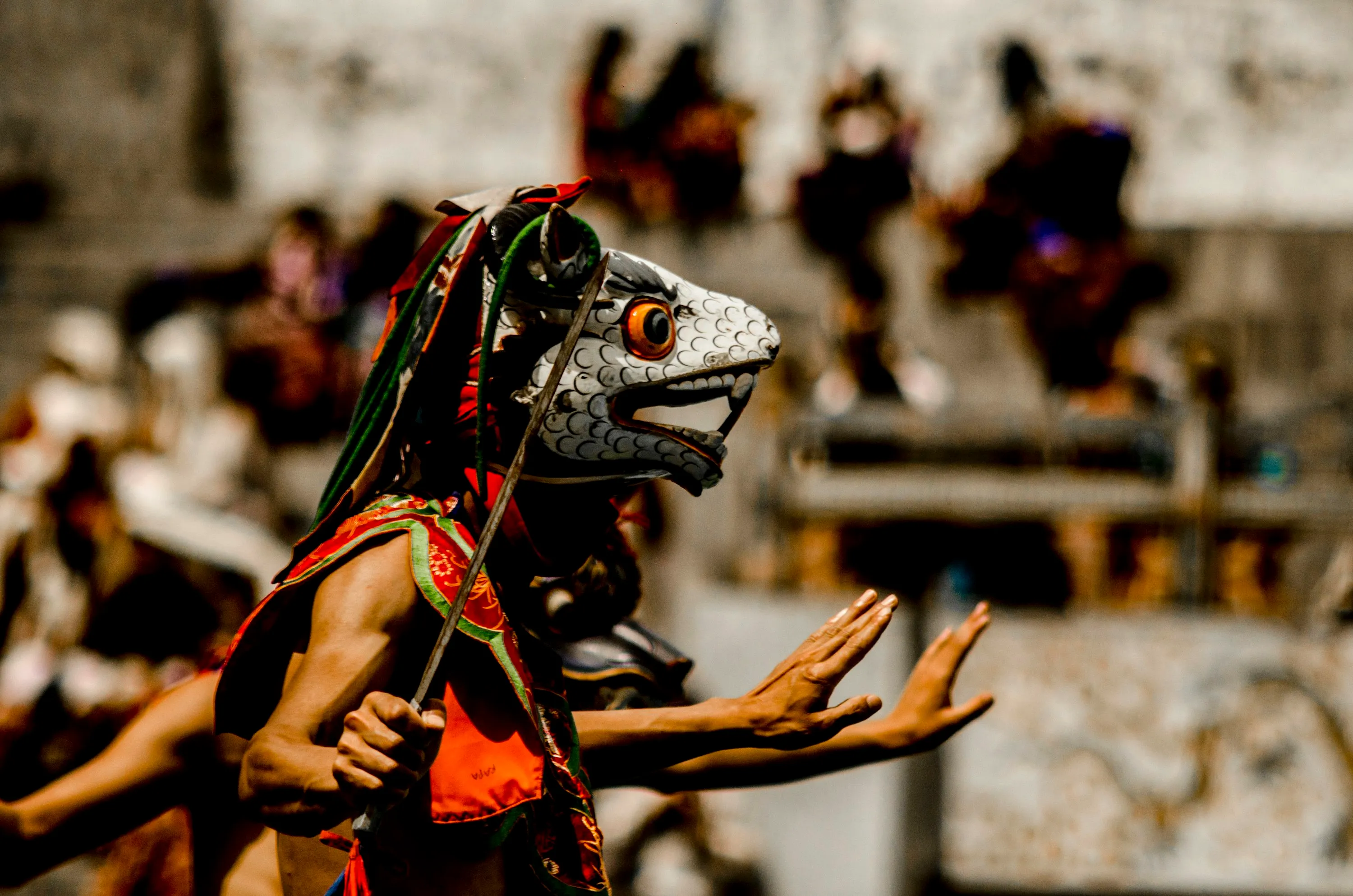
Paro Tshechu in spring and Thimphu Tshechu in autumn are major festivals with dates set by the lunar calendar; check each year's dates before you book.
Visa and SDF Checklist for Austrians
- Visa: Austrian citizens need a Bhutan visa, applied for online in advance and usually arranged through a licensed Bhutanese tour operator.
- Passport: send your operator a clear scan of the photo page; make sure the passport has plenty of validity left.
- Sustainable Development Fee: currently USD 100 per adult per night for most international visitors. Check the latest rates with the Department of Tourism before booking.
- Insurance: travel insurance covering the whole stay in Bhutan is required.
- Cash: the ngultrum is pegged to the Indian rupee; ATMs are mostly in towns, so carry some cash.
Our Austria guide recommends booking well ahead, as the tour operator coordinates the Paro flights with your visa clearance. Seats on Bhutanese carriers are limited, especially in spring and autumn.
How Many Nights from Vienna?
- Five to six nights: a classic introduction to Paro, Thimphu and Punakha.
- Eight to nine nights: adds Phobjikha, Trongsa and a slower rhythm.
- Twelve nights or more: Bumthang and central Bhutan, or a trek in the right season.
If you plan a stopover in Bangkok on the way out or back, factor that into your total holiday days.
Austrian holiday patterns are worth keeping in mind. Autumn half-term and the weeks around Easter can coincide with Bhutan's busier seasons, and festival dates draw extra visitors too. Start planning several months ahead, let your operator confirm the Paro flights and visa first, and then choose your Vienna departure to match. For the journey itself, keep essentials such as medication, a warm layer and copies of your documents in your hand luggage, since you will change airlines at least once and checked bags may be re-tagged in the gateway city. On arrival in Paro, the drive to your hotel is short, so you can rest before the Tiger's Nest hike or the road to Thimphu.
Vienna Travellers' Questions
Can I use Salzburg or Innsbruck instead?
Our Austria guide mentions both cities, but most long-haul connections run through Vienna or other larger hubs.
Is Bangkok or Delhi the better gateway from Vienna?
Both appear in our guide. Bangkok suits a stopover; Delhi can be quicker. Check current schedules for your dates.
What happens if Paro is closed by weather?
Flights may be delayed or rescheduled. Your operator can help rearrange your plans, which is why buffer days are recommended.
For complete itineraries and further detail, see How to Travel to Bhutan from Austria.