

Muscat International Airport (MCT), close to the coast at Seeb, is where nearly every Bhutan journey from Oman's capital begins. It is a modern, efficient airport, and from it you can be in a South Asian hub within a few hours. There is no direct flight to Bhutan, so you will connect onward with one of Bhutan's two airlines. This guide looks at the trip specifically from Muscat, including which hub works best, how the clocks change and what to pack when leaving the Gulf for the Himalaya.
Departing Muscat International Airport
MCT is a straightforward airport to navigate, and the drive from most of Muscat's districts is manageable outside peak traffic. Our Oman guide highlights Oman Air for the first leg to Delhi, with Thai Airways on the Bangkok route and Nepal Airlines via Kathmandu. Check current schedules before you plan, as frequencies change by season.
The guide recommends allowing a buffer day in the transit city to avoid missed connections, which is good advice from any Gulf capital. Many Muscat residents fly out after work on a Thursday or Friday evening, which pairs neatly with an overnight in the hub and a morning flight into Paro.
The Delhi Route and Its Alternatives
Delhi is typically the most direct option from Muscat. Our guide puts the Oman Air flight at about four hours, followed by a Drukair flight of around two hours to Paro International Airport. Drukair (Royal Bhutan Airlines) and Bhutan Airlines are the only two airlines permitted to fly into Paro, so the final sector is always theirs.
Bangkok makes sense if you want to combine Bhutan with a Thai stopover, while Kathmandu suits travellers adding Nepal. The guide estimates total travel times of 8 to 12 hours depending on layovers. Seats on the Paro leg are limited and peak seasons are busy, so book early through your tour operator.
Muscat to Paro: How the Day Could Look
This is a sample journey only, intended to help you plan. Real timings will depend on the flights running when you travel.
- Day 1, evening: depart MCT for Delhi.
- Night: arrive in Delhi and sleep at an airport hotel.
- Day 2, early morning: Drukair or Bhutan Airlines to Paro, timed for the clearer morning skies.
- Arrival: meet your guide and driver from Manifest Bhutan Expeditions.
The guide explains that flights into Paro are scheduled early to take advantage of better visibility, and that fog or wind can still delay them. Paro's approach is visual-only, so the overnight in Delhi is as much insurance as rest.
Paperwork for Omani Nationals and Muscat Residents
Omani citizens need a Bhutan visa, applied for online in advance. Our guide explains that independent travel is not permitted for most nationalities, so you will book through a licensed Bhutanese tour operator, who lodges the application. Provide a copy of your passport, which should be valid for at least six months.
- SDF: a Sustainable Development Fee applies; for most international visitors it is currently USD 100 per adult per night. Always check the latest rates with the Department of Tourism before booking.
- Insurance: you need travel insurance that covers the full stay.
- Indian passport holders in Muscat: you travel on a permit rather than a visa, and the SDF for Indian nationals is INR 1,200 per night.
- Cash: carry some, as ATMs are mainly in towns. The ngultrum is pegged 1:1 to the Indian rupee.
Gulf Time and Bhutan Time
Oman runs on Gulf Standard Time, UTC+4, with no daylight saving. Bhutan Standard Time is UTC+6 all year. Bhutan is therefore two hours ahead of Muscat. When the sun is setting over the Corniche at 6 pm, it is 8 pm in Thimphu. Jet lag is negligible, though an early Paro departure from Delhi will still feel early.
Escaping the Muscat Summer? Read This First
Muscat is extremely hot through the summer months and delightful in winter. It is tempting to plan Bhutan as a summer escape, but Bhutan's summer (June to August) is its monsoon, with cloud and rain that can disrupt flights. The most popular periods are spring (March to May) and autumn (September to November). Winter (December to February) is cold but clear, especially at altitude.
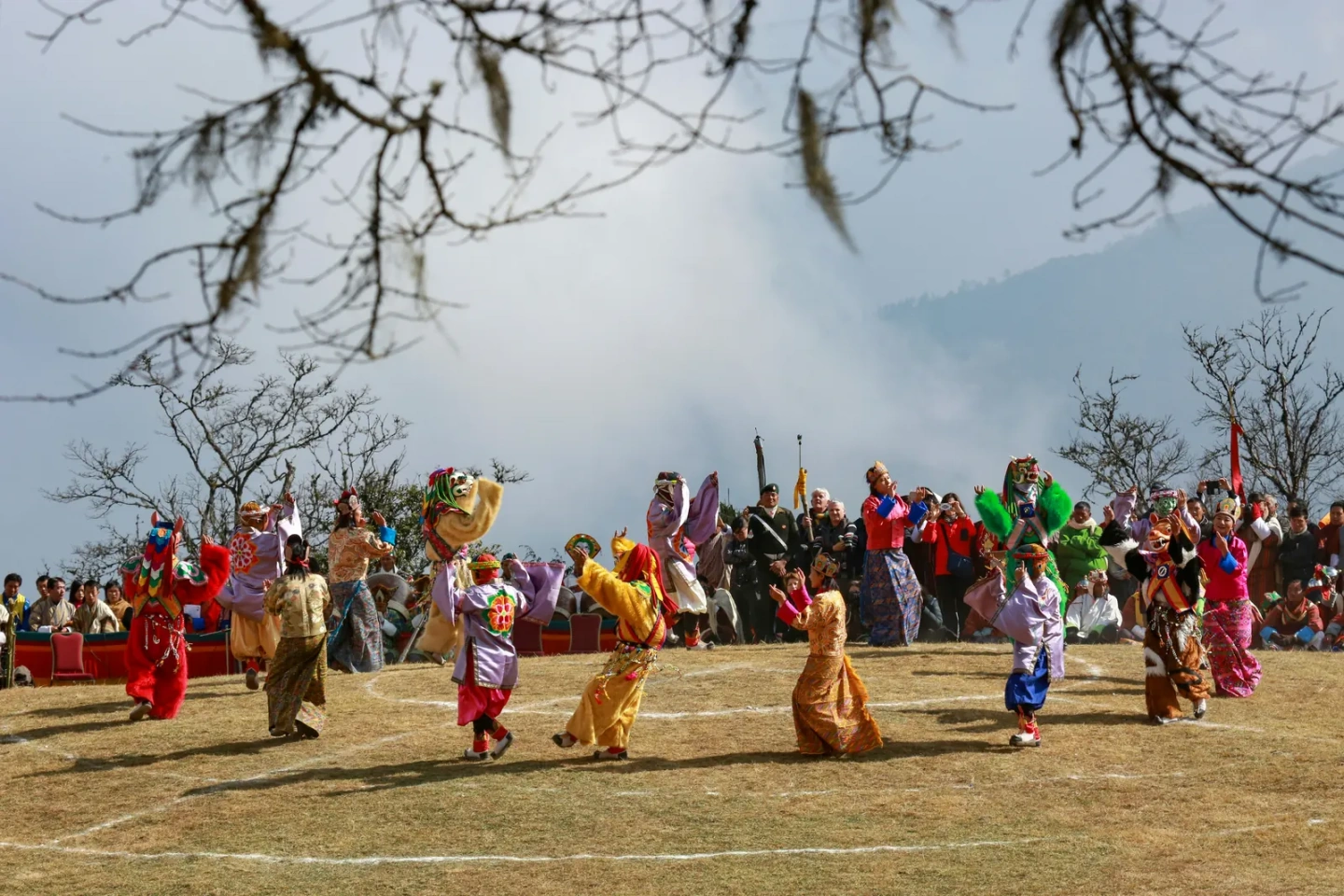
For Muscat residents, autumn is often ideal, with settled weather and the Thimphu Tshechu. Spring brings blossom and the Paro Tshechu. Festival dates follow the lunar calendar and change each year. If summer is your only option, choose a flexible itinerary and allow extra buffer time around flights. Whatever the month, pack layers; Bhutanese evenings are cool even when Muscat is sweltering.
Trip Lengths and Common Questions
Because Muscat is relatively close, five or six nights is enough for Paro and Thimphu. A week to ten days lets you include central Bhutan and slow the pace. Many Muscat residents use Eid or school holidays; book those dates early, as Paro flights fill up.
Is there a direct flight from Muscat to Paro?
No. You will typically connect in Delhi, Bangkok or Kathmandu.
How long is the journey?
Our guide estimates 8 to 12 hours depending on layovers, more if you stop overnight.
Can I travel in summer?
Yes, but it is monsoon season in Bhutan, so expect rain and leave room for flight delays.
For more on routes, seasons and the visa process, read How to Travel to Bhutan from Oman. When your dates are clear, contact us and we will build your Bhutan journey around connections from MCT.