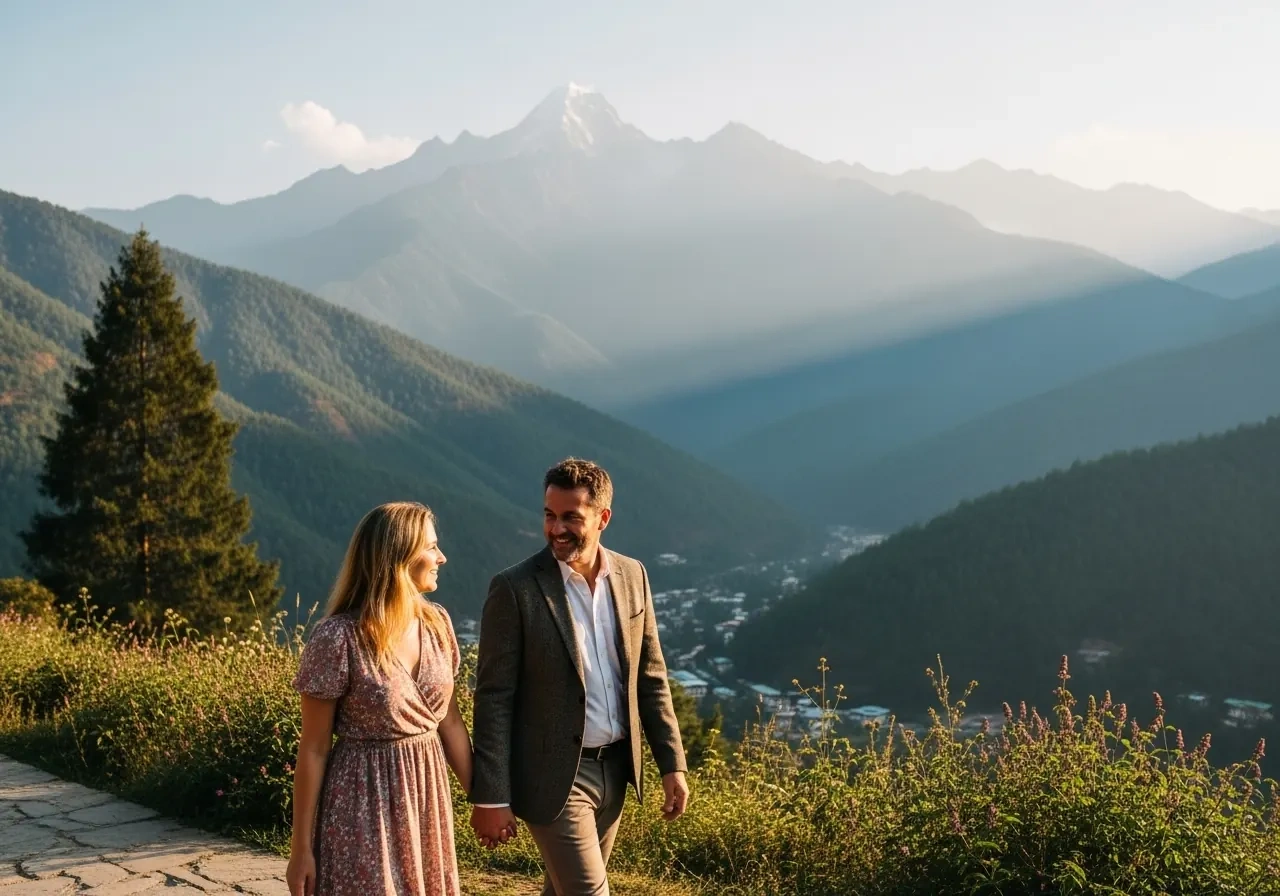


Luanda, Angola's capital on the Atlantic coast, is the natural starting point for Angolans heading to Bhutan. International flights have long used Quatro de Fevereiro International Airport (LAD) in the city, and the new Dr António Agostinho Neto International Airport (NBJ), south-east of Luanda, has been taking over services. Before you travel, check which airport your ticket shows. From either, the journey leads through a major hub to Asia and on to Paro. This guide covers the route from Luanda.
Which Luanda Airport, and Which Airline?
Because services in Luanda have been moving between airports, confirm your departure point with the airline when you book and again a few days before you fly. The newer airport is further from the city centre, so allow more time for the drive if your flight leaves from there.
Our Angola guide names Ethiopian Airlines, Emirates and Qatar Airways as carriers that can take you from Luanda towards the gateways for Bhutan. Each routes through its own hub: Addis Ababa, Dubai and Doha respectively. Check current schedules for each before you decide.
Connecting Hubs for Paro
From your first hub, you typically continue to one of three gateways named in our Angola guide: Delhi, Bangkok or Kathmandu. These are cities from which Drukair (Royal Bhutan Airlines) and Bhutan Airlines fly to Paro, Bhutan's only international airport. No other airlines fly into the country.
- Addis Ababa to Delhi is a natural fit with Ethiopian Airlines.
- Dubai or Doha to Delhi or Kathmandu suits Emirates or Qatar Airways passengers.
- Bangkok works well if you would like a South-East Asian stopover.
Our guide estimates around 15 to 20 hours to reach the transit point, including layovers. The Bhutanese airlines operate limited schedules, so align your long-haul flights with their timetable. Check current schedules before committing.
Picturing a Luanda-to-Paro Trip
Here is a sample journey for illustration only.
A traveller leaves Luanda on an evening Ethiopian Airlines flight to Addis Ababa. They connect the next morning to Delhi, arriving later that day, and stay overnight near the airport. The following morning, they catch a Drukair flight into Paro and spend the afternoon settling in with their guide.
Our Angola guide recommends building flexibility into your itinerary, perhaps by adding an extra day in the transit city, since monsoon rain or fog can delay flights into Paro. If you will stay in India, Thailand or Nepal, confirm the entry requirements for Angolan passport holders first.
Luanda and Bhutan: Five Hours Apart
Angola keeps West Africa Time, UTC+1, all year, without daylight saving. Bhutan uses UTC+6, also unchanged through the year. Bhutan is therefore five hours ahead of Luanda in every season; 2pm in Paro is 9am in Luanda.
Travelling east across five time zones takes some adjustment. An overnight stop and plenty of daylight on arrival will help your body clock reset.
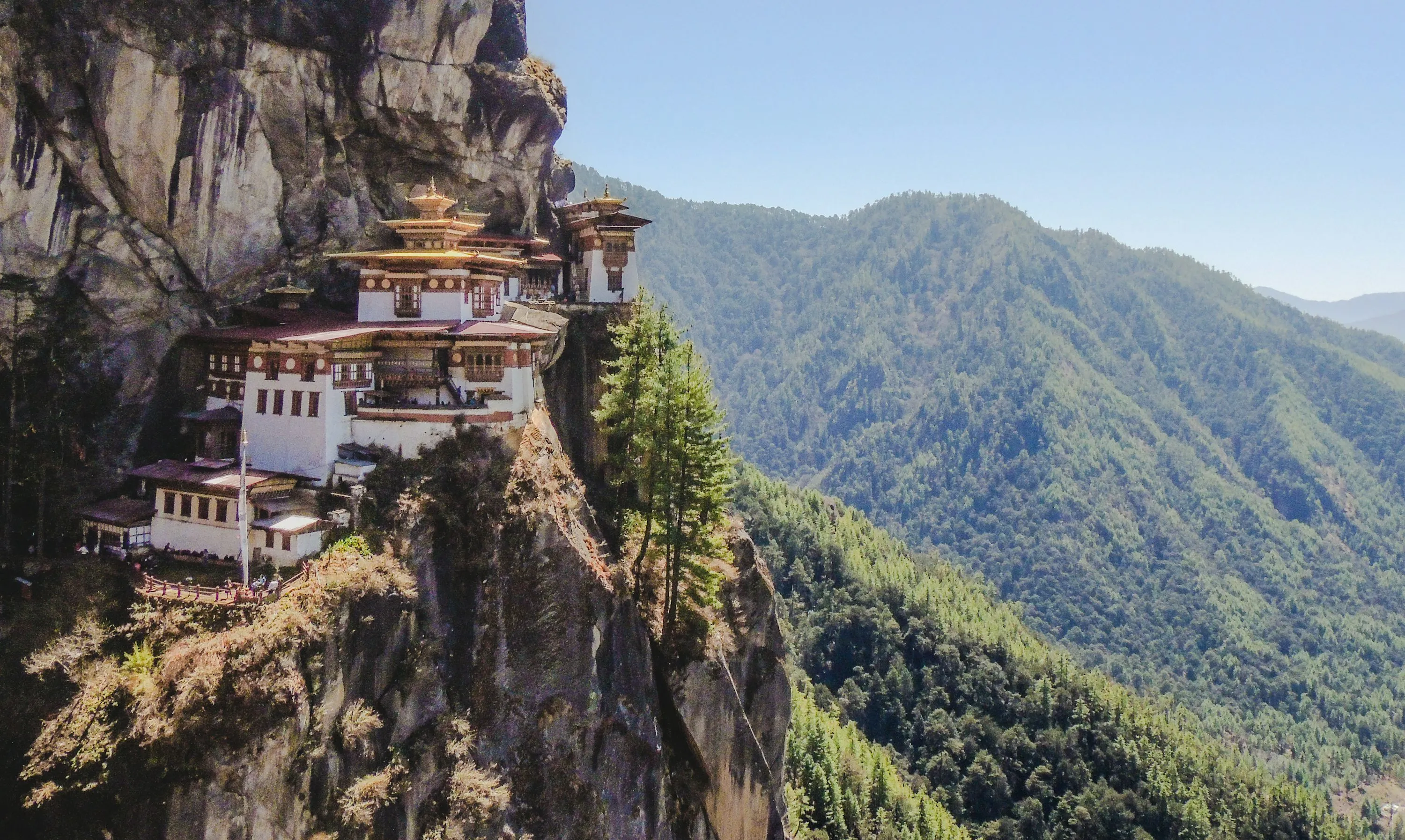
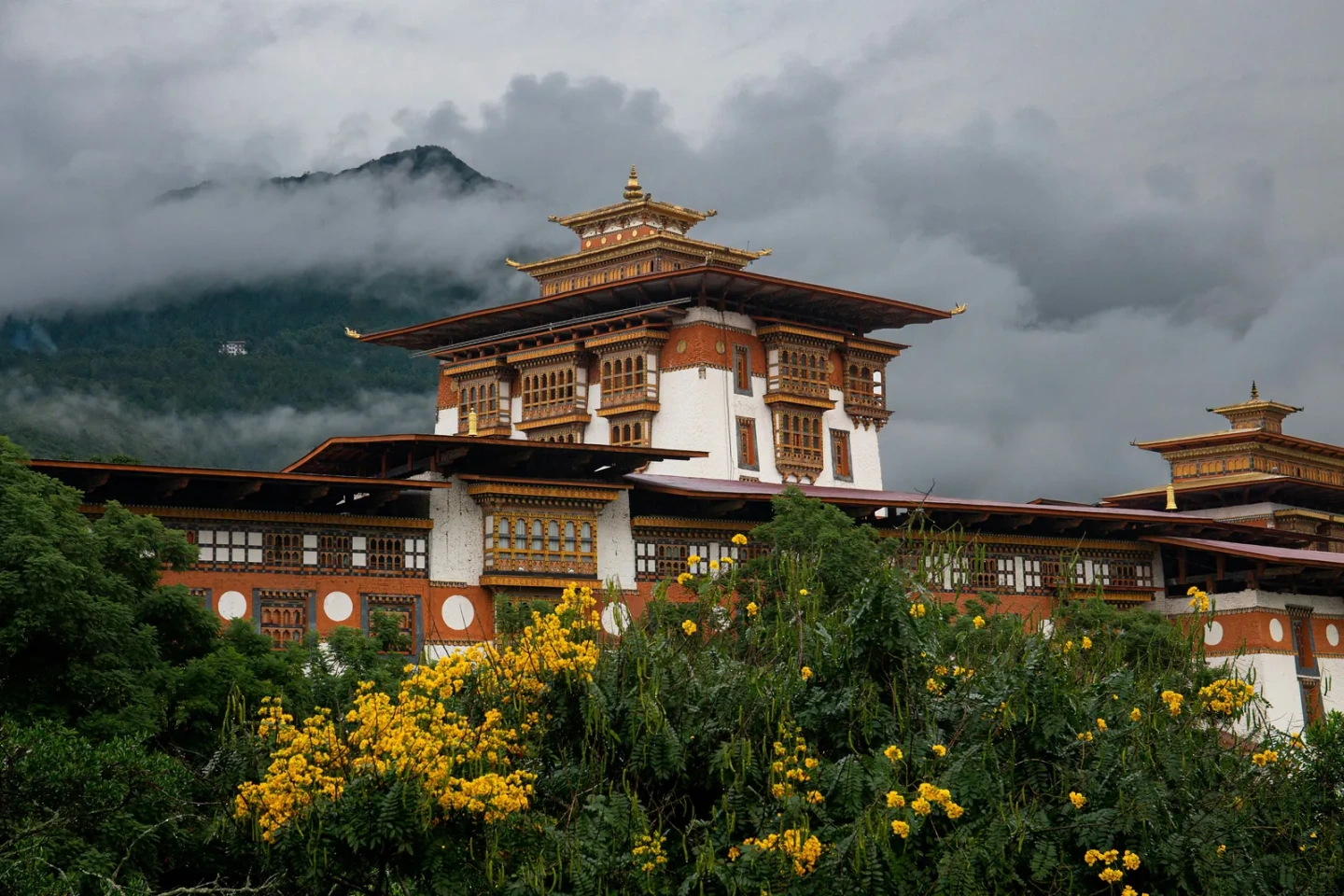
Altitude is the other change to plan for. Luanda is at sea level, while Paro and Thimphu sit in high valleys, so even short climbs can feel tiring at first. Most itineraries ease you in with museums, dzongs and short walks before tackling the trail to Taktsang. Drink plenty of water, avoid rushing on stairs and tell your guide if you feel unwell; with a private programme, the pace can be adjusted easily.
Atlantic Coast Weather and Bhutan's Year
Luanda has a warm climate with a hot, wetter season roughly from November to April and a cooler, cloudier dry season, known locally as cacimbo, in the middle of the year. Bhutan's seasons are more pronounced. Spring (March to May) and autumn (September to November) are the high seasons for visitors. June to August is the monsoon. December to February is cold but often clear, particularly at altitude.
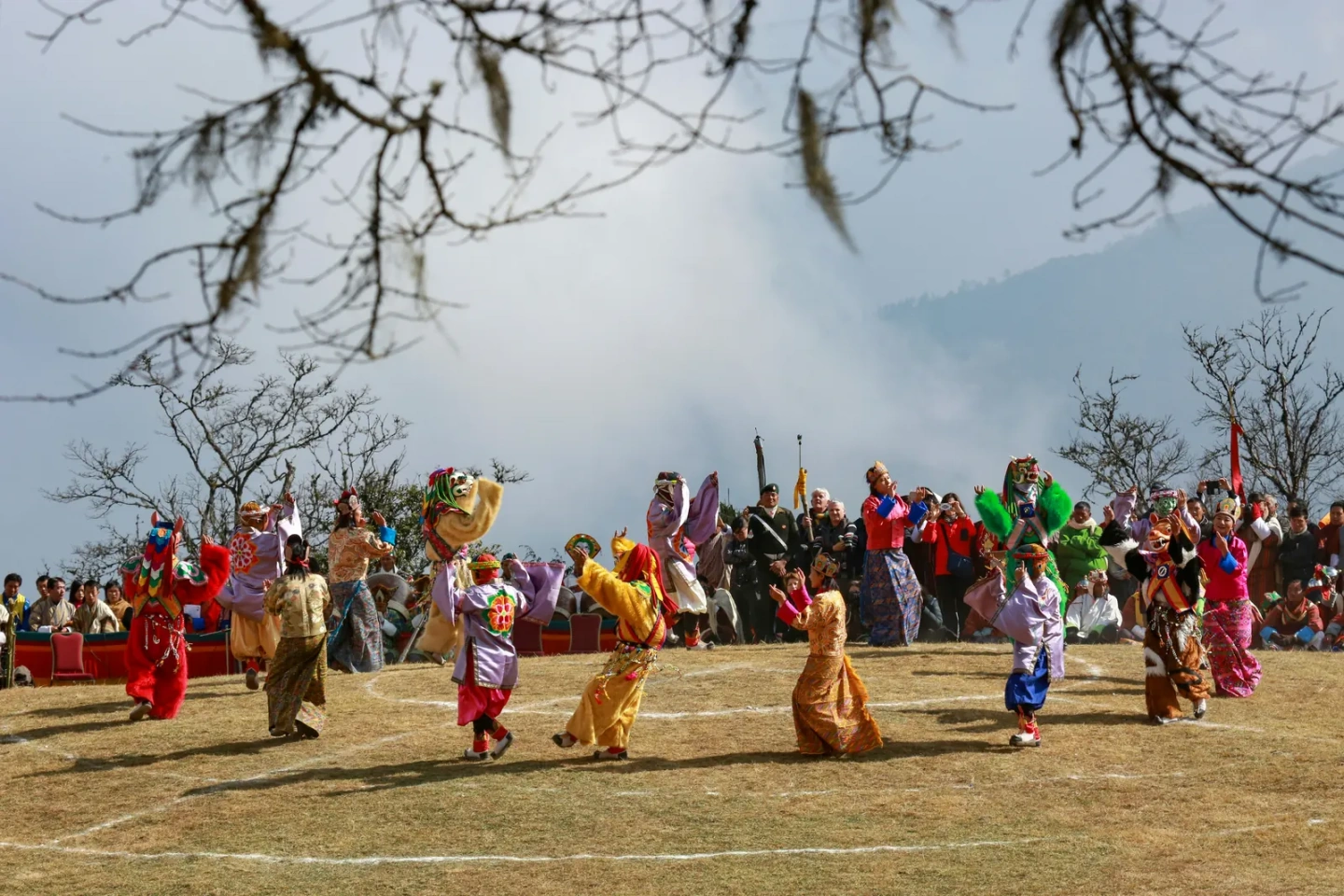
Paro Tshechu is held in spring and Thimphu Tshechu in autumn, with dates that follow the lunar calendar and vary year to year. Angolan travellers should pack warm layers and a good jacket, since mountain mornings can be cold even in the shoulder seasons.
Visa and Fees for Angolan Passport Holders
Angolan citizens need a Bhutan visa, applied for online in advance and usually arranged by a licensed Bhutanese tour operator. Our Angola guide explains that once approved, you receive a visa clearance letter by email to present on arrival at Paro.
- SDF: the current Sustainable Development Fee for most international visitors is USD 100 per adult per night. Check the latest rates with the Department of Tourism before booking.
- Insurance: travel insurance covering your full stay is a requirement.
- Transit: check the requirements of Ethiopia, the UAE or Qatar, and your Asian gateway.
Recommended Stays from Angola
- Six nights: Paro, Thimphu and Punakha, including Taktsang.
- Nine nights: add the Phobjikha valley.
- Twelve nights: central Bhutan, a festival or a trek.
Since Paro's approach is visual-only, keep one buffer day before your flights home.
Which airport should I use in Luanda?
Check your ticket. International services have been moving from Quatro de Fevereiro to the new Dr António Agostinho Neto International Airport.
Is there an overland option?
It exists: the Phuentsholing crossing from West Bengal in India is one route in. For travellers coming from Angola, though, flying into Paro is the usual choice.
What currency does Bhutan use?
The ngultrum, which matches the Indian rupee in value. ATMs cluster in towns, so take some cash too.
Read the Full Angola Guide
For more detail on visas, costs and itineraries for Angolan travellers, see How to Travel to Bhutan from Angola. Then share your dates with us, and we will help match your Bhutan programme to flights from Luanda.