




Hosea Kutako International Airport (WDH) lies on the open plateau east of Windhoek, about forty minutes from the city, and it is the gateway for Namibians setting out for Bhutan. The trip is a long one, linking the dry highlands of southern Africa with the forested valleys of the eastern Himalayas, and it always involves at least two connections. This guide explains the journey from Namibia’s capital, with practical notes on time, seasons and entry.
Windhoek’s Gateway: Hosea Kutako
The road out to Hosea Kutako crosses quiet countryside, but give yourself time all the same. Our Namibia guide notes that the first leg typically goes to Johannesburg, a flight of around two to three hours. Regional airline line-ups have changed in recent years, so check current schedules for the Windhoek–Johannesburg sector before you book anything else.
Johannesburg and the Long Leg to Asia
From Johannesburg, our country guide describes onward connections to Delhi, Bangkok or Kathmandu with carriers such as Emirates, Qatar Airways or Ethiopian Airlines, noting that these segments can take ten to fifteen hours with layovers. From any of these gateways, Drukair (Royal Bhutan Airlines) or Bhutan Airlines complete the journey to Paro International Airport.
- Leg one: Windhoek to Johannesburg.
- Leg two: Johannesburg to Delhi, Bangkok or Kathmandu, often via a Gulf or East African hub.
- Leg three: into Paro with one of Bhutan’s two airlines.
Those two carriers are the only ones flying into Bhutan, and Paro is the only international airport. We suggest picking the Asian gateway first, then working back to the long-haul airline that fits it most comfortably.
When you compare fares, look at the whole chain rather than each flight in isolation. A single ticket from Windhoek to your Asian gateway gives you more protection if the Johannesburg connection runs late, and it is worth asking about before booking separate sectors. Keep the Paro flight on its own timeline, with a night’s rest before it.
How a Windhoek–Paro Trip Might Look
As an example only: you fly from Hosea Kutako to Johannesburg in the morning and connect that afternoon onto a long-haul flight with Qatar Airways towards Delhi. You arrive the next day, rest at a hotel near the airport and fly on to Paro the morning after. Your guide is waiting outside the terminal, and you ease into the trip with a short afternoon in Paro town.
Flights into Paro are flown visually and can be delayed by weather, so we always build in a buffer night in the gateway. It is the simplest way to protect the rest of your plans.
Windhoek Time Compared with Bhutan
Namibia keeps Central Africa Time (UTC+2) all year and no longer changes its clocks for winter. Bhutan uses UTC+6 with no daylight saving. Bhutan is four hours ahead of Windhoek throughout the year: 7am in Windhoek is 11am in Paro.
Four hours is easy to absorb, particularly if you get some sleep on the long-haul sector. Most Namibian visitors are on Bhutan time by the second day.
From the Namibian Plateau to Himalayan Seasons
Windhoek is dry and sunny for much of the year, with summer rains concentrated roughly between November and March and crisp, cold nights in the winter months. Bhutan is much greener and more varied. The busiest months are in spring (March to May) and autumn (September to November). From June to August the monsoon arrives. From December to February conditions turn cold and clear, especially at altitude.
Our Namibia guide points out that Namibians unused to Himalayan conditions should pay attention to timing and packing. Remember that the seasons are reversed: Bhutan’s autumn coincides with Namibia’s spring. If a festival appeals, Paro Tshechu falls in spring and Thimphu Tshechu in autumn, with dates set by the lunar calendar.
Namibian Travellers: Visa, SDF and Insurance
Namibian citizens need a Bhutan visa, applied for online in advance and usually arranged through a licensed Bhutanese tour operator; our Namibia guide explains that you cannot apply independently. Once approved, a visa clearance letter is issued, and the visa is stamped on arrival in Paro, with a fee our guide puts at around USD 40.
The Sustainable Development Fee for most international visitors stands at USD 100 per adult per night at present. It is always worth checking the latest rates with the Department of Tourism before you book. Insurance covering the whole of your stay is required. Bhutan’s ngultrum is pegged to the Indian rupee; ATMs are mainly in towns, so keep some cash on hand.
Building the Right Length of Trip
Allow two travel days in each direction, then choose your Bhutan nights:
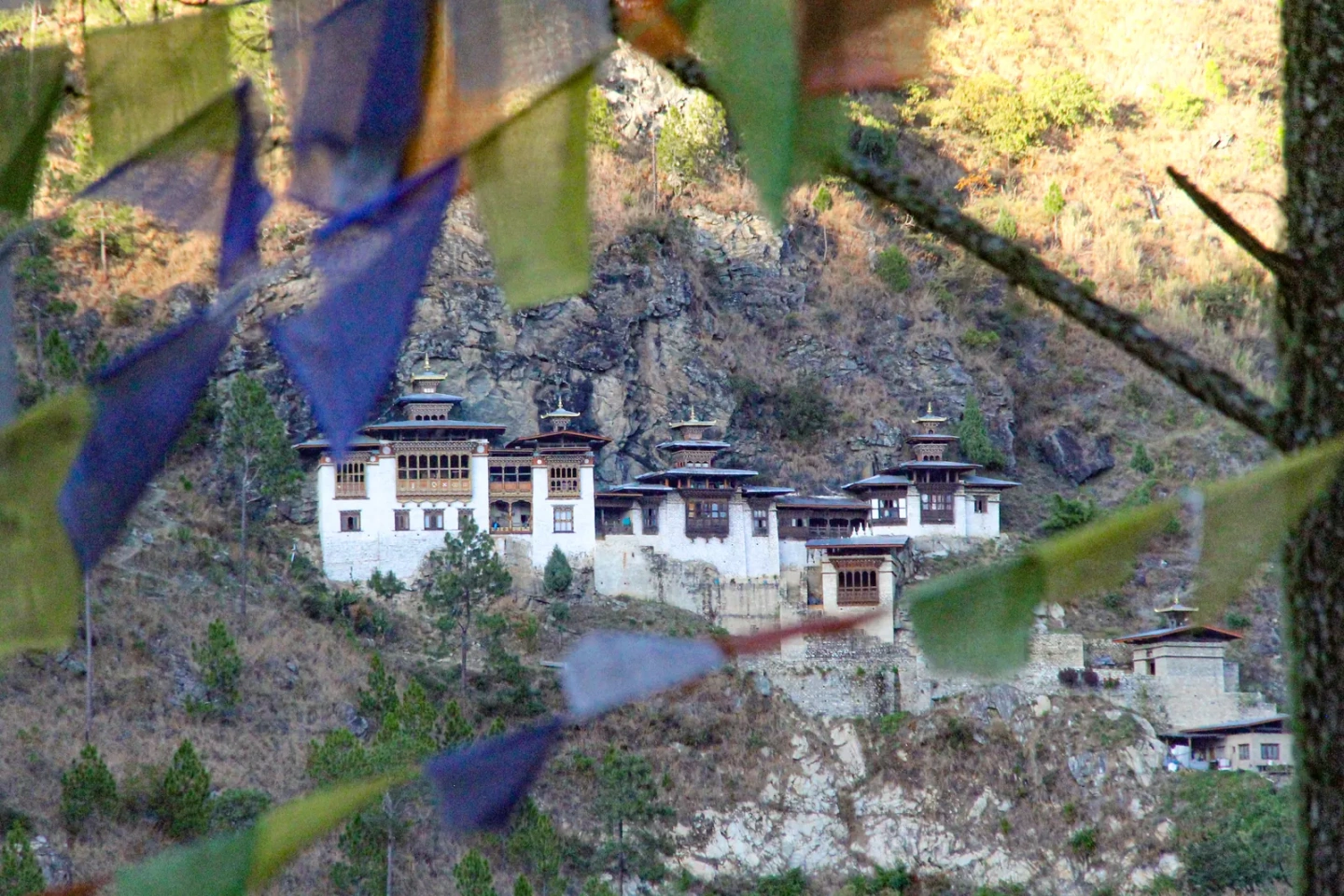
- Five to six nights: Paro, Thimphu and a day hike to a cliffside monastery.
- Eight nights: include Punakha and the Phobjikha valley.
- Eleven nights or more: central Bhutan, a festival or a trek.
Namibians who enjoy hiking in their own wide landscapes often find a short Bhutanese trek a highlight.
Windhoek FAQ
Do all routes go through Johannesburg?
Most do, according to our Namibia guide, because Johannesburg offers the long-haul connections to Asia.
How long is the total journey?
Our guide notes about two to three hours to Johannesburg and ten to fifteen hours for the onward segments, plus the Paro flight and any rest stop.
Can I visit Bhutan without a tour operator?
No. Visits are arranged through a licensed tour operator, who also handles your visa application.
For a fuller picture of visas, routes and itineraries for Namibian travellers, read How to Travel to Bhutan from Namibia. We would be glad to help you plan your trip from Windhoek.