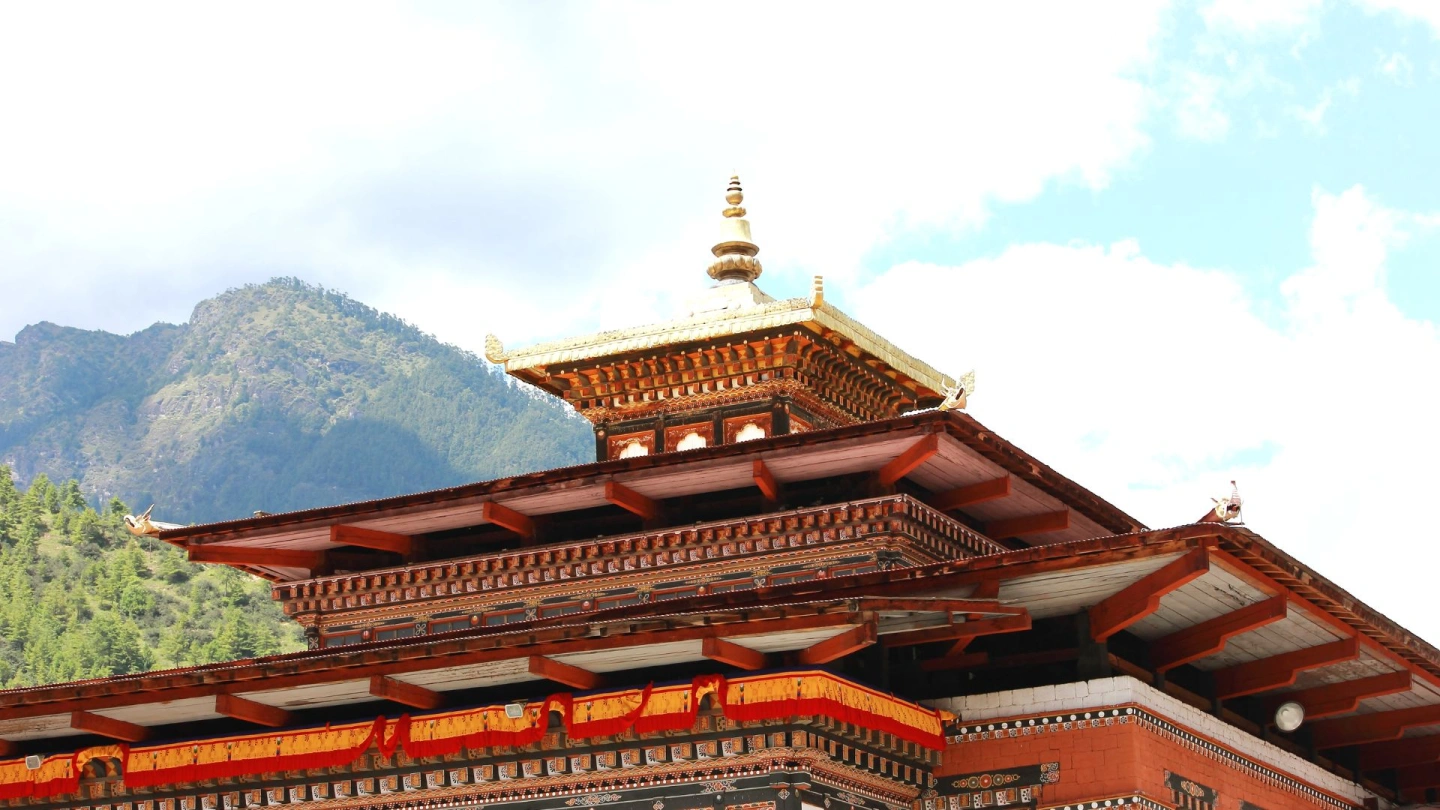
Mongolia and Bhutan share a Buddhist heritage and a love of high, open country, yet there is no direct flight between Ulaanbaatar and Paro. Travellers from the Mongolian capital start at Chinggis Khaan International Airport (UBN), the newer airport that replaced the old Buyant-Ukhaa terminal, and connect through one of Asia's regional hubs. This guide focuses on the trip from UB itself: getting to the airport, choosing a hub, matching the very different climates and arranging your paperwork.
From Ulaanbaatar to Chinggis Khaan Airport
The new airport sits a good distance south of the city, so the transfer takes far longer than the old run to Buyant-Ukhaa did. Allow generous time, especially in winter when snow and ice slow traffic, and in rush hour when UB's roads are notoriously congested. Pre-book a transfer or check how the airport bus is running.
Our Mongolia guide mentions MIAT Mongolian Airlines for the first leg, along with connections on carriers such as Korean Air or Turkish Airlines. Check current schedules, as routes and frequencies change between summer and winter.
Packing from UB needs a little thought. If you leave in deep winter you will be wearing heavy down at the airport but will not need all of it in Bangkok or even in Bhutan's valleys, so plan layers you can stow. Keep your passport, visa clearance and insurance papers in a single folder in your cabin bag, along with a change of clothes in case the Paro connection slips by a day.
Choosing Between Bangkok, Delhi and Kathmandu
Bangkok's Suvarnabhumi Airport is typically the most straightforward hub for UB travellers. From there, Drukair (Royal Bhutan Airlines) flies on to Paro, and our guide puts the whole trip at about 10 to 12 hours including layovers. Delhi is an alternative, reached with Air India or IndiGo via a stopover, followed by a short Drukair hop. Kathmandu is the third, with Nepal Airlines or Himalaya Airlines mentioned for that connection.
Whichever you choose, the final flight is with Drukair or Bhutan Airlines; no other carriers land at Paro International Airport. The guide suggests booking at least two to three months in advance through your tour operator. Seats into Paro are limited, and travellers from UB who want to coincide with a festival or the autumn peak should move earlier still.
Many Mongolian visitors are drawn by the shared Buddhist tradition, and monasteries in Bhutan will feel familiar in spirit while differing in many details. Your guide will explain local etiquette, including dress expectations when visiting religious sites.
Ulaanbaatar's Extremes vs Bhutan's Gentler Seasons
Ulaanbaatar is often described as the coldest capital in the world, with long, bitter winters, a brief warm summer and windy, dusty springs. Bhutan, by contrast, feels mild. Spring (March to May) and autumn (September to November) are the most popular seasons, summer (June to August) brings the monsoon, and winter (December to February) is cold but clear, especially at altitude.
For Mongolian travellers, a Bhutanese winter can actually feel pleasant, with sunny days and quiet monasteries. Spring is a lovely escape from UB's dust storms, and it coincides with the Paro Tshechu. Autumn offers crisp air and the Thimphu Tshechu. Festival dates follow the lunar calendar, much as Tsagaan Sar does, so confirm them for your year. The summer monsoon is the one season to approach carefully, as it can delay flights.
A Sample Route: Ulaanbaatar to Paro
This is an example only, to show how the journey fits together. Your actual flights will depend on what operates on your dates.
- Day 1, morning: leave central UB early for Chinggis Khaan International.
- Day 1: fly to Bangkok, possibly with a connection on the way.
- Overnight: rest at a hotel near Suvarnabhumi.
- Day 2, morning: Drukair to Paro, where your Manifest Bhutan Expeditions guide is waiting.
The overnight in Bangkok is optional but valuable. Paro is a visual-only approach in a narrow valley, and fog or high winds can cause delays. Our guide recommends adding buffer days and notes that shoulder months tend to be more reliable than the monsoon.
Two Hours Back: Adjusting Your Watch
Mongolia uses UTC+8 in Ulaanbaatar and does not currently observe daylight saving; Bhutan is on UTC+6 all year. So Bhutan is two hours behind Ulaanbaatar. When it is midday on Sükhbaatar Square, it is 10 am in Thimphu. The adjustment is small, and early risers will find Bhutan's dawn light well suited to photography.
Paperwork for Mongolian Citizens
Mongolian passport holders need a Bhutan visa, which must be arranged in advance online. Our guide explains that you cannot obtain it independently; your licensed Bhutanese tour operator processes it for you. Start by supplying a scanned passport valid for at least six months from your entry date.
- The Sustainable Development Fee is currently USD 100 per adult per night for most international visitors. Make a point to check the latest rates with the Department of Tourism before booking.
- Insurance covering your entire stay in Bhutan is required.
- Bring some cash: the ngultrum is pegged 1:1 with the Indian rupee, and ATMs are mainly found in towns.
- Check transit rules for Thailand, India or Nepal, depending on your hub.
Ulaanbaatar FAQ
How many nights should I plan in Bhutan?
Five nights is enough for Paro and Thimphu. Seven to ten nights lets you explore further and makes the travel time feel more worthwhile.
Is Bangkok the easiest connection?
It is typically the most straightforward, but Delhi and Kathmandu work too, depending on schedules.
Will Bhutan feel cold after UB?
Rarely. Even in winter, most Mongolian travellers find Bhutan's valleys mild by comparison.
For more on routes, seasons and the visa process, see our full country guide, How to Travel to Bhutan from Mongolia. When you are ready, send us your dates and we will plan a trip that fits the connections from UBN.