

For many Londoners, Bhutan sits near the top of the travel wish list, and the good news is that getting there from the capital is straightforward. London Heathrow Airport (LHR) has frequent long-haul departures to the Asian cities that act as Bhutan's gateways, so you need just one change of plane to reach Paro. Here we set out how the journey typically works for travellers leaving London, as a companion to our complete guide for visitors from the UK.
Heathrow to Delhi: The Classic First Leg
No direct flights link the UK and Bhutan. Paro International Airport (PBH) is the only international airport in the country, and the only airlines that fly there are Drukair (Royal Bhutan Airlines) and Bhutan Airlines.
Our UK guide describes Delhi as the most common transit point from London, thanks to its frequent connections. British Airways and Virgin Atlantic fly from Heathrow to Delhi's Indira Gandhi International Airport in approximately 8 to 9 hours, after which a Drukair flight of around two hours brings you to Paro. Kolkata is another Indian gateway mentioned in the guide. Please check current schedules, as long-haul and regional timetables both change.
Bangkok and Kathmandu: Alternative Routes from London
- Via Bangkok: our guide notes that travellers can fly to Bangkok with Thai Airways or other carriers, in around 11 to 12 hours, then connect to Paro. A good choice if you fancy time in Thailand too.
- Via Kathmandu: flights from London via Dubai or Doha, with Emirates or Qatar Airways, take around 12 to 14 hours in total, followed by a flight of about an hour to Paro.
Travellers from Manchester or Edinburgh can use similar routings. Because Paro's approach is visual-only and weather can disrupt flights, our UK guide recommends flexible tickets, and we suggest building a buffer night into any connection.
Sample Itinerary: From Zone 1 to the Paro Valley
This is an example of how the trip might run, not a fixed schedule. You take the Elizabeth line or the Piccadilly line to Heathrow for an evening departure to Delhi. Arriving the next morning, you rest at an airport hotel through the day and night. The following morning, a Drukair flight carries you over the foothills to Paro, where your guide and driver meet you outside arrivals.
It costs an extra night, but the pause usually pays for itself in energy and peace of mind, and it gives you the same cushion on the return leg.
GMT, BST and Bhutan Standard Time
London uses Greenwich Mean Time (UTC+0) in winter and British Summer Time (UTC+1) from late March to late October. Bhutan keeps UTC+6 all year with no clock changes. Bhutan is therefore six hours ahead of London in winter and five hours ahead in summer.
An evening flight east tends to shorten the first night considerably. Try to sleep on the plane, and keep your first afternoon in Bhutan gentle.
Grey London Winters vs Bhutan's Clear Seasons
London's climate is mild and changeable: summers are warm rather than hot, and winters are cool, damp and often grey. Bhutan offers sharper contrasts. Its favourite travel windows are spring (March to May) and autumn (September to November), when skies tend to be clearer; the summer months of June to August are given over to the monsoon, and December to February is cold but crisp and clear, especially at altitude.
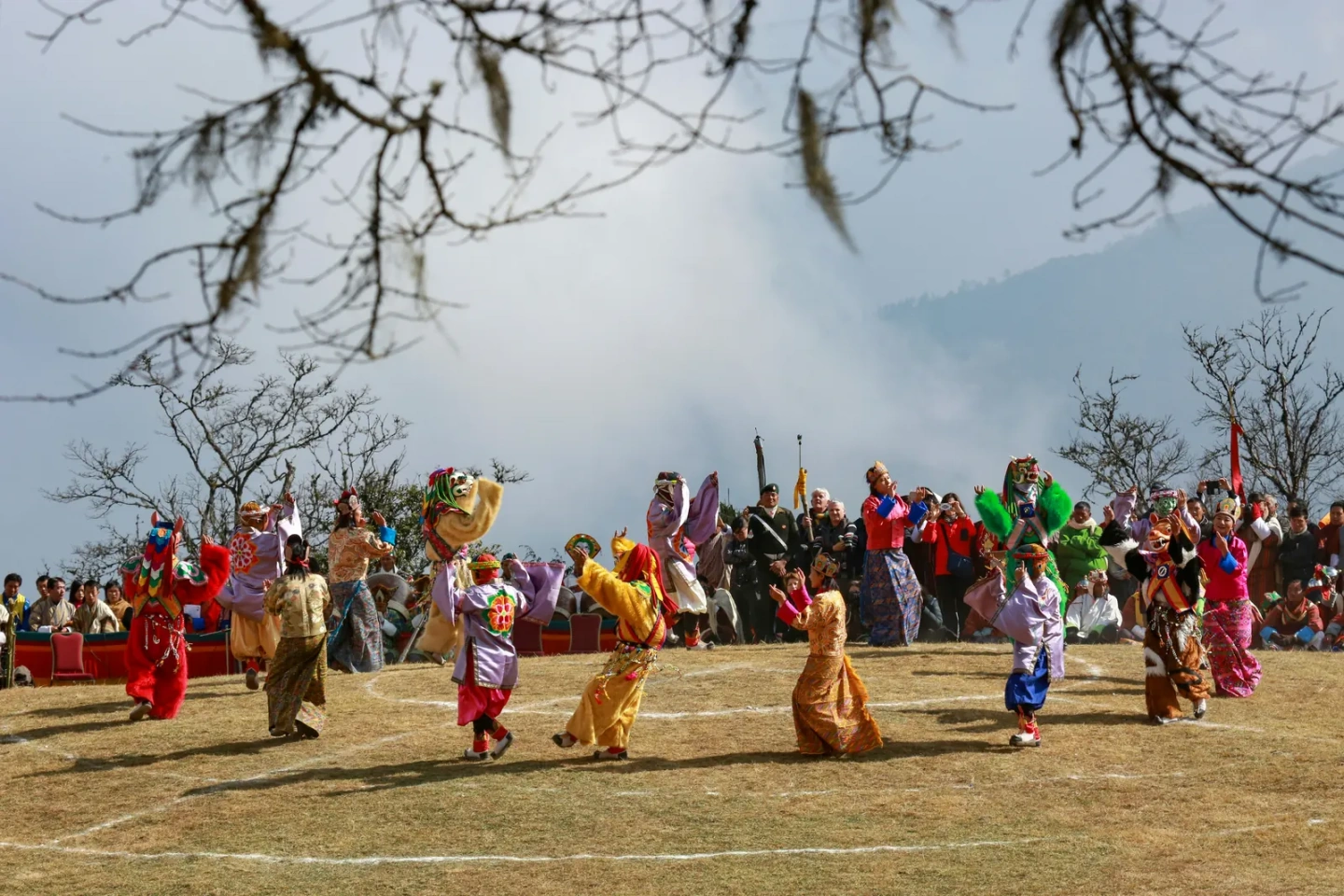
Our UK guide notes that peak seasons fill early and recommends booking flights at least six to twelve months in advance for spring and autumn. Spring hosts the Paro Tshechu and autumn the Thimphu Tshechu, with dates following the lunar calendar. If you want to swap a dreary London February for blue skies, a winter visit can be wonderful, but bring proper warm layers.
Paperwork for British Travellers
British citizens need a Bhutan visa, applied for online in advance and usually arranged through a licensed Bhutanese tour operator. We collect your passport details and the information required, submit the application, and send you the approval before you travel.
The Sustainable Development Fee (SDF) is currently USD 100 per adult per night for most international visitors, including UK nationals. As with any government fee, check the latest rates with the Department of Tourism before booking. Travel insurance covering the whole stay is required; choose a policy that also covers disruption to your connecting flights.
Bhutan's currency is the ngultrum (BTN), pegged 1:1 to the Indian rupee. ATMs are found mainly in towns, so carry some cash.
Ideal Durations for a Trip from the UK
- 5 to 6 nights: Paro and Thimphu, with time to settle after the long-haul flights.
- 7 to 10 nights: the length most of our UK guests choose for a first visit.
- 11 nights or more: for trekking, festival timing, or combining Bhutan with Nepal or India.
When comparing routings from London, look at total journey time and the risk of a tight transfer, not just the fare. A slightly dearer ticket with a sensible connection in Delhi or Doha often proves better value than a cheaper one that leaves no margin if the first flight runs late.
London FAQ
What is the quickest way from London to Paro?
Our UK guide points to Heathrow to Delhi, then a Drukair flight to Paro, as the most common option. Check current schedules for your dates.
How far ahead should I book?
For spring and autumn, our UK guide suggests booking flights six to twelve months in advance, as seats on the Paro flights sell out quickly.
How many hours ahead is Bhutan?
Six hours ahead of London in winter and five during British Summer Time.
For full guidance on visas, the SDF and itineraries for British travellers, read our main guide: How to Travel to Bhutan from the UK. We are happy to help you plan from London.