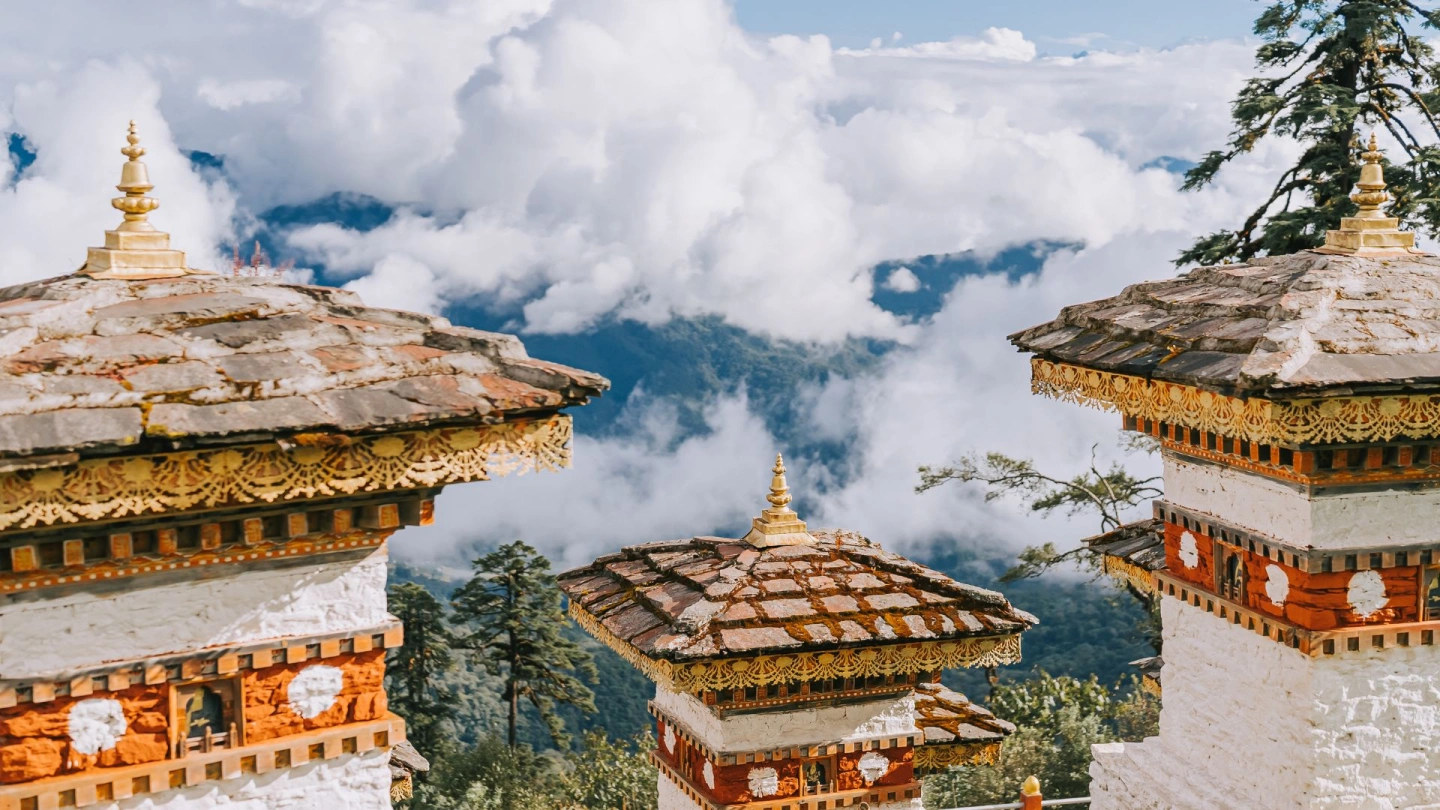
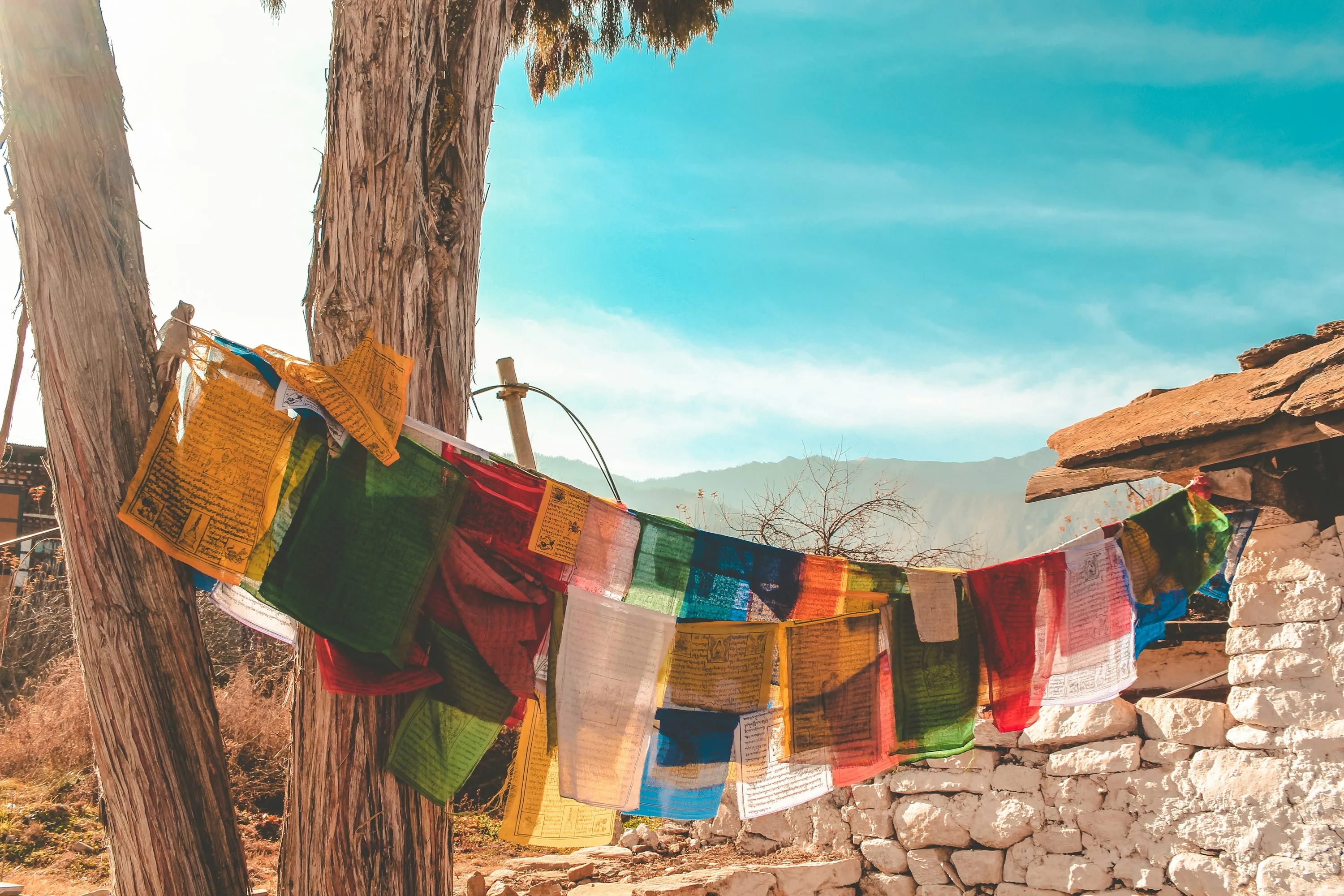
Kathmandu and Bhutan are Himalayan neighbours, and the flight between them is one of the shortest international routes into the kingdom. Tribhuvan International Airport (KTM) is one of the gateway cities for flights into Paro, served by both of Bhutan's airlines, so most travellers from the Nepali capital can reach Bhutan without a connection. On a clear day, the views of the mountains along the way are a highlight in themselves. This page explains how the journey typically works from Kathmandu and complements our complete Nepal guide.
Tribhuvan to Paro: The One-Hour Hop
Paro International Airport (PBH) is Bhutan's only international airport, and only Drukair (Royal Bhutan Airlines) and Bhutan Airlines fly into it. Our Nepal guide explains that both airlines operate direct flights from Tribhuvan, with a flight time of approximately one hour. The guide also mentions the chance of glimpsing Everest en route, weather permitting.
Frequencies vary by season, and flights can be busy around festivals, so our guide recommends booking two to three months ahead. Always check current schedules with your operator.
Starting Elsewhere in Nepal, or Routing via India
If you live in Pokhara, Biratnagar or another Nepali city, you will usually fly domestically to Kathmandu first, as our guide notes there are no direct routes from elsewhere in Nepal. Leave a generous gap between flights, as domestic schedules in the hills can also be affected by weather.
When direct flights are full, transit via Delhi or Kolkata in India, or Bangkok in Thailand, is possible. Our guide cautions that these routes add travel time and may involve extra formalities, so they are usually a fallback rather than a first choice.
Kathmandu to Paro: A Sample Morning
Here is an illustration, not a fixed timetable. You leave Thamel or Lalitpur early, allowing time for traffic on the Ring Road, and check in at Tribhuvan. After about an hour in the air, much of it with the Himalaya stretching out alongside, you descend into the narrow Paro valley on an approach flown visually. Once through immigration, you meet your guide and could be visiting your first sights before lunch.
As Paro's operations depend on the weather, keep a buffer day before any important commitment back in Kathmandu.
A Quarter of an Hour: Nepal Time and Bhutan Time
Nepal Standard Time is UTC+5:45, one of the world's more unusual offsets, while Bhutan Standard Time is UTC+6. Neither uses daylight saving. Bhutan is therefore just 15 minutes ahead of Kathmandu throughout the year. When it is 10am in Durbar Square, it is 10:15am in Thimphu.
There is no jet lag at all. Just remember to move your watch forward a quarter of an hour when you land.
Kathmandu Valley Weather vs Bhutan's Seasons
Kathmandu has a familiar Himalayan rhythm: warm springs, a wet monsoon in the summer months, clear autumns and cool, dry winters with cold nights. Bhutan's seasons will feel recognisable. Spring (March to May) and autumn (September to November) are its busiest times for visitors; summer (June to August) is the monsoon, and winter (December to February) is cold but clear, especially at altitude.
Nepali travellers often prefer autumn, after the monsoon has cleared, when the Thimphu Tshechu usually takes place, or spring, when the Paro Tshechu is held. Festival dates follow the lunar calendar, so they move each year, and demand for flights rises around them. If Dashain or Tihar holidays fall in the same period, book even earlier.
Entry Steps for Nepali Citizens
Nepali passport holders need a Bhutan visa, applied for online in advance and usually arranged through a licensed Bhutanese tour operator. Our Nepal guide notes that Nepali citizens do not have the visa-free arrangement available to Indian nationals, and that the operator submits the application on your behalf with your passport details and proof of onward travel.
The Sustainable Development Fee is currently USD 100 per adult per night for most international visitors, and our Nepal guide confirms that this rate applies to Nepali citizens. As always, check the latest rates with the Department of Tourism before booking. Travel insurance covering your whole stay is required.
The ngultrum (BTN) is pegged 1:1 to the Indian rupee. Carry some cash, as ATMs are mainly in towns.
Short Breaks and Longer Explorations
- 3 to 4 nights: Paro and Thimphu, an easy break from Kathmandu.
- 5 to 7 nights: time to explore further and enjoy slower days.
- 8 nights or more: ideal for trekking or for timing your visit around a festival.
Kathmandu is also a popular place to start a combined Nepal and Bhutan holiday for international visitors, so if friends are joining you from overseas, Tribhuvan makes a convenient meeting point.
For Nepali families, the short flight and minimal time change make Bhutan a practical choice for travelling with children or older relatives. Mention any mobility needs when you book so your operator can plan walks, drives and hotel choices to suit everyone in the group. Remember that Bhutan's valleys can be cooler than Kathmandu, so warm layers are useful in every season.
Kathmandu FAQ
How long is the flight from Kathmandu to Paro?
About one hour, according to our Nepal guide. Check current schedules for days of operation.
Do Nepali citizens need a visa for Bhutan?
Yes. The visa is applied for in advance, usually through a licensed Bhutanese tour operator.
What is the time difference?
Bhutan is 15 minutes ahead of Kathmandu all year.
For full visa steps, SDF details and itineraries for Nepali travellers, read our main guide: How to Travel to Bhutan from Nepal. We would be glad to plan your trip from Kathmandu.
Related: Bhutan car rental with driver and guide; hiring a licensed guide (English, Hindi, Nepali; Bengali subject to availability).