



Funafuti is both Tuvalu's capital and its only gateway to the wider world, and Funafuti International Airport (FUN) is where any journey to Bhutan begins. The runway runs right through the heart of the atoll, so getting to the airport is no trouble. The real challenge is distance: you are setting out from one of the most remote countries on earth to reach a Himalayan kingdom with a single international airport.
The Funafuti Runway and the Flight to Fiji
Our Tuvalu guide explains that flights from Funafuti go primarily to Fiji, operated by Fiji Airways two to three times a week on small propeller aircraft. It puts that first hop at about two hours. Because frequencies are so low, this leg dictates everything else, so build the rest of your plan around it rather than the other way round.
Fijian schedules can change, so check current schedules early, and consider giving yourself a day or more in Fiji before the long-haul sector.
Nadi and Beyond: Hubs Towards Bhutan
From Nadi International Airport, the guide describes connections to major Asian hubs: Bangkok, Delhi and Kathmandu. It mentions Fiji Airways or Qantas for the long sector to Bangkok, and alternative paths through Sydney or Singapore before continuing to Delhi or Kathmandu.
- Nadi to Bangkok: the guide's main example, roughly 10 to 12 hours.
- Via Sydney or Singapore: alternatives when Bangkok timings do not suit.
- Into Paro: Drukair or Bhutan Airlines, the only two airlines that fly to Bhutan.
Singapore is itself one of the gateway cities with flights to Paro, which can make it a tidy option if the timings line up.
A Possible Funafuti to Paro Itinerary
This sample is designed to show the rhythm of the journey. It is an example only, and real dates will hinge on the Funafuti to Fiji timetable.
- Day 1: Fly Funafuti to Fiji and spend the night near Nadi.
- Day 2: Long-haul flight from Nadi to Bangkok; overnight at an airport hotel.
- Day 3: Rest day in Bangkok as a buffer.
- Day 4: Board a Drukair or Bhutan Airlines flight to Paro.
The country guide notes that total travel time can stretch to 20 to 40 hours with waits. Spare days are not wasted here: the Paro approach is visual-only, weather can delay flights, and a missed connection out of Funafuti could mean waiting several days for the next service.
Packing light also helps on this route. The small aircraft on the Funafuti to Fiji sector may have tighter baggage rules than the long-haul jets that follow, so check allowances for every airline before you leave home. If you are carrying warm clothing for the Himalaya, consider whether some of it can be bought or collected in Fiji or Bangkok instead of being hauled from the atoll.
It is also sensible to tell your tour operator the exact date you will reach the Asian gateway. They can then hold the Paro sector for the right day and adjust if your Fiji connection shifts.
Tuvalu Is Six Hours Ahead of Bhutan
Tuvalu keeps UTC+12 throughout the year with no daylight saving, while Bhutan stays on UTC+6. That makes Bhutan six hours behind Funafuti in every season. If you phone home at 9am in Thimphu, it is 3pm in Funafuti.
Flying west and gaining hours is usually easier than the reverse, though a six-hour shift is still noticeable. Expect early mornings for your first few days, which are perfect for catching Bhutan's valleys before the cloud builds.
Atoll Heat Versus Mountain Air
Funafuti is hot and humid all year, with a wetter season from roughly November to April. Bhutan could hardly be more different. Spring (March to May) and autumn (September to November) are its most popular seasons, with mild days, cool evenings and clearer skies.
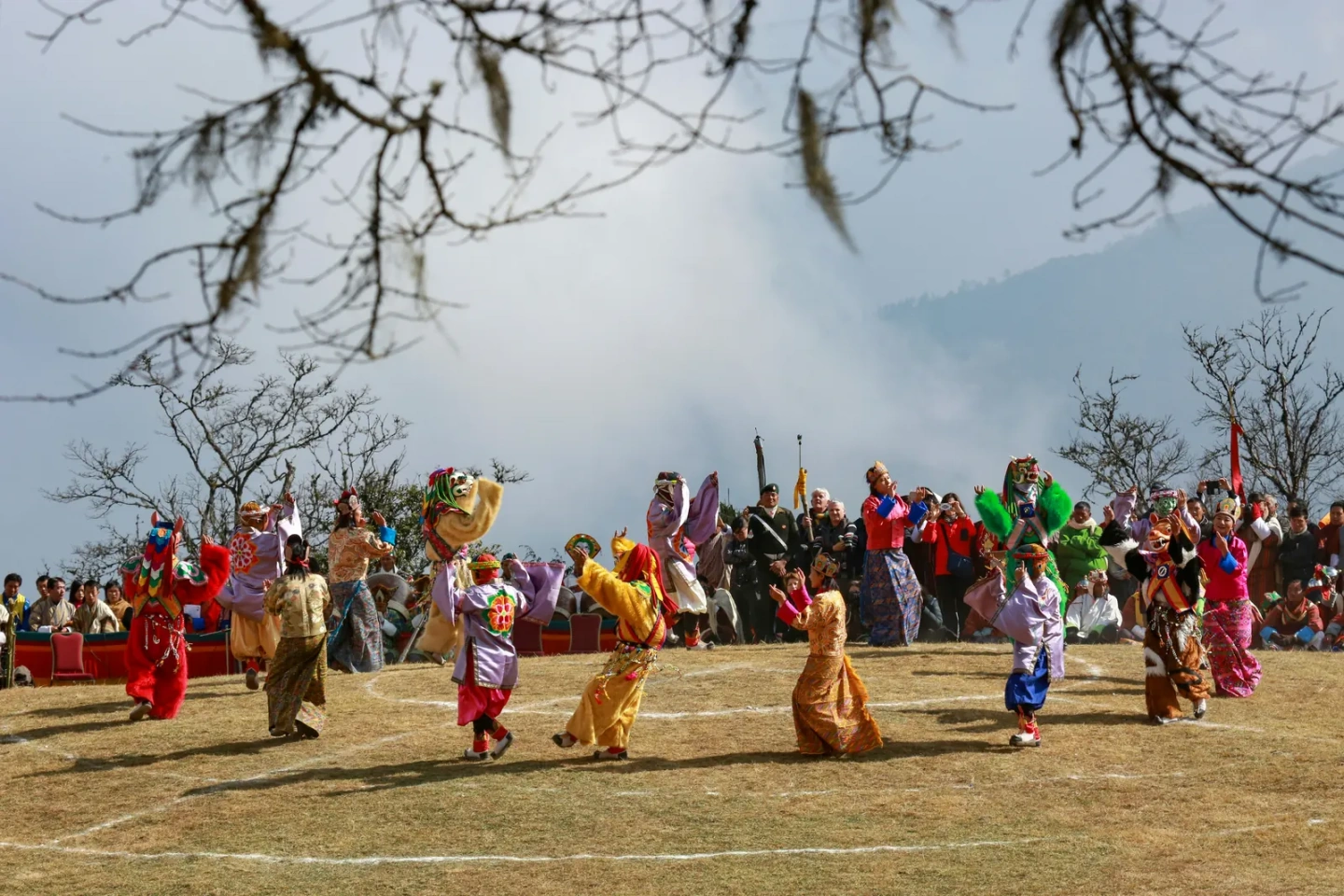
Summer (June to August) is Bhutan's monsoon, and winter (December to February) is cold but often clear, especially at altitude. Coming from the atoll, you will need genuinely warm clothing, including a jacket and layers, even outside winter. Paro Tshechu is held in spring and Thimphu Tshechu in autumn, with dates set by the lunar calendar each year.
Visa and SDF Steps for Tuvaluan Citizens
The Tuvalu guide confirms that all foreign visitors, including Tuvaluans, must book through licensed Bhutanese tour operators. You will need a Bhutan visa, applied for online in advance, typically arranged by your operator.
- Sustainable Development Fee: currently USD 100 per adult per night for most international visitors; check the latest rates with the Department of Tourism before booking.
- Insurance: compulsory, and it should cover the whole Bhutan stay.
- Transit: check entry or transit conditions for Fiji, Thailand, Australia or Singapore depending on your path.
- Money matters: Bhutan's ngultrum is pegged to the Indian rupee; ATMs are mostly in towns.
The guide recommends planning three to six months ahead, which fits well with the low frequency of flights out of Funafuti.
Making the Journey Worthwhile: Trip Lengths
When getting there takes three or four days, a longer stay makes sense. Eight nights is a reasonable minimum for Paro, Thimphu and a neighbouring valley. Twelve nights opens up central Bhutan at an easy pace, and two weeks or more allows for trekking or a festival. Remember to include buffer days at both ends.
Funafuti Travellers' FAQs
How often can I fly out of Funafuti?
The Tuvalu guide mentions two to three flights a week to Fiji, so plan the rest of your trip around those dates.
Is Singapore a good stopover?
It can be, as Singapore is one of the gateway cities for flights into Paro.
Does my operator book international flights?
Your operator can coordinate the Paro sector, but the guide notes that international segments from Tuvalu are usually arranged separately.
For full detail on visas, fees and itineraries, read How to Travel to Bhutan from Tuvalu, and get in touch whenever you would like us to help plan your trip from Funafuti.