


From the banks of the Ubangi River to the valleys of the eastern Himalayas is a long way, but the route from Bangui to Bhutan follows a clear logic. The Central African Republic's capital is served by Bangui M'Poko International Airport (BGF), close to the city, and from there travellers typically head east via Nairobi and the Gulf before reaching South Asia. This page explains the steps for anyone starting in Bangui.
Starting at M'Poko International
M'Poko is the principal departure point for Central African travellers, as our country guide notes. Because international frequencies from Bangui are limited, it pays to build your whole plan around the first flight. Confirm it before anything else, then arrange the rest of the journey to fit.
Keep printed copies of your visa clearance letter, insurance certificate and passport photo page. You may be asked for them at several transit desks along the way. A small amount of US dollars in cash is also handy for meals or a hotel during an unplanned layover.
The Nairobi–Doha Corridor
The route described in our guide runs like this:
- Bangui to Nairobi (Kenya) with Kenya Airways.
- Nairobi to Doha (Qatar) with Qatar Airways.
- Doha to Bangkok (Thailand) or Delhi (India).
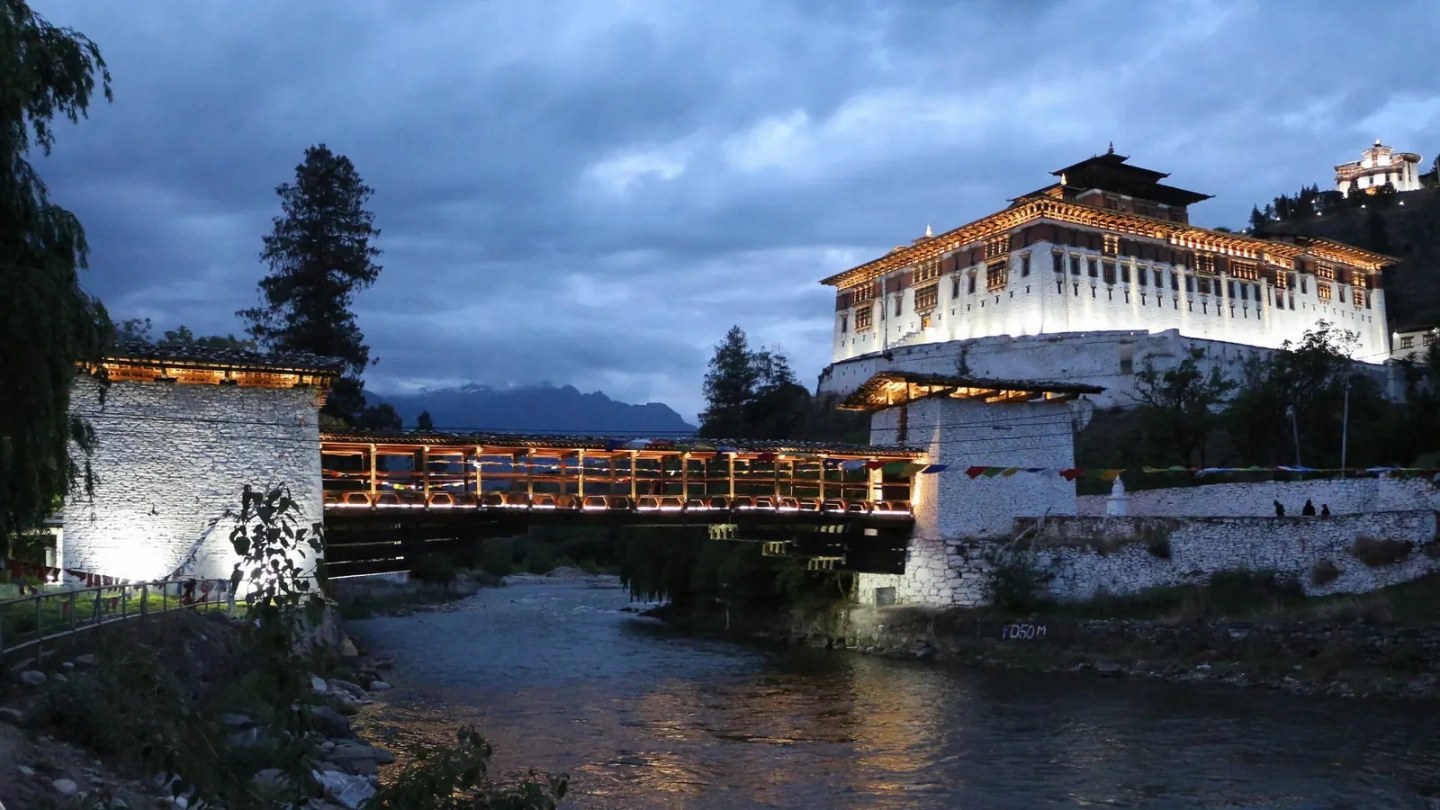
- Bangkok or Delhi to Paro with Drukair (Royal Bhutan Airlines) or Bhutan Airlines.
Those two Bhutanese carriers are the only airlines that fly into Paro, and their schedules from the gateway cities are limited, so this final leg is the one to secure early. Kathmandu is another common gateway. As always, check current schedules, because timings can shift from one season to the next.
A sensible order of booking from Bangui is: agree your Bhutan dates with your operator, secure the Paro flight, then buy the long-haul tickets to match. Working backwards from Paro in this way means the scarce seats into Bhutan dictate the plan, rather than the other way round. Leave generous connection times in Nairobi and Doha, too, since a late first flight can have knock-on effects across the whole chain.
Bangui to Paro: A Worked Example
To make the journey easier to picture, here is one example. It is not a promise of particular flights or connection times.
On day one you fly from Bangui to Nairobi and connect to Doha. On day two you continue from Doha to Delhi and check into an airport hotel for the night. On day three you board the Drukair or Bhutan Airlines flight to Paro. Our guide recommends booking two to three months ahead through your tour operator so the connections line up.
The Delhi night is deliberate. Landings at Paro are made visually in daylight, and weather can postpone arrivals by hours or occasionally longer. A buffer protects your tour start and gives you a proper rest after several flights.
Bangui Hours and Bhutan Hours
The Central African Republic uses West Africa Time, UTC+1, with no daylight saving. Bhutan uses UTC+6, also without daylight saving. Bhutan is therefore five hours ahead of Bangui throughout the year: 10am in Bangui is 3pm in Thimphu.
Combined with a long, multi-stop journey, five hours is enough to leave you tired on arrival. Plan a gentle first afternoon in Paro, drink plenty of water and get outside in the daylight.
Bangui's Rains and Bhutan's Monsoon
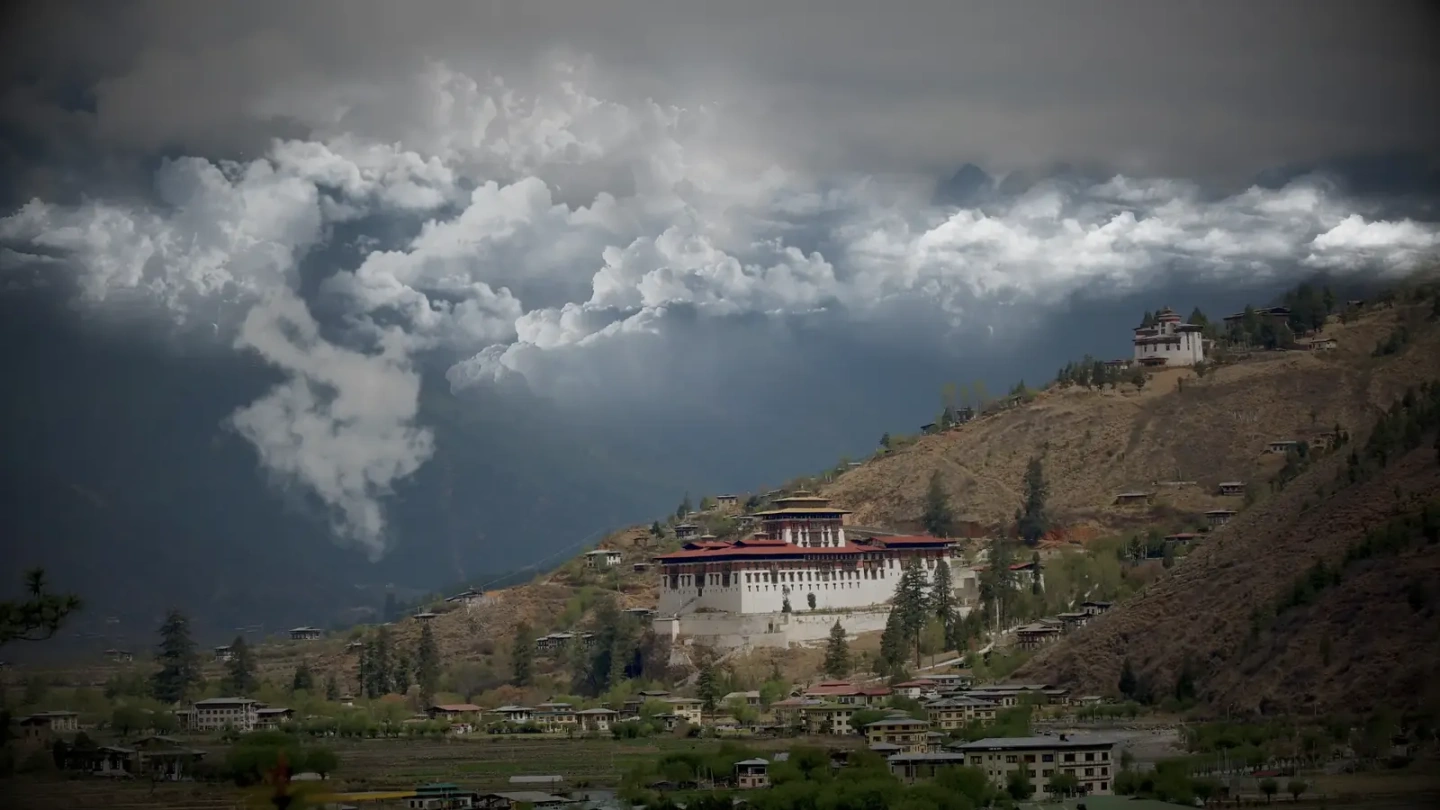
Bangui has a tropical climate, with a long rainy season through much of the middle of the year and a drier period around December to February. Bhutan's pattern overlaps in an interesting way. Its summer (June to August) is the monsoon, while spring (March to May) and autumn (September to November) are the most popular seasons. Winter (December to February) is cold but clear, especially at altitude.
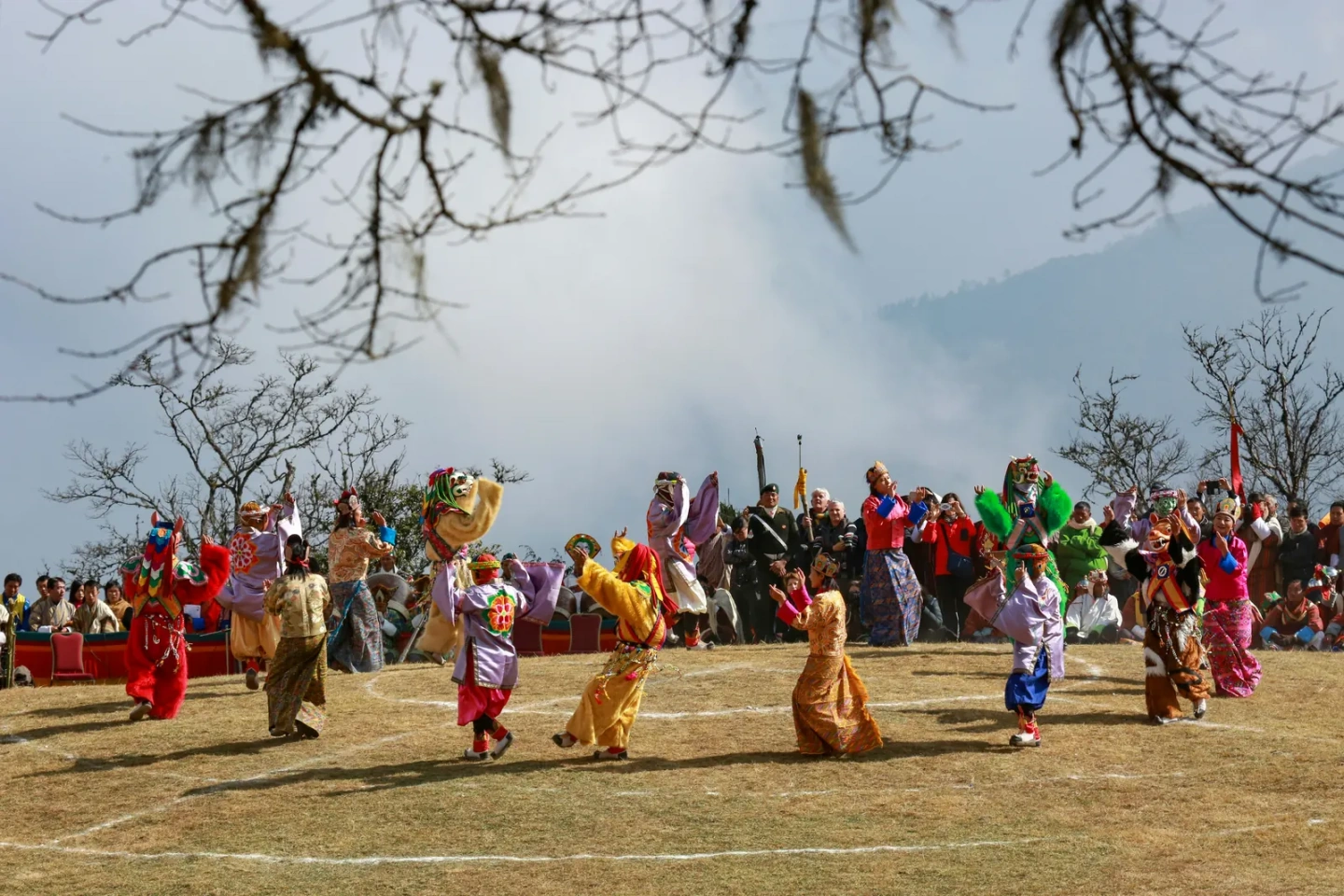
Bangui's drier months coincide with Bhutan's crisp, sunny winter, which suits travellers who prefer quiet trails and clear views. Others choose spring for Paro Tshechu or autumn for Thimphu Tshechu; both follow the lunar calendar, so dates change every year. Whatever the season, pack warmer clothes than you would ever need at home.
What Central African Passport Holders Need
Citizens of the Central African Republic need a Bhutan visa, applied for online in advance and usually arranged by a licensed Bhutanese tour operator. The guide notes that approval typically comes within three to five business days, producing an emailed clearance letter that you present on arrival for the visa stamp.
- SDF: currently USD 100 per adult per night for most international visitors. Check the latest rates with the Department of Tourism before booking.
- Insurance: required for the full duration of your stay in Bhutan.
- Transit rules: check what Kenya, Qatar, Thailand or India require of your passport for a connection.
The ngultrum is Bhutan's currency, pegged 1:1 to the Indian rupee. ATMs are found mainly in towns, so carry cash for smaller places.
Recommended Lengths for a Bangui Trip
- Seven nights: Paro, Thimphu and time to recover from the journey.
- Ten nights: add the central valleys, village walks and a slower rhythm.
- Two weeks: suitable for trekking, a festival or a combined trip with Nepal.
Given the number of connections, we would rarely suggest fewer than six nights in Bhutan from Bangui.
Bangui Traveller FAQ
Why route via Nairobi and Doha?
Our guide identifies this as a common pattern, using Kenya Airways and Qatar Airways to reach Bangkok or Delhi. Your operator may suggest alternatives on certain dates.
Can a tour operator book the whole route?
Operators usually book the Drukair or Bhutan Airlines leg and coordinate timings; long-haul tickets are often bought separately.
Is there a Bhutanese embassy in Bangui?
The visa process is online, so you do not need to visit an embassy to apply.
For a complete overview of travel from your country, read our guide, How to Travel to Bhutan from Central African Republic. We would be pleased to help you plan the route from Bangui to Paro.