

Amsterdam is the constitutional capital of the Netherlands, and Amsterdam Airport Schiphol (AMS) is where most Dutch journeys to Bhutan begin, including for people living in The Hague, Rotterdam and Utrecht. There are no direct flights to Paro, but Schiphol's wide network makes it simple to reach the Asian gateways that Bhutan's airlines serve. Here is what to expect when travelling from Amsterdam.
Schiphol Options for Bhutan-Bound Travellers
Schiphol is reached easily by train from central Amsterdam, which makes an early departure painless. From there, the Netherlands guide outlines several typical first legs:
- KLM, Etihad or Qatar Airways to Delhi, arriving at Indira Gandhi International Airport;
- Thai Airways via Bangkok, landing at Suvarnabhumi;
- Connections to Kathmandu, arriving at Tribhuvan International Airport.
The guide notes that transit times at these hubs can range from about 4 to 12 hours depending on schedules, so check current schedules before choosing.
The Delhi–Paro Link and Other Final Legs
Bhutan is served only by Drukair (Royal Bhutan Airlines) and Bhutan Airlines. From Delhi, the Netherlands guide describes the Druk Air flight to Paro as roughly two hours. Bangkok and Kathmandu offer similar final sectors with the bonus, on clear days, of mountain scenery out of the window.
In total, the guide suggests 15 to 25 hours from Amsterdam including layovers. It recommends booking three to six months ahead through your tour operator, who can coordinate the connections and handle any disruptions.
Amsterdam to Paro: A Sample Two-Day Journey
This example shows how a trip could flow; it is not a guaranteed itinerary:
- Day 1: take the train to Schiphol and fly with KLM to Delhi, arriving at night.
- Day 2, morning: after a short rest near the airport, board Druk Air to Paro and meet your guide.
Many Dutch travellers prefer a full night in Delhi or Bangkok rather than an early connection the same morning. Paro's valley approach is flown visually, and summer fog and monsoon rain can cause delays, so a buffer on the way home is wise too.
Choosing Between Delhi, Bangkok and Kathmandu
Each gateway suits a different kind of traveller. Delhi is usually the most straightforward from Schiphol and keeps total journey time down. Bangkok appeals to those who want a relaxed stopover, perhaps with a night or two in the city before or after Bhutan. Kathmandu is the natural choice if you are planning a Himalayan double bill with Nepal. Whichever you pick, your tour operator will book the Bhutanese leg to fit your visa dates, and can suggest how much time to leave between flights so a delay on the long-haul sector does not cost you a day in Bhutan.
Dutch Summer Time vs Bhutan Time
The Netherlands use Central European Time, UTC+1, in winter and switch to UTC+2 for summer time between late March and late October. Bhutan keeps UTC+6 all year. The result: Bhutan is five hours ahead of Amsterdam in winter and four hours ahead in summer.
That shift is quite easy to absorb on an overnight eastbound flight. The Netherlands guide suggests that business class on the long-haul legs can help with jet lag if your budget stretches that far, but plenty of rest and daylight on arrival work for most people.
From Dutch Drizzle to Himalayan Sunshine
Amsterdam's maritime climate brings mild summers, cool winters and rain at any time of year, with short, grey days in the depths of winter. Bhutan's seasons are more pronounced. Spring (March to May) and autumn (September to November) are the main travel seasons, the summer months of June to August are the monsoon, and winter, from December to February, is cold but crisp and often clear, particularly at elevation.
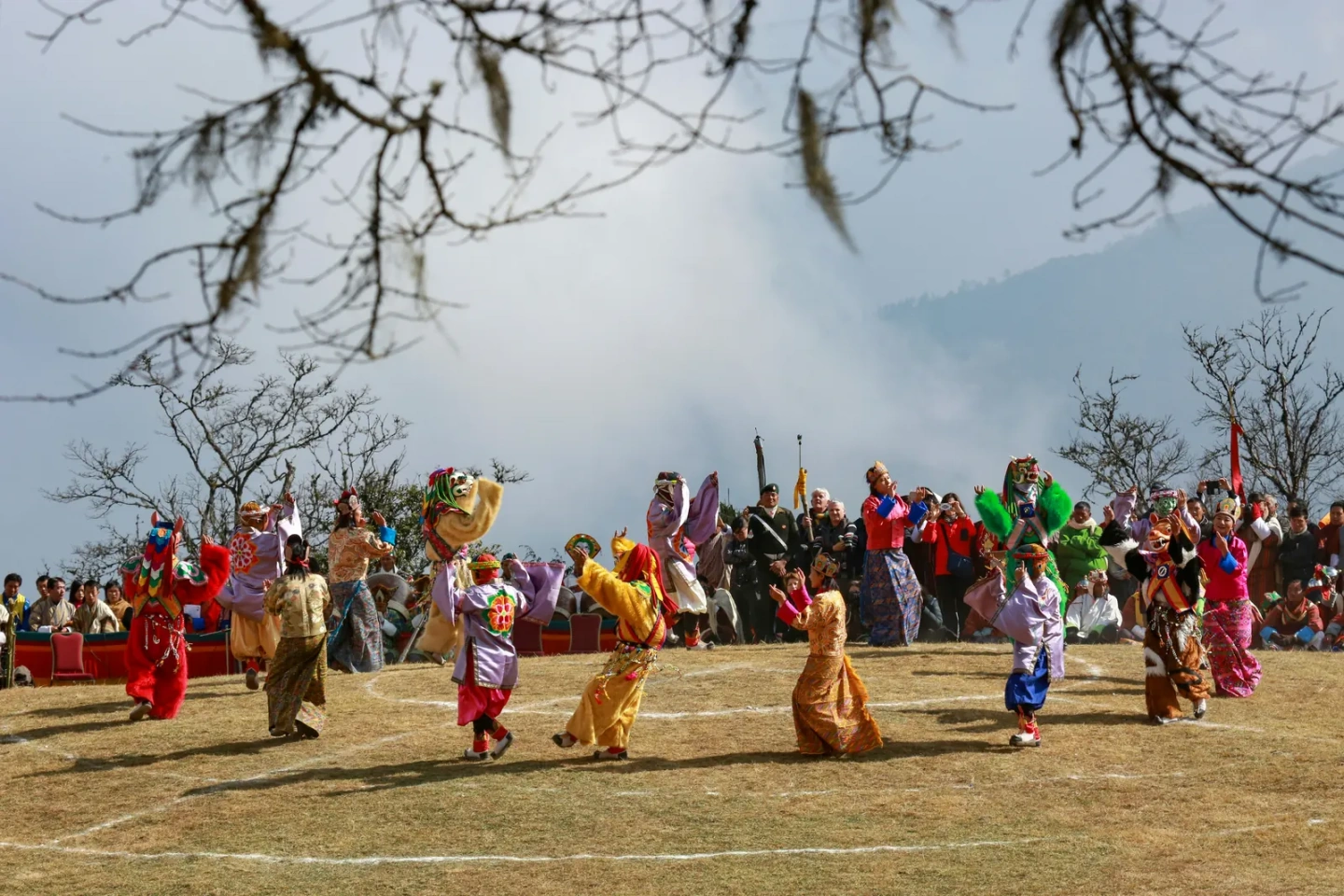
Dutch travellers often head to Bhutan in autumn, as days shorten at home, or in spring for flowering hillsides. Paro Tshechu falls in spring and Thimphu Tshechu in autumn; dates are set by the lunar calendar and differ each year, so confirm them before booking.
Visa and Fees for Dutch Citizens
Dutch passport holders need a Bhutan visa, applied for online in advance and normally arranged by a licensed Bhutanese tour operator. Manifest Bhutan Expeditions handles the application for our guests, using the passport details and photo you send. The Netherlands guide advises six months' validity on your passport beyond your stay.
A Sustainable Development Fee applies to most international visitors and stands at USD 100 per adult per night for now. Check the latest rates with the Department of Tourism before booking. Travel insurance covering your entire stay in Bhutan is compulsory, so arrange it when you book flights.
Trip Lengths and Amsterdam FAQs
- 5 nights: Paro and Thimphu, a good introduction.
- 7 to 9 nights: more valleys and a slower pace.
- 10 to 14 nights: trekking or festival travel.
I live in The Hague. Should I fly from Rotterdam?
Schiphol is usually the better starting point for long-haul connections, and it is easy to reach by train from The Hague.
How long is the flight from Delhi to Paro?
The Netherlands guide describes it as about two hours on Druk Air.
Will my guide meet me at Paro?
Yes. As the Netherlands guide notes, your guide meets you on arrival.
Can I bring a large suitcase?
Bhutanese carriers apply tighter allowances than most long-haul airlines, so pack light and check the limits for your final flight before you leave Amsterdam.
Do I need cash?
Some. The ngultrum (BTN) is pegged 1:1 to the Indian rupee, and ATMs are mainly in towns.
For full guidance, see How to Travel to Bhutan from Netherlands.